
Industrial hinges may seem simple, but they hold the mechanical world together. For manufacturers, designing hinges that withstand load, torque, and environmental stress while ensuring precision and durability is a complex challenge—one that blends material science, engineering judgment, and industrial practicality.
Industrial hinge design relies on mastering torque range, material hardness, surface finish, temperature tolerance, and life-cycle durability. Engineers must balance strength, flexibility, and corrosion resistance while optimizing for consistent, smooth rotation. Effective hinge design ensures reliable performance across heavy-duty machinery, enclosures, and access systems, guaranteeing safety, longevity, and minimal maintenance for industrial manufacturers.
Let’s dive deeper into how mechanical design principles, materials, and manufacturing standards combine to create industrial hinges that perform flawlessly under pressure.
What Are the Principles of Industrial Design?
The core of industrial hinge design mirrors the broader principles of industrial design—functionality, efficiency, simplicity, and innovation. A hinge must fulfill its purpose efficiently: enabling controlled motion, bearing mechanical loads, and maintaining alignment.
For manufacturers, this means each hinge design must:
- Perform consistently in its intended environment.
- Integrate aesthetically with the machine or product design.
- Simplify maintenance through accessibility and durability.
- Promote innovation by adopting modern materials or motion-control features.
This philosophy ensures that hinges are not just mechanical joints but engineered interfaces that determine product usability and longevity.
Types of Industrial Hinges and Their Applications
Understanding hinge types helps manufacturers choose the best fit for their product. The main categories include:
1. Continuous Hinges (Piano Hinges)
These run the full length of a door or panel, distributing stress evenly. They’re ideal for electrical enclosures, control cabinets, and heavy access panels, where long-term alignment is essential.
2. Butt Hinges
A classic choice for machine doors and industrial furniture, butt hinges provide compact strength. When properly mounted, they can handle medium-to-high loads efficiently.
3. Torque Hinges
Torque hinges control the opening and closing force, allowing position retention without external stays. They’re common in control panels, display units, and adjustable mechanisms.
4. Скрити панти
Used where aesthetics and safety are critical—such as in industrial cabinets or medical equipment—concealed hinges protect moving parts from debris and corrosion.
Each hinge type can be customized in size, torque capacity, and material (stainless steel, aluminum, polymer, etc.) to fit its operational needs.
Key Mechanical Design Factors in Industrial Hinges
Designing a hinge goes beyond selecting the right type—it’s about balancing engineering principles with environmental demands.
1. Torque and Load
The torque range defines how easily a hinge moves under load. Excessive torque leads to stiffness; too little causes instability. Torque calculations must account for panel weight, gravity center, and friction coefficients to ensure smooth movement.
2. Material Selection
Material choice determines durability, corrosion resistance, and cost.
- Stainless steel: best for corrosion-prone environments.
- Carbon steel: offers strength for heavy-duty applications.
- Aluminum: lightweight and corrosion-resistant.
- Polymer/plastic hinges: useful for non-metallic assemblies or living hinges.
3. Corrosion Resistance
Industrial environments often involve humidity, chemicals, or salt spray, so coatings (e.g., zinc plating, anodizing, or powder coating) are essential to prevent surface degradation.
4. Surface Finish
Smooth finishes reduce friction and wear between hinge leaves. Typical industrial finishes include ground, brushed, or passivated surfaces for stainless steel components.
5. Temperature Tolerance
High or low temperatures can change material hardness and friction. Selecting alloys with stable performance in your operating range ensures consistent torque control.
6. Life-Cycle Durability
Durability testing (often exceeding 100,000 open/close cycles) validates hinge longevity and informs replacement intervals—key data for maintenance-driven industries.
Hinge Design Calculations: How Engineers Get It Right
Designing hinges starts with mathematics. Engineers perform hinge design calculations to ensure balance, strength, and repeatable motion.
Basic Torque Formula
[T = F × d]
Къде:
- T = torque (Nm)
- F = applied force (N)
- d = distance from the pivot point (m)
Multiple hinges share the load proportionally. For example, two hinges each bear about 40–45% of the total door load, leaving 10–20% for dynamic effects.
Friction and Pivot Resistance
The coefficient of friction between hinge surfaces affects torque and smoothness. Lubrication or self-lubricating bushings can significantly reduce wear.
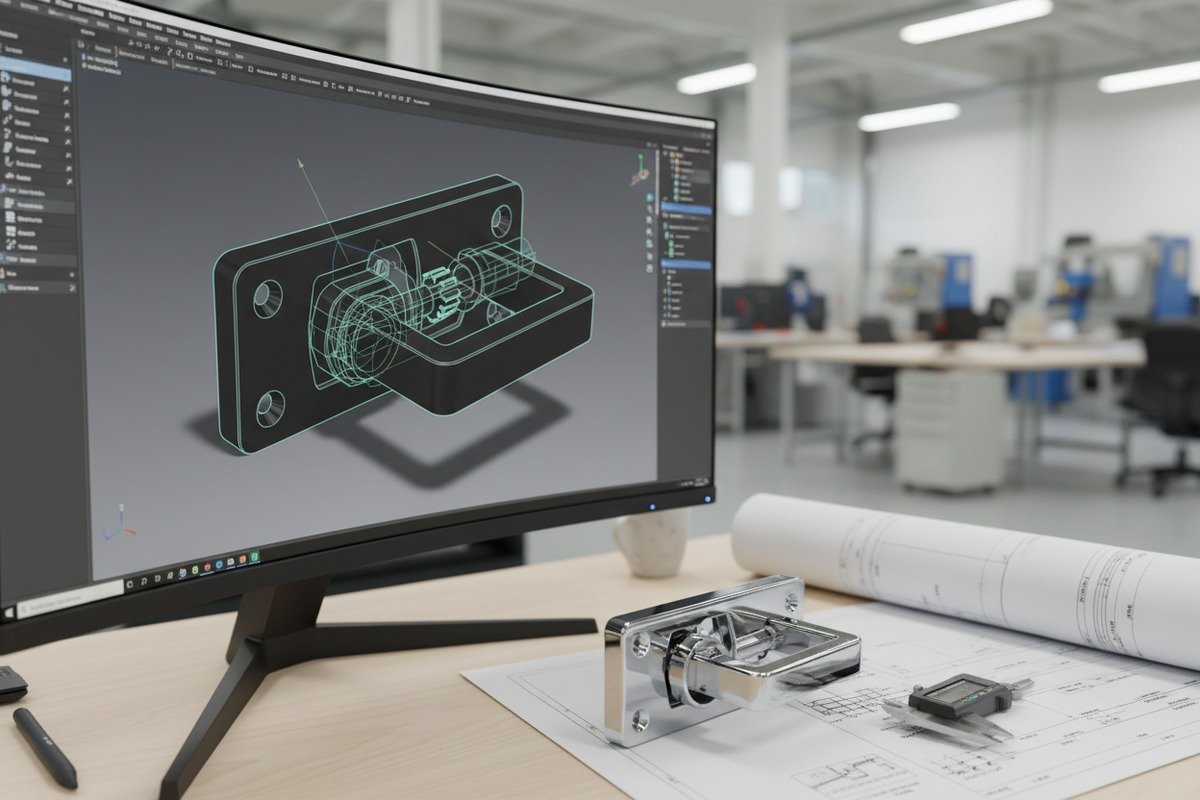
Finite Element Analysis (FEA)
Modern engineers use FEA simulations in CAD to test stress concentration and deformation before prototyping, saving time and cost.
Manufacturing Considerations and Industry Standards
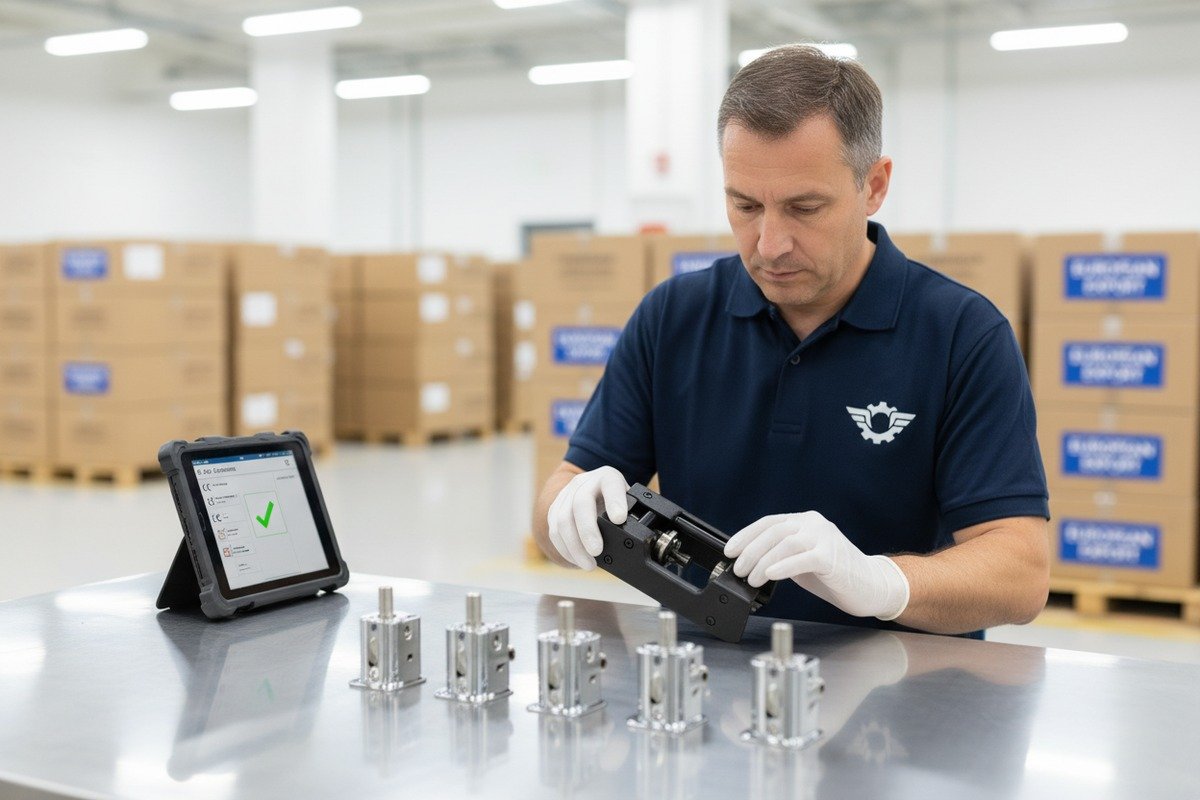
Even the best design fails without precise manufacturing. Industrial hinges must meet tight tolerances and surface integrity standards.
1. Tolerance Control
Machining accuracy ensures proper fit and pivot alignment. Misalignment increases wear and leads to premature failure.
2. Material Processing
Processes like forging, stamping, or CNC machining affect grain orientation and strength. Manufacturers often choose cold-rolled steel or extruded aluminum for consistency.
3. Finishing and Coating
Surface treatments improve corrosion resistance and visual appeal. Common finishes include black oxide, passivation, or nickel plating.
4. Compliance and Standards
Designs must comply with relevant ISO 20816, ANSI/BHMA, or RoHS standards to ensure reliability and safety.
Living Hinge vs. Metal Hinge: What’s the Difference?
A living hinge is a thin, flexible section of plastic connecting two rigid parts—commonly used in packaging or lightweight assemblies.
- Living hinge design guide PDF resources highlight that polypropylene and polyethylene are preferred for flexibility.
- Laser-cut living hinges extend this idea to sheet materials like wood or acrylic, offering design freedom in prototyping.
- Butterfly living hinges add ornamental value, useful for aesthetic product designs.
In contrast, metal hinges provide long-term stability under heavy loads, making them ideal for индустриални машини и access panels.
Bi-Stable and Specialty Hinges in Advanced Applications
Bi-stable hinges hold two stable positions without continuous torque—perfect for folding equipment panels or adjustable machinery covers. These advanced hinges often incorporate springs or friction mechanisms to enhance usability.
Other specialty hinges include:
- Friction control hinges (for controlled motion)
- Adjustable torque hinges (for tunable positioning)
- Smart hinges with embedded sensors (for Industry 4.0 monitoring)
These innovations allow predictive maintenance and smarter motion control in high-value equipment.
Industrial Hinge Design for Doors and Access Panels
Industrial doors require hinges that handle repeated cycles, vibration, and environmental exposure.
When designing for doors:
- Use continuous or butt hinges for stability.
- Apply corrosion-resistant coatings in outdoor or marine conditions.
- Evaluate load distribution and opening angle for ergonomic access.
“Industrial hinge design principles for door” guidelines often emphasize sealing performance and easy replacement—key for enclosure maintenance and worker safety.
Резюме
Industrial hinge design merges precision engineering with practical manufacturing. By mastering torque, materials, and corrosion control, manufacturers can ensure hinges that perform reliably across any environment. Explore our downloadable Industrial Hinge Design Principles PDF to deepen your understanding and optimize your next mechanical project.




 Bulgarian
  English
  Spanish
  French
  German
  Japanese
  Arabic
  Korean
  Swedish
  Dutch
Dutch  Greek
Greek  Hindi
Hindi  Hebrew
  Italian
  Vietnamese
  Thai
Thai  Czech
Czech  Slovak
  Hungarian
  Finnish