
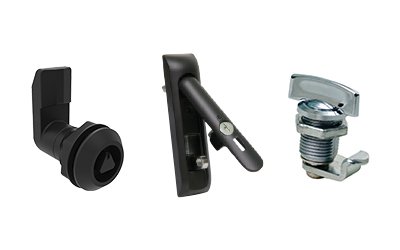
Dust and water are silent killers of electrical components NEMA 4X standards 1. Over the years, our production lines have supplied cam locks to enclosure manufacturers across North America and Europe, and we've seen firsthand what happens when ingress protection 2 fails — shorted circuits, corroded terminals, and costly downtime that could have been avoided with the right locking hardware.
IP65 and IP66 cam locks protect electrical enclosures by combining a dust-tight seal (rated "6" for complete particle exclusion) with water resistance against jets of varying pressure. Integrated gaskets, O-rings, and compression mechanisms around the lock cylinder block moisture and particulates from entering through the lock opening.
Understanding the difference between these two ratings — and knowing which one your application truly demands — can save thousands in repair costs and compliance headaches. Below, we break down the details so you can make a confident, informed decision for your next project.
How do I choose between IP65 and IP66 cam locks for my outdoor electrical enclosures?
Every year, our engineering team fields hundreds of questions from enclosure builders trying to decide between IP65 and IP66. The confusion is understandable — both ratings share the same dust protection, and the water resistance gap can seem minor on paper until you face a real-world failure.
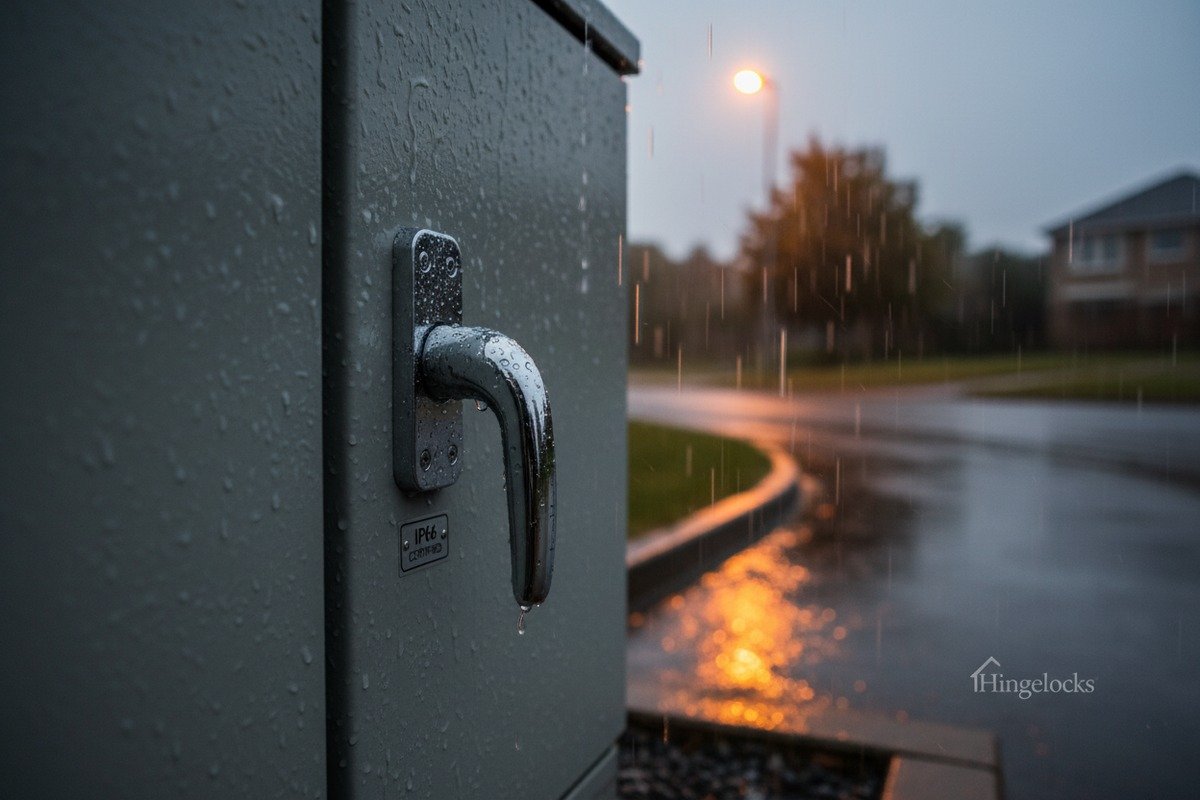
Choose IP65 cam locks for enclosures exposed to rain, splashes, or low-pressure cleaning. Choose IP66 when enclosures face high-pressure water jets, heavy storms, or industrial washdowns. Both are fully dust-tight, but IP66 handles roughly four times more water pressure than IP65.
Decoding the IP Rating System
IP stands for Ingress Protection, defined by the international standard IEC 60529 3. The first digit rates solid particle resistance on a scale of 0 to 6. The second digit rates liquid ingress resistance on a scale of 0 to 9K. Both IP65 and IP66 carry a first digit of "6," the highest solid protection level — meaning absolutely zero dust enters the enclosure. Not even particles smaller than 5 micrometers can get through.
The critical difference is the second digit. A "5" means the lock and enclosure withstand low-pressure water jets from a 6.3 mm nozzle at 30 kPa, delivering about 12.5 liters per minute. A "6" means resistance to powerful water jets from a 12.5 mm nozzle at 100 kPa, delivering 100 liters per minute. That is a massive jump in force.
When IP65 Is the Right Call
IP65 cam locks work well for sheltered outdoor enclosures, roadside telecom cabinets, residential solar junction boxes, and locations where rain and occasional garden-hose cleaning are the main threats. They cost less and still provide robust sealing. If your enclosure sits under an overhang or in a mild climate, IP65 is usually sufficient.
When You Need IP66
IP66 becomes necessary when enclosures face direct exposure to driving rainstorms, coastal wind-driven spray, or regular high-pressure washdowns in food processing plants 4 and factories. From our experience exporting to industrial automation companies in Europe, facilities that perform daily hose-downs of equipment almost always specify IP66 or higher. The cost difference per lock is small compared to the cost of replacing a failed control panel.
| Factor | IP65 Cam Lock | IP66 Cam Lock |
|---|---|---|
| Dust Protection | Complete (dust-tight) | Complete (dust-tight) |
| Water Jet Pressure | 30 kPa (low-pressure) | 100 kPa (high-pressure) |
| Water Flow Rate | 12.5 L/min | 100 L/min |
| Nozzle Size | 6.3 mm | 12.5 mm |
| Test Distance | 2.5–3 m | 2.5–3 m |
| Best For | Sheltered outdoor, light rain | Heavy storms, washdowns, marine |
| Relative Cost | Lower | Slightly higher |
A Practical Decision Framework
Ask yourself three questions. First, will the enclosure be directly exposed to heavy rain or pressurized water? If yes, go IP66. Second, is the enclosure in a food, pharmaceutical, or marine environment? If yes, IP66 minimum. Third, is the enclosure sheltered and only subject to occasional splashing? Then IP65 will do the job and save you a bit on budget.
One thing we always tell our customers: the cam lock is only as strong as its installation. Even an IP66 lock cannot protect an enclosure if the door gasket is misaligned or the panel cutout is oversized. Proper fit matters just as much as the rating.
What materials should I prioritize in IP66 cam locks to prevent corrosion in my industrial cabinets?
When we design cam locks for harsh-environment enclosures, material selection is the first conversation we have with our R&D team. The wrong alloy or coating can degrade a seal in months, turning an IP66-rated lock into a liability.
Prioritize 316 stainless steel for marine and chemical environments, 304 stainless steel for general industrial use, and zinc alloy with high-quality powder coating for cost-effective corrosion resistance. Pair these with silicone or EPDM gaskets that resist UV, ozone, and temperature extremes to maintain seal integrity over time.
Why Material Choice Directly Affects IP Rating Longevity
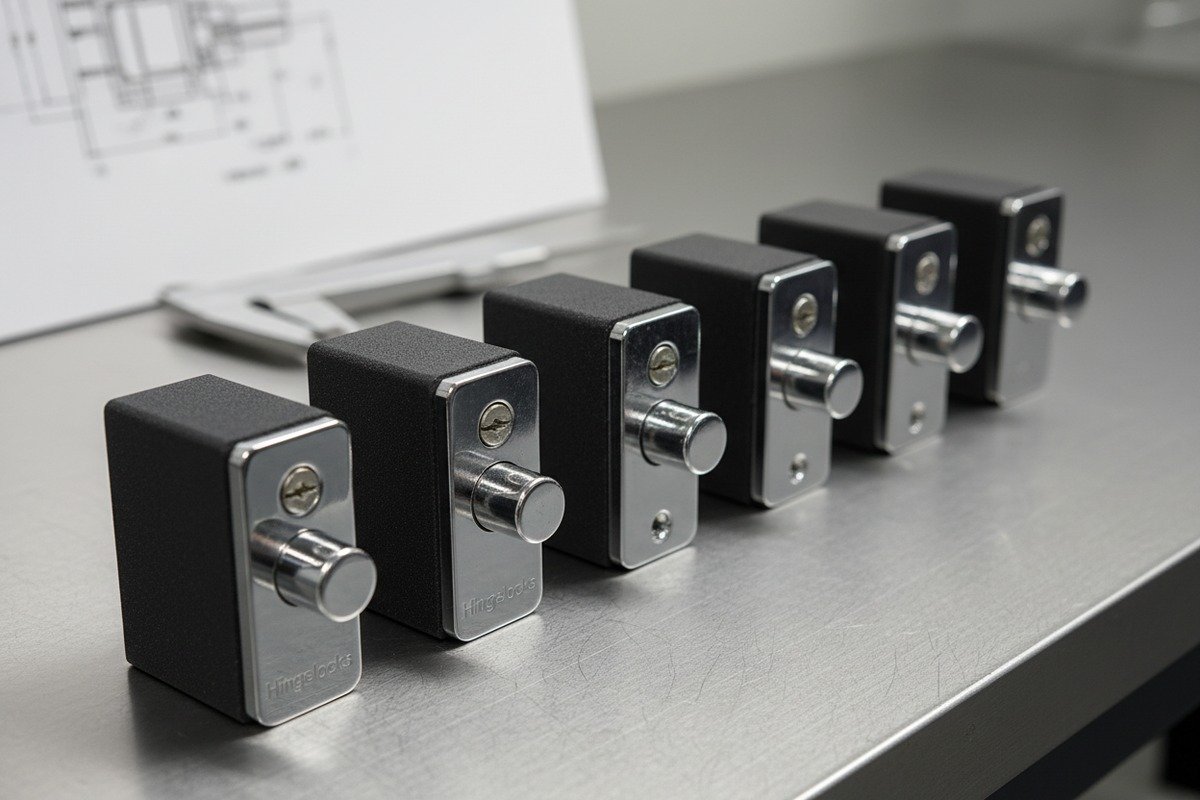
An IP66 cam lock is tested and rated at the time of manufacture. But corrosion attacks metal surfaces, pits seal grooves, and weakens gasket compression over time. If the lock body corrodes, the gasket no longer seats properly, and water finds its way in. This is why material selection is not just about aesthetics — it is about maintaining the IP rating for the life of the enclosure.
Metal Options at a Glance
| Material | Corrosion Resistance | Cost | Best Application |
|---|---|---|---|
| 316 Stainless Steel 5 | Excellent (marine-grade) | High | Coastal, chemical, food processing |
| 304 Stainless Steel 6 | Very good | Medium-high | General industrial, outdoor |
| Zinc Alloy 7 (powder-coated) | Good | Medium | Indoor industrial, sheltered outdoor |
| Zamak (die-cast zinc) | Moderate | Low-medium | Light-duty indoor cabinets |
| Engineered Polymer (PA/POM) | Excellent (no metal corrosion) | Low-medium | Chemical environments, lightweight needs |
Stainless Steel: The Gold Standard
For IP66 cam locks destined for coastal installations, offshore wind farms, or food-grade washdown areas, 316 stainless steel is the best option. It contains molybdenum, which dramatically improves resistance to chloride-induced pitting. We have customers building EV charging enclosures in Florida and along the Gulf Coast, and 316 is their non-negotiable requirement.
304 stainless steel is a strong choice for most general outdoor and industrial settings. It handles rain, humidity, and moderate chemical exposure well. It costs less than 316 and still offers a long service life when maintained properly.
Coatings and Surface Treatments
When budget constraints push customers toward zinc alloy, a quality powder coating or electroplating layer becomes essential. Our factory applies multi-layer treatments — zinc plating followed by chromate conversion and then a powder topcoat — to create a barrier against moisture. However, any scratch or chip in the coating exposes the base metal. That is why stainless steel often wins on total cost of ownership in truly harsh environments.
Gasket and Seal Materials
The lock body is only half the equation. The gasket or O-ring that sits between the lock and the enclosure panel must also resist the environment. Silicone gaskets 8 handle wide temperature ranges (−60 °C to +230 °C) and resist UV degradation. EPDM (ethylene propylene diene monomer) rubber 9 excels against ozone, weathering, and many chemicals. Neoprene offers a good balance for general applications. We always recommend matching the gasket material to the specific chemicals and temperatures present on site.
Specialized Coatings for Extreme Conditions
Some of our OEM clients request additional treatments like passivation for stainless steel (removes free iron from the surface), or PVD (physical vapor deposition) coatings for extreme abrasion resistance. In pharmaceutical cleanroom enclosures, electro-polished stainless steel cam locks reduce bacterial adhesion and simplify cleaning. These are niche requirements, but they show how deeply material science intersects with IP protection.
How can I ensure my cam locks maintain a waterproof seal during high-pressure washdowns?
High-pressure washdowns are one of the toughest tests any cam lock will face in the field. When we test our locks under simulated IP66 conditions in our facility — 100 liters per minute from a 12.5 mm nozzle at 3 meters — we learn quickly which design details matter and which are just marketing noise.
To maintain a waterproof seal during high-pressure washdowns, use cam locks with compression-style latching that actively presses the door gasket, verify the lock includes an integrated O-ring or gasket around the cylinder, ensure proper panel cutout tolerances, and perform routine inspections to replace degraded seals before they fail.
How Cam Locks Create Active Compression
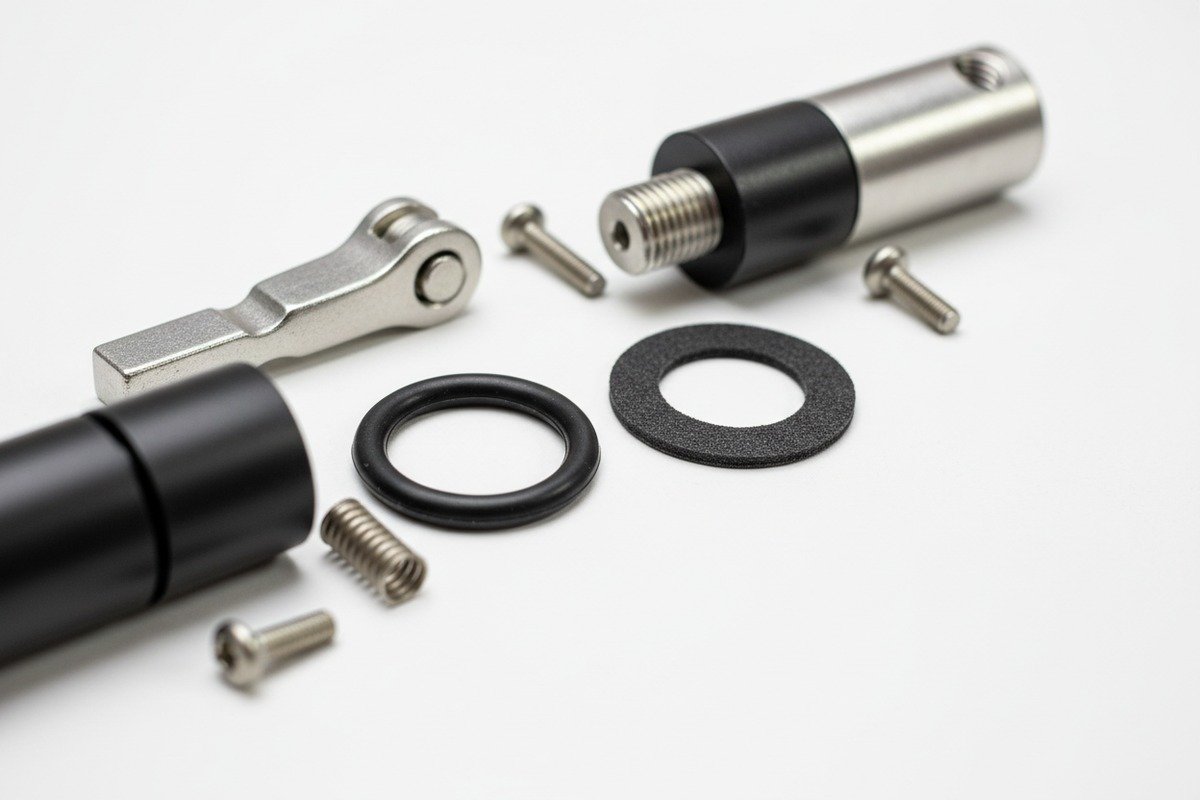
A cam lock does not simply hold a door shut. When you turn the key or actuator, the cam arm rotates and pulls the door tightly against the enclosure frame. This compression squeezes the door gasket, creating a continuous seal around the entire perimeter. The lock itself also needs its own seal — typically an O-ring around the cylinder barrel — to prevent water from entering through the keyhole or mounting hole.
This active compression is what separates a well-designed IP66 cam lock from a generic latch. Without adequate compression force, the door gasket may not deform enough to fill micro-gaps, and pressurized water will find its way through.
Critical Installation Practices
Even the best cam lock will fail if installed poorly. Here are the practices our technical team recommends to every customer:
- Panel cutout precision. The mounting hole must match the lock cylinder diameter within ±0.5 mm. An oversized hole allows water to bypass the O-ring.
- Gasket continuity. The door gasket must form an unbroken loop. Any gap, tear, or compression set (permanent deformation from aging) creates a potential leak path.
- Torque specification. Over-tightening the lock nut can crack the panel or deform the O-ring groove. Under-tightening leaves a gap. We provide torque specs with every lock for this reason.
- Flat mounting surface. Warped or uneven panels prevent uniform gasket compression. Check panel flatness before installation.
Anti-Vibration Features
In industrial settings, machinery vibration can gradually loosen a cam lock, reducing compression force over time. This is a common and often overlooked failure mode. Advanced cam lock designs use spring-loaded mechanisms, lock nuts with serrated flanges, or integrated locking detents that resist vibration-induced loosening. During our product development for enclosures used near heavy CNC machines and generators, we added anti-vibration washers as standard because field failures taught us this lesson the hard way.
Maintenance Schedule for Sustained IP Protection
| Maintenance Task | Recommended Frequency | Why It Matters |
|---|---|---|
| Visual inspection of gaskets and O-rings | Every 6 months | Catches cracks, compression set, or chemical damage early |
| Lubrication of cam mechanism | Every 12 months | Ensures smooth operation and full cam rotation for proper compression |
| Replacement of O-rings and gaskets | Every 2–3 years (or as needed) | Rubber compounds degrade from UV, ozone, and temperature cycling |
| Check mounting nut torque | Every 12 months | Vibration can loosen nuts, reducing seal compression |
| Inspect lock body for corrosion | Every 6 months | Corrosion on seal surfaces creates leak paths |
Dealing with Thermal Cycling
Outdoor enclosures experience temperature swings that cause metal and gasket materials to expand and contract. Over hundreds of cycles, this can create micro-gaps. Silicone and EPDM gaskets handle thermal cycling better than standard nitrile because of their wider operating temperature range and superior elastic memory. We recommend silicone O-rings for any enclosure that sees temperature swings greater than 40 °C between day and night or between seasons.
Neglecting maintenance is the number one reason IP-rated enclosures fail in the field. Our data from warranty returns shows that over 60% of reported seal failures trace back to degraded gaskets or loose mounting hardware — not defective locks. The lock was fine; the upkeep was not.
Will these IP-rated cam locks help my products meet the NEMA 4X standards my customers require?
This is one of the most frequent questions we receive from enclosure manufacturers selling into the North American market. NEMA and IP are related but not identical systems, and understanding the overlap — and the gaps — is critical to avoiding compliance headaches.
IP66 cam locks align closely with NEMA 4X water and dust protection requirements, but NEMA 4X also mandates corrosion resistance, which the IP system does not address. To meet NEMA 4X, pair IP66-rated cam locks made from corrosion-resistant materials like 316 stainless steel with a fully sealed enclosure design.

Understanding NEMA vs. IP
NEMA (National Electrical Manufacturers Association) ratings 10 are used primarily in the United States and Canada. They define enclosure performance more broadly than IP ratings. While IP focuses strictly on dust and water ingress measured under controlled lab conditions, NEMA ratings also consider corrosion resistance, gasket aging, construction practices, and real-world environmental factors like ice formation and oil exposure.
NEMA 4X is one of the most commonly specified ratings for outdoor electrical enclosures. It requires protection against windblown dust, rain, splashing water, hose-directed water, and corrosion. The "X" suffix specifically denotes additional corrosion resistance.
How IP Ratings Map to NEMA 4X
There is no perfect one-to-one conversion between IP and NEMA. However, industry practice and NEMA's own guidelines provide a useful crosswalk.
| NEMA Rating | Approximate IP Equivalent | Key Additional NEMA Requirements |
|---|---|---|
| NEMA 1 | IP10 | Indoor use, falling dirt |
| NEMA 3R | IP14 | Rain, sleet, ice formation |
| NEMA 4 | IP66 | Hose-directed water, windblown dust |
| NEMA 4X | IP66 + corrosion resistance | Same as NEMA 4, plus corrosion protection |
| NEMA 6P | IP68 | Prolonged submersion, corrosion resistance |
The critical takeaway: an IP66 cam lock satisfies the ingress protection portion of NEMA 4X, but it does not automatically satisfy NEMA 4X unless it is also built from corrosion-resistant materials. A chrome-plated steel cam lock rated IP66 would meet the water and dust requirements but might fail the corrosion requirement if the plating degrades in a salt-spray environment.
What Your Customers Actually Need
When a buyer specifies NEMA 4X, they typically need the complete package: water resistance, dust exclusion, and long-term corrosion resistance. Here is what we recommend to our distribution partners:
- Specify IP66 cam locks made from 304 or 316 stainless steel.
- Ensure the lock gaskets are rated for the expected chemical and temperature exposure.
- Request salt-spray test documentation (ASTM B117) — a minimum of 500 hours for 304 SS, and 1,000+ hours for 316 SS.
- Verify that the entire enclosure assembly (not just individual components) has been tested to NEMA 4X.
The Compliance Gap Many Overlook
A common mistake is assuming that using all IP66-rated components automatically results in a NEMA 4X enclosure. NEMA 4X is a system-level rating. The enclosure, hinges, locks, gaskets, and cable entries must all work together. We have seen cases where a customer installed a perfectly good IP66 cam lock but used a low-quality door gasket, and the complete assembly failed NEMA 4X testing. Our approach is to supply cam locks that are tested and documented as IP66 with corrosion-resistant construction, so the lock is never the weak link in the system.
Meeting Evolving Industry Demands
The push for NEMA 4X compliance is growing rapidly in renewable energy, EV charging infrastructure, and 5G telecom. Enclosures for solar inverters and battery energy storage systems often sit outdoors in extreme heat, coastal environments, or desert dust. We have expanded our IP66 product line specifically to address these markets, offering cam locks in both keyed and electronic (RFID) variants that maintain full IP66 and corrosion-resistance performance. The trend toward smart access — keyless locks with IP66 ratings — is accelerating, especially for remote sites where physical key management is impractical.
Conclusion
Choosing the right IP-rated cam lock is a decision that directly impacts enclosure reliability, compliance, and long-term cost. Whether you need IP65 for sheltered outdoor cabinets or IP66 for high-pressure washdown environments, the combination of proper rating selection, corrosion-resistant materials, correct installation, and ongoing maintenance will keep your electrical enclosures sealed and your customers satisfied.
Footnotes
- Offers comprehensive information about NEMA 4X enclosure standards. ↩︎
- Wikipedia provides a comprehensive and authoritative definition of Ingress Protection (IP) ratings. ↩︎
- The official IEC website is the most authoritative source for information on the IEC 60529 standard. ↩︎
- Offers information on the specific requirements for enclosures in food processing. ↩︎
- IQS Directory offers a detailed overview of the uses, grades, and compositions of 316 stainless steel, making it a suitable replacement. ↩︎
- Provides information on the characteristics and uses of 304 stainless steel. ↩︎
- Explains the properties and applications of zinc alloys in manufacturing. ↩︎
- Describes the properties and benefits of silicone gaskets. ↩︎
- Provides details on the characteristics and uses of EPDM rubber. ↩︎
- RealPars offers a comprehensive guide to NEMA ratings, explaining their purpose and classifications. ↩︎



 Thai
Thai  English
  Spanish
  French
  German
  Japanese
  Arabic
  Korean
  Swedish
  Dutch
Dutch  Greek
Greek  Hindi
Hindi  Hebrew
  Italian
  Vietnamese
  Bulgarian
  Czech
Czech  Slovak
  Hungarian
  Finnish