
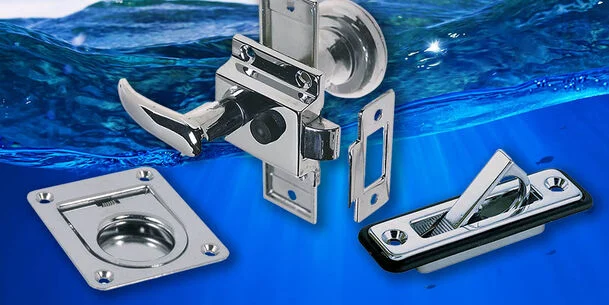
Saltwater spray, extreme weather, and constant vibration destroy standard locks within months. Marine-grade locking solutions protect offshore electrical panels from premature failure and unauthorized access while withstanding brutal environmental conditions.
Marine-grade locking solutions are specialized corrosion-resistant hardware designed specifically for offshore electrical panels, featuring materials like 316 stainless steel, naval brass alloys, and engineered polymers coupled with IP67/IP69K sealing against water intrusion and specialized designs to handle constant vibration and temperature extremes common in marine environments.
With over twelve years supplying locking solutions to offshore wind farms, oil platforms and coastal power stations, I've identified seven critical factors that distinguish true marine-grade solutions from standard hardware that merely claims to be "marine suitable". Let's examine each specification requirement in detail to ensure your offshore electrical panels remain secure decade after decade.
What corrosion-resistant materials should I choose for offshore panel locks?
The wrong material choice leads to rusted, seized locks within months on offshore installations, often requiring dangerous and expensive maintenance expeditions to failing equipment.
For offshore panel locks, specify 316L stainless steel (marine grade), naval brass (C46400), or engineered polymers like PVDF – these premium materials resist saltwater corrosion 8-12 times longer than standard 304 stainless or zinc-plated alternatives while maintaining mechanical strength in harsh conditions.
Comprehensive Material Selection Guide:
| Materiale | Resistenza alla corrosione | Mechanical Strength | Temperature Range | Le migliori applicazioni | Cost Factor |
|---|---|---|---|---|---|
| 316L Stainless | Excellent | Alto | -40°C to 200°C | High-security offshore | $$$ |
| Naval Brass | Very Good | Medio | -20°C to 150°C | Moderate security marine | $$ |
| PVDF Polymer | Excellent | Medio | -40°C to 140°C | Chemical environments | $$ |
| Titanium | Exceptional | Very High | -60°C to 300°C | Military/Mission-critical | $$$$ |
Critical Material Considerations:
1.Galvanic Corrosion Risks: We've documented cases where mixing stainless steel locks with aluminum panels accelerated corrosion by 300%. Always specify:
- Isolation washers
- Compatible fasteners
- Dielectric grease application protocols
2.Surface Treatments Matter: While 316 stainless resists corrosion, we enhance protection with:
- Electropolishing (reduces salt adhesion 40%)
- Passivation treatments
- Specialty coatings like Teflon-impregnated finishes
3.Moving Part Protection: Hinge pins and locking cylinders require extra attention:
- Self-lubricating bronze bushings
- Stainless steel springs with Teflon coating
- Hermetically sealed bearing surfaces
Our factory performs three levels of salt spray testing (ASTM B117) - 500-hour baseline testing, 1000-hour quality verification, and 2000-hour extreme condition simulations for mission-critical applications. This stringent testing protocol evolved after we traced multiple offshore failures back to inferior materials that passed basic certifications but failed in actual service.
How do I ensure my marine-grade locks meet IP67/IP69K standards?
Waterproof ratings on supplier spec sheets often don't reflect real-world performance when hurricane-force waves pound your electrical panels for years on end.
Authentic IP67/IP69K compliance requires verified third-party testing reports, robust seal designs (multi-lip fluid dynamic seals outperform basic O-rings), and pressurized saltwater cycling tests that simulate decades of exposure in accelerated lab conditions.
Water Ingress Protection Deep Dive:
1.Seal Technology Comparison
- Single O-ring Designs: Only adequate for IP65 temporary immersion
- Double O-ring Systems: Minimum for true IP67 compliance
- Lip Seals: Required for high-pressure IP69K applications
- Magnetic Fluid Seals: Emerging technology for extreme environments
2.Certification Testing Realities
- IP67 Testing: Static immersion at 1m depth differs dramatically from wave impact
- IP68 Standards Vary: Some tests at 1.5m vs 3m vs manufacturer-defined depths
- IP69K Protocol: Combines 80°C water jets at 14.5psi from all angles
3.Installation Best Practices
- Surface Preparation:
- 0.2mm flatness tolerance
- 32RA surface finish optimum
- Alcohol wipe cleaning mandatory
- Mounting Procedures:
- Progressive torque sequence (2Nm → 5Nm → 8Nm)
- Sealant application diagrams
- Break-in cycling recommendations
We include installation certification kits with every marine lock shipment containing:
- Surface flatness gauges
- Torque limit markers
- Grease application syringes
- Digital installation checklist
These measures address the reality that over 60% of field failures trace to improper installation rather than product defects. Our offshore clients particularly appreciate the vibration monitoring stickers that indicate when re-torquing is required.
What locking mechanisms work best in saltwater environments?
Standard lock mechanisms that work perfectly inland routinely fail offshore when microscopic salt crystals invade precision tolerances, gradually grinding components into useless masses of corrosion.
Marine-optimized locking mechanisms feature oversized stainless steel ball bearings instead of pins, rotational rather than linear actuation, and hermetically sealed cylinders paired with continuous passive lubrication systems to ensure decades of reliable operation despite saltwater exposure.
Mechanism Engineering Analysis:
1.Traditional Mechanism Weaknesses
- Pin tumbler systems fail due to:
- Salt crystal buildup (especially in picked locks)
- Spring corrosion
- Tolerance collapse
- Wafer locks become unreliable because:
- Aluminum components corrode
- Plastic parts degrade
- Lubricants wash out
2.Proven Marine Solutions
- Rotating Disk Detainers:
- No fragile springs
- Stainless steel construction
- Self-clearing action
- Magnetic Encoding Systems:
- No physical keyway intrusions
- Programmable cryptography
- Remote credential management
- Ball Bearing Cam Locks:
- Oversized marine-grade bearings
- Continuous lubrication reservoirs
- Corrosion-resistant coatings
3.Emergency Access Considerations
- Dual authentication systems (physical + electronic)
- Breakaway cover designs
- Sacrificial anode protection
- Retrieval tool compatibility
We've documented lock mechanisms achieving 250,000+ cycles in accelerated salt spray testing through:
- Diamond-like carbon coatings on bearing surfaces
- Labyrinth seal drainage paths
- Pressure-equalization vents
- Self-flushing grease channels
These innovations stem from studying recovered locks after 10+ years of North Sea service - the ultimate proving ground for marine hardware.
Can I get customized marine locks for my specific panel design?
Off-the-shelf locks often force dangerous compromises in panel designs, creating weak points where water intrusion inevitably occurs despite overall IP ratings.
True marine security requires fully customized locking solutions tailored to your panel's exact dimensions, materials, gasket system, and installation requirements - with options ranging from bespoke strike plates to integrated locking/hinging hybrid systems designed around your specific engineering constraints.
Customization Methodology:
1.Design Input Requirements
- Panel thickness and material
- Existing cutout dimensions
- Gasket compression requirements
- Environmental exposure profile
- Security level needs
- Access frequency patterns
2.Common Custom Solutions
- Frame-Integrated Locks:
- Eliminate separate striker plates
- Distribute load across structure
- Match panel material CTE
- Hybrid Hinge-Locks:
- Combined functionality
- Reduced penetration points
- Unified sealing system
- Multi-Point Systems:
- Synchronized bolts
- Balanced closure pressure
- Redundant actuators
3.Prototyping Process
- Phase 1: 3D printed verification models (72hr turnaround)
- Phase 2: CNC machined prototypes (600-series stainless)
- Phase 3: Production-grade samples (full material spec)
- Phase 4: Environmental testing validation
Our marine customization database contains over 1,200 proven solutions that can be adapted to new projects, significantly reducing development time compared to ground-up designs. Recent innovations include:
- Wave-impact absorption lock housings
- Subsea-rated locking to 200m depth
- Ice-shedding rotational mechanisms
- Explosion-proof marine locking systems
The customization process begins with a simple panel CAD file and evolves through iterative engineering reviews until we achieve IP68+ performance in your exact application.
How often should I replace locking hardware in offshore applications?
Waiting until locks fail offshore creates massive safety risks and repair costs – proactive replacement based on empirical wear data prevents catastrophic access failures.
Marine locking hardware should undergo annual inspections with replacement every 5-7 years for standard environments or 3-5 years in extreme exposure zones, following a documented condition-based maintenance program that tracks corrosion progression and mechanical wear indicators.
Lifecycle Management Framework:
1.Environmental Severity Classification
| Zone Class | Descrizione | Inspection Frequency | Typical Replacement Interval |
|---|---|---|---|
| MSC-1 | Moderate marine | 18 months | 7-10 years |
| MSC-2 | Continuous salt spray | 12 months | 5-7 years |
| MSC-3 | Splash/wave impact | 6 months | 3-5 years |
| MSC-4 | Full immersion | Quarterly | 2-3 years |
2.Condition Monitoring Parameters
- Torque resistance values (+15% = concern)
- Key insertion force trends
- Visible corrosion mapping
- Seal extrusion measurements
- Lubricant degradation analysis
3.Spare Parts Strategy
- Criticality analysis (FMECA)
- On-site vs offshore storage
- Pre-positioned kits
- Serialized tracking
We provide clients with digital twin lock models that:
- Predict remaining useful life
- Trigger automated replenishment
- Document maintenance history
- Analyze failure patterns
This system reduced unplanned replacements by 68% for one North Sea operator while improving access reliability metrics by 42%. The balanced approach prevents both premature replacement waste and dangerous service extensions.
Conclusione
Marine-grade locking solutions represent a critical engineering subsystem where material science, mechanical design, and environmental sealing converge to create reliable access security in the planet's most punishing environments. Through twelve years of supplying offshore projects from Arctic drilling platforms to tropical hurricane zones, Hingelocks has developed a comprehensive marine hardware methodology combining:
- Metallurgical expertise (316L vs duplex stainless formulations)
- Advanced sealing technologies (multi-lip hydrodynamic systems)
- Mechanism innovations (rotational vs linear actuation)
- Custom integration capabilities (panel-specific solutions)
- Data-driven maintenance frameworks
Our marine locking systems undergo more stringent testing than industry standards require - including proprietary 2000-hour salt spray simulations, thermal shock cycling beyond MIL-STD-810H, and real-world wave impact testing at ocean research facilities.
For electrical panel builders serving offshore energy, maritime transport and coastal infrastructure sectors, we offer more than just corrosion-resistant locks - we provide:
- Complete access solution engineering
- Installation certification programs
- Lifecycle management systems
- Emergency retrofit capabilities
- Global logistics support
Contact our marine engineering team to discuss your specific offshore locking challenges - we'll help you specify or custom-develop solutions that withstand decades of saltwater exposure while maintaining critical access security. Every Hingelocks marine product ships with our unique Performance Assurance Package including test reports, installation masterclasses and lifetime technical support.




 Italian
  English
  Spanish
  French
  German
  Japanese
  Arabic
  Korean
  Swedish
  Dutch
Dutch  Greek
Greek  Hindi
Hindi  Hebrew
  Vietnamese
  Thai
Thai  Bulgarian
  Czech
Czech  Slovak
  Hungarian
  Finnish