
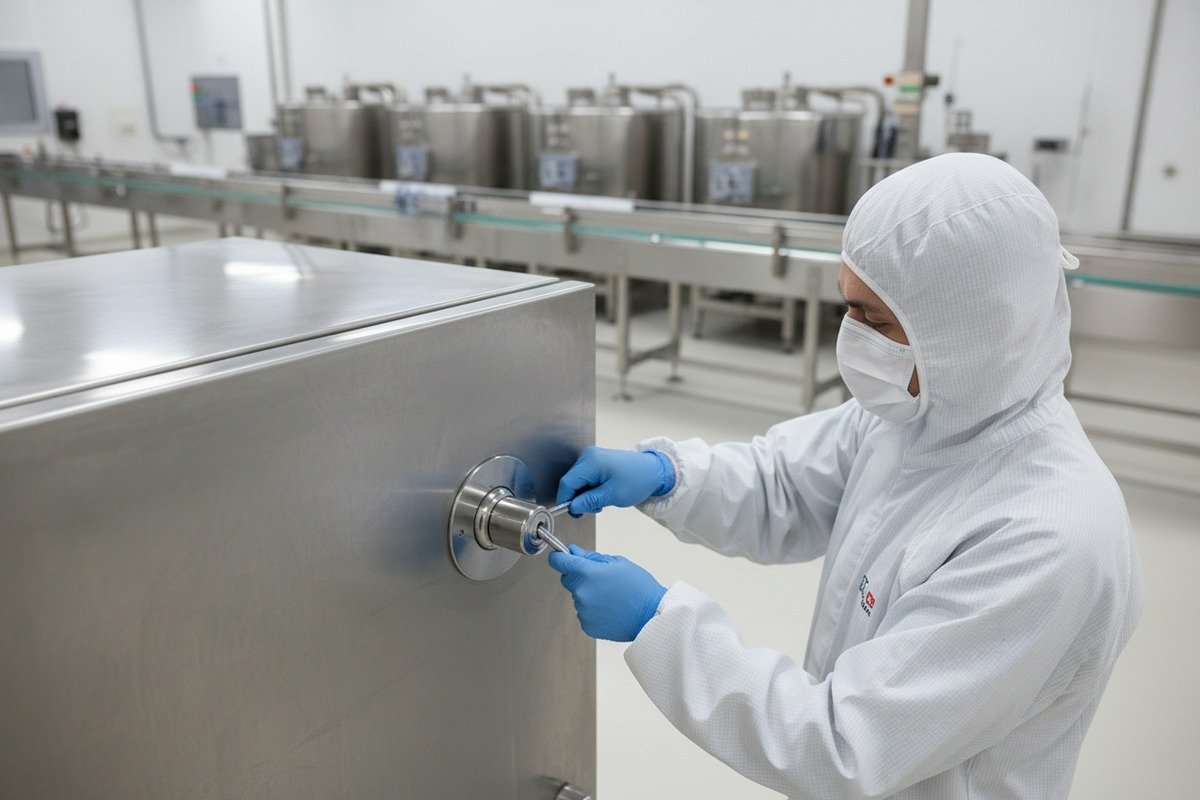
Every year, our production team fields urgent calls from food processors who failed hygiene audits because of one overlooked detail—their cabinet locks.
To choose food-grade stainless steel electrical cabinet locks, prioritize 304 or 316 grade stainless steel, verify IP69K and NSF/3A certifications, select smooth crevice-free designs with FDA-compliant silicone seals, and partner with an OEM supplier experienced in hygienic enclosure hardware for washdown environments.
Below, we break down the exact material grades, certifications, design features, and supplier criteria you need to make the right decision for your facility 304 or 316 grade stainless steel 1. Let's start with the steel itself.
Which grade of stainless steel should I prioritize for my food-grade cabinet locks?
Over the past 35 years on our factory floor in Xi'an, we have tested and supplied thousands of lock variants—and the steel grade question comes up in nearly every food-industry project NSF/ANSI/3-A 14159-1 standards 2.
For most food processing environments, SUS304 stainless steel is the standard choice. Upgrade to 316 or 316L when your facility handles chlorides, brine, or aggressive sanitizers, as these grades offer superior pitting and crevice corrosion resistance essential for seafood, dairy, and chemical-heavy washdown zones.
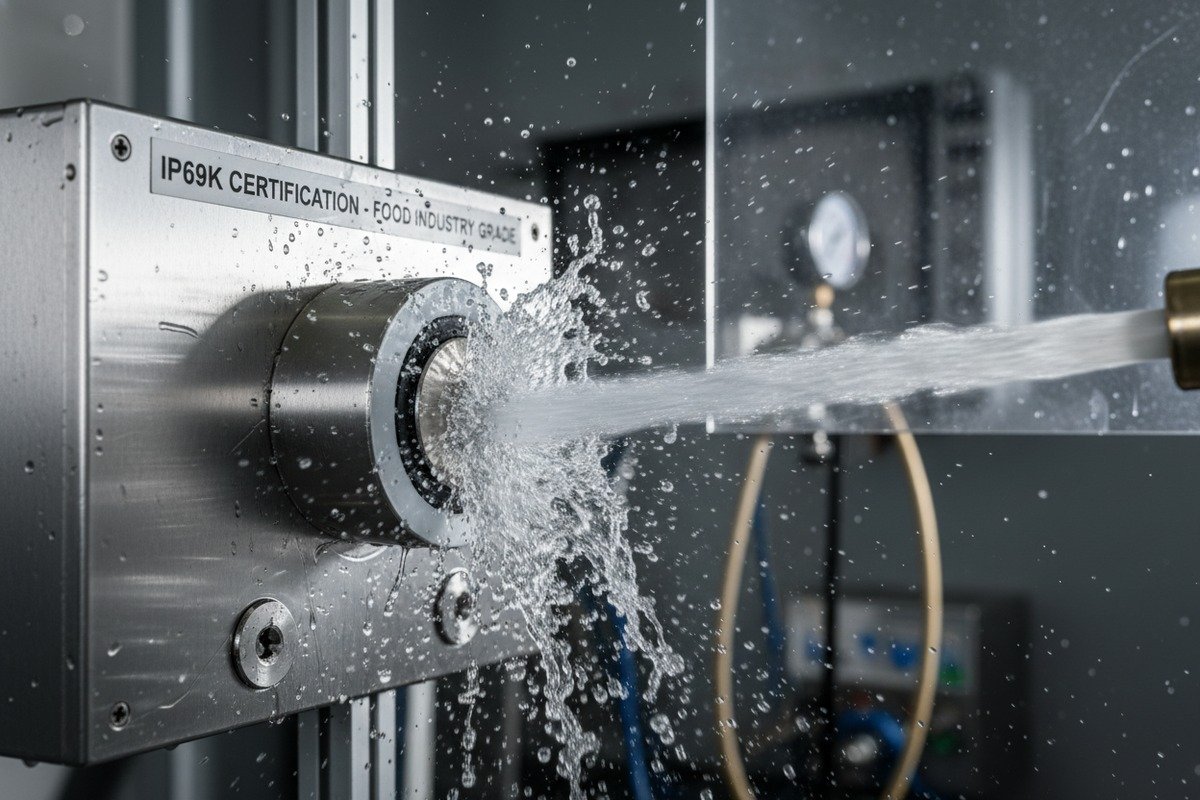
Why the Grade Matters
Stainless steel is not a single material. It is a family. The two grades that dominate food-grade hardware are 304 and 316. Both are austenitic, non-magnetic, and resist corrosion far better than carbon steel. But the difference lies in their chemistry—specifically molybdenum content.
Grade 316 contains 2–3% molybdenum. This gives it a clear edge against chloride attack. If your plant processes seafood, pickled goods, or uses chlorine-based sanitizers daily, 304 may develop pitting within months. We have seen this firsthand on returned locks from a shrimp processing client in Louisiana.
304 vs. 316: A Practical Comparison
| Feature | SUS304 | SUS316 / 316L |
|---|---|---|
| Molybdenum Content | None | 2–3% |
| Chloride Resistance | Moderate | Vysoká |
| Cost (relative) | Lower | 20–30% higher |
| Common Use | Bakeries, dry goods, general F&B | Seafood, dairy, meat, pharma |
| Surface Finish Options | Mirror polish, 400-grain brushed | Mirror polish, 400-grain brushed |
| Magnetic? | Slightly (after cold work) | No |
| Typical Lifespan in Washdown | 5–8 years | 10+ years |
Surface Finish Is Equally Critical
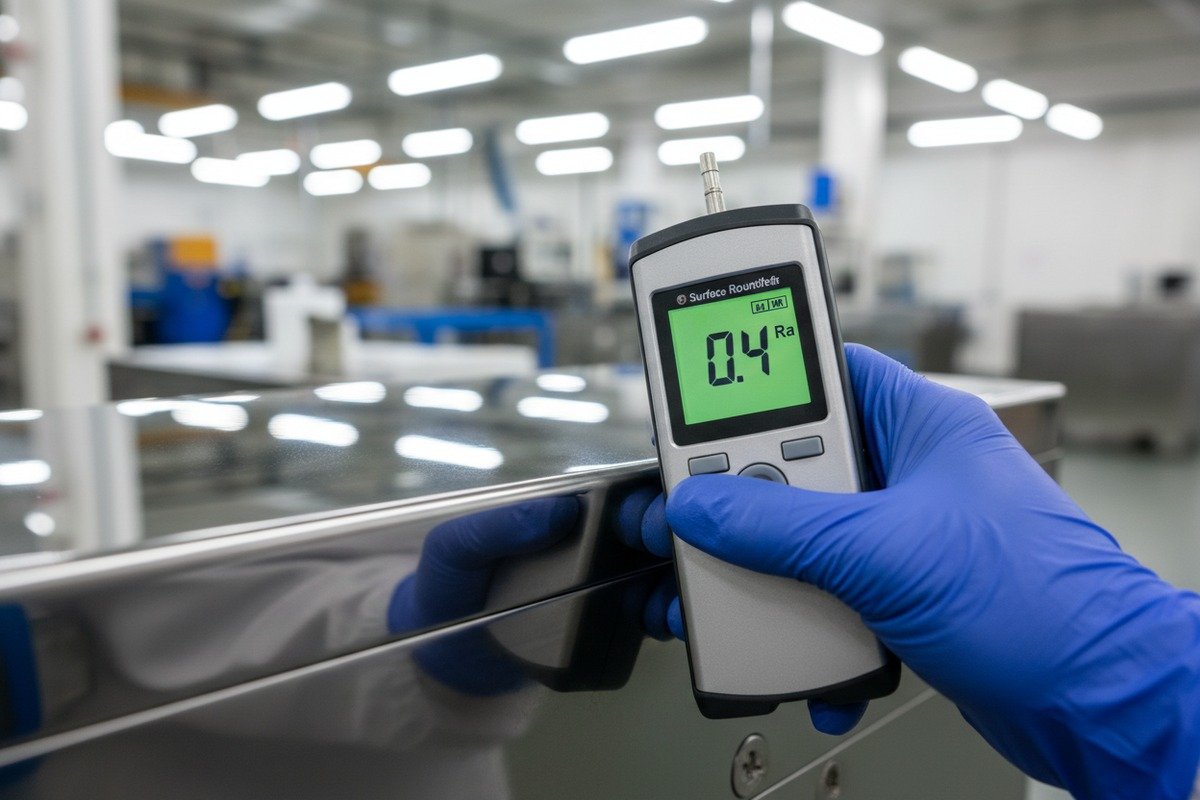
Even the best grade fails if the surface is rough. Bacteria cling to microscopic valleys in poorly finished metal. The industry benchmark is a surface roughness of ≤0.8 µm Ra 3 (roughness average). Our engineers routinely specify 400-grain brushed or mirror-polished finishes on every food-grade lock we ship. This is not cosmetic. It is functional. A smooth surface cleans faster, resists biofilm formation 4, and passes UV residue tests that rough surfaces fail.
Coatings: Skip Them
Some suppliers offer painted or powder-coated locks. Avoid these for food zones. Coatings chip. Chips become contamination. Chips create crevices where bacteria hide. Bare, polished stainless steel is the only acceptable surface in a primary food contact or splash zone.
When 304 Is Enough
Not every zone in a food plant demands 316. Dry storage areas, control rooms adjacent to production, and low-moisture packaging lines often do well with 304. The key is to map your facility by corrosion risk. We help our OEM clients do this during the quoting stage, so they don't over-specify and overspend—or under-specify and face recalls.
How do I verify if my electrical cabinet locks meet international hygiene and IP69K standards?
When we ship locks to food and pharma clients in North America and Europe, the first documents they request are certification reports—not catalogs.
Verify compliance by demanding third-party test certificates for IP69K (DIN 40050 Part 9), NEMA 4X, and NSF/ANSI/3-A 14159-1 standards. Cross-check that locks carry EHEDG or equivalent hygienic design validation, and confirm FDA-compliant materials for seals and gaskets through documented material traceability reports.
The Alphabet Soup of Standards—Decoded
Food-grade hardware sits at the intersection of multiple overlapping standards. Here is a quick reference to the ones that matter most for electrical cabinet locks.
| Standard / Rating | What It Covers | Why It Matters for Locks |
|---|---|---|
| IP66 | Dust-tight + powerful water jets | Basic washdown protection |
| IP69K 5 | High-pressure, high-temp close-range spray (80°C, 30 bar) | Survives CIP/COP cleaning cycles |
| NEMA 4X | Corrosion resistance + washdown | Required in many US food plants |
| NSF/ANSI/3-A 14159-1 | Hygienic design of food equipment | Validates no bacterial traps in design |
| DIN EN 1672-2 | Safety and hygiene of food machinery | EU standard for equipment in contact zones |
| EHEDG 6 | Hygienic engineering and design guidelines | Gold standard for cleanability validation |
| FSMA (FDA) | Preventive controls for human food | Mandates sanitary equipment across US plants |
How to Actually Verify
Asking a supplier "Is this IP69K rated?" is not enough. Here is what our quality team recommends:
- Request the test report, not just the rating. A legitimate IP69K test follows DIN 40050 Part 9. The report should name the accredited lab, the test date, and the exact product model tested.
- Check the seal material documentation. FDA 21 CFR 177.2600 covers silicone and rubber in food contact. Blue-dyed silicone is now the industry norm because blue is the least common food color—making any seal fragment instantly visible during inspection.
- Ask for material certificates (MTR/MTC). These trace the stainless steel from mill to finished lock. Our facility provides EN 10204 3.1 certificates 7 on request. If your supplier cannot, that is a red flag.
- Look for EHEDG certification. Not all locks have it. But if a supplier claims "hygienic design," EHEDG validation is the most credible proof.
The 2018 Wake-Up Call
The CDC reported over 20 multistate foodborne outbreaks and more than 200 product recalls in 2018 alone. Many traced back to equipment that could not be properly sanitized. Enclosures and their locks were among the weak points. Since then, auditors have become far more aggressive about checking hardware certifications during HACCP audits 8 and IFS inspections.
Real-World Test: UV Residue Inspection
One of the most revealing tests is simple. Clean the lock with a standard 30-bar, 30-second washdown. Then inspect under UV light. Standard locks with crevices, external hinges, and PU foam seals almost always show residues. Hygienic locks—smooth, sealed, rounded—come out clean. We have run this test in our own lab and the difference is stark.
Can these stainless steel locks withstand my facility's frequent high-pressure chemical washdowns?
Our R&D lab runs accelerated washdown simulations before any food-grade lock leaves the facility—because real-world cleaning is far harsher than most spec sheets suggest.
Yes, properly designed stainless steel locks withstand frequent high-pressure chemical washdowns when they use 304 or 316 steel with ≤0.8 µm polished surfaces, FDA-compliant silicone gaskets, rounded crevice-free geometry, and validated IP69K sealing. The lock must be tested against your specific chemicals and cleaning cycles to confirm long-term durability.
What "Frequent Washdown" Really Means
In a typical meat or dairy plant, enclosures and their locks face 2–4 full washdown cycles per day. Each cycle involves:
- Pre-rinse with cold water to remove gross debris
- Foam or gel application of alkaline or acidic detergent (pH 2–12)
- High-pressure rinse at 30+ bar, often at 60–80°C
- Sanitizer application (quaternary ammonium, peracetic acid, or chlorine-based)
- Final rinse
Over a year, that is 700–1,400 aggressive cleaning cycles. Multiply that across a 10-year expected service life, and you need hardware that can survive 7,000–14,000 washdowns without seal failure, surface degradation, or mechanical wear.
The Three Failure Points
Most lock failures in washdown environments trace to three areas:
- Seal degradation. PU foam seals swell, crack, and trap bacteria. Silicone resists chemicals far better. Blue FDA-compliant silicone is the current best practice.
- Surface corrosion. Even 304 steel can pit if the surface finish is too rough or if cleaning chemicals pool in crevices. Mirror-polished surfaces and rounded edges eliminate pooling zones.
- Mechanical wear. Quarter-turn locks and compression latches with internal springs can fail if water enters the mechanism. IP69K-rated locks with internal sealing prevent this.
Design Features That Survive
When we design locks for washdown applications, our engineers follow these rules:
- No undercuts or dead spaces. Every surface must be self-draining.
- Sloped tops. On enclosures and lock housings, a slope of at least 3° prevents water from pooling.
- Concealed mechanisms. The locking cam and spring sit behind the seal line, not exposed to spray.
- One-piece gaskets. Segmented gaskets create joints. Joints create bacterial traps. One-piece silicone gaskets eliminate this.
- Internal hinges. External hinges are impossible to clean fully. Our hygienic enclosure locks pair with internal hinge systems.
Chemical Compatibility Quick Reference
| Cleaning Agent | SUS304 | SUS316 | Silicone Seal | PU Foam Seal |
|---|---|---|---|---|
| Sodium hydroxide (pH 13) | Good | Excellent | Excellent | Poor—swells |
| Phosphoric acid (pH 2) | Fair | Good | Excellent | Poor—degrades |
| Peracetic acid | Good | Excellent | Excellent | Fair |
| Chlorine-based sanitizer | Fair—risk of pitting | Good | Excellent | Poor |
| Quaternary ammonium | Excellent | Excellent | Excellent | Fair |
| Hot water (80°C, 30 bar) | Excellent | Excellent | Excellent | Poor—deforms |
This table is a core reference we share with every OEM client during the design review. If your facility uses chlorine-based sanitizers daily, 316 steel and silicone seals are non-negotiable.
Vibration and Thermal Cycling
Washdown environments also introduce rapid temperature swings. A lock at ambient 5°C in a cold room gets blasted with 80°C water, then returns to 5°C within minutes. This thermal cycling 9 stresses seals and fasteners. Our locks use silicone rated for –60°C to +230°C continuous service, so thermal shock is not a concern. The latch mechanism itself must also be vibration-proof, since production lines generate constant mechanical vibration that can loosen conventional fasteners.
What should I look for in an OEM partner to customize sanitary locks for my specific enclosure?
Having worked with enclosure manufacturers, system integrators, and food equipment OEMs across North America and Europe for over three decades, we know that the right supplier relationship makes or breaks a hygiene program.
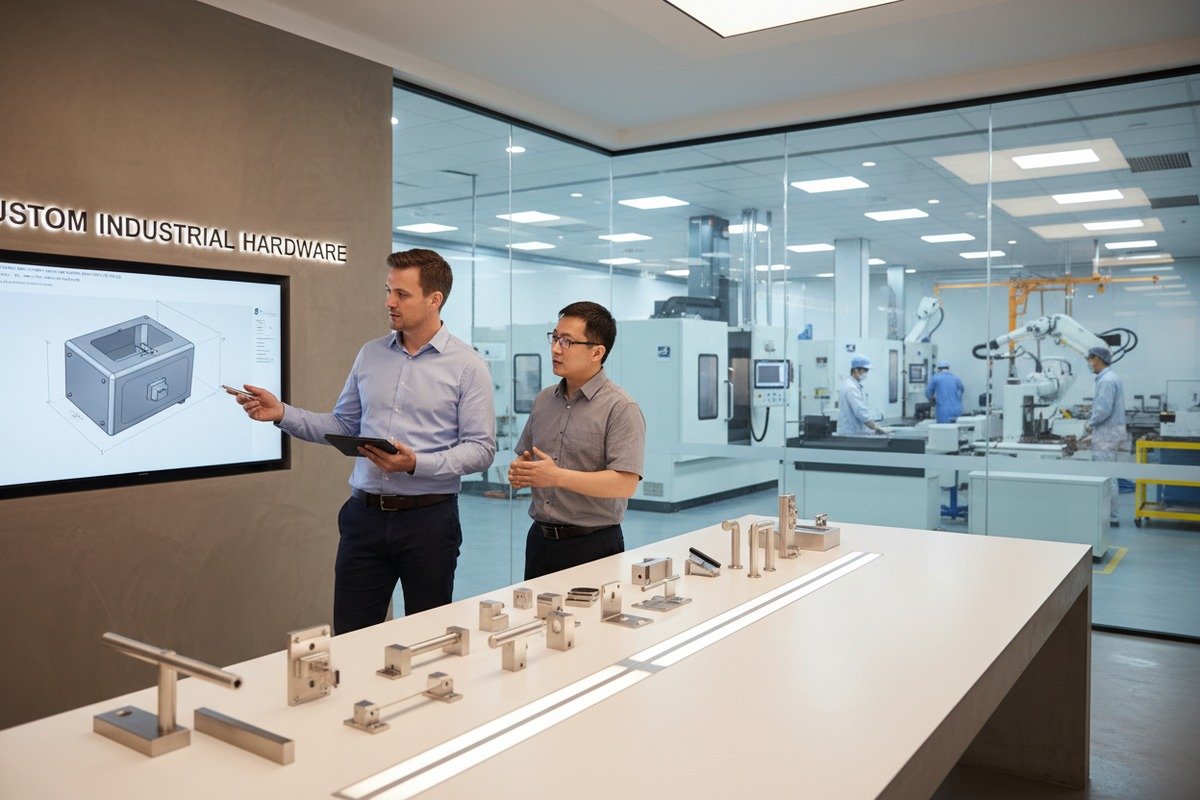
Look for an OEM partner with proven food-grade stainless steel expertise, in-house R&D and tooling capabilities, third-party certifications (UL, TÜV, IAPMO), full material traceability, free CAD design support, flexible MOQs, and a track record of delivering IP69K-compliant hygienic locks within 15–35 day lead times.

Why Customization Is Not Optional
No two food processing facilities are identical. A dairy plant in Wisconsin has different enclosure dimensions, cleaning protocols, and ambient conditions than a seafood operation in Norway. Off-the-shelf locks often force compromises—wrong seal material, wrong IP rating, wrong mounting footprint. Custom locks eliminate these compromises.
The OEM Partner Checklist
Here is the evaluation framework we recommend to procurement managers like Thomas who source locks for distribution cabinets and food-grade enclosures:
1. Manufacturing Experience and Scale
Ask how many years the supplier has been making industrial locks. Ask about their facility size. Our 4,000+ sqm factory with 100 employees is purpose-built for this work. A small workshop cannot maintain the consistency you need across 10,000-piece orders.
2. R&D and Tooling Capability
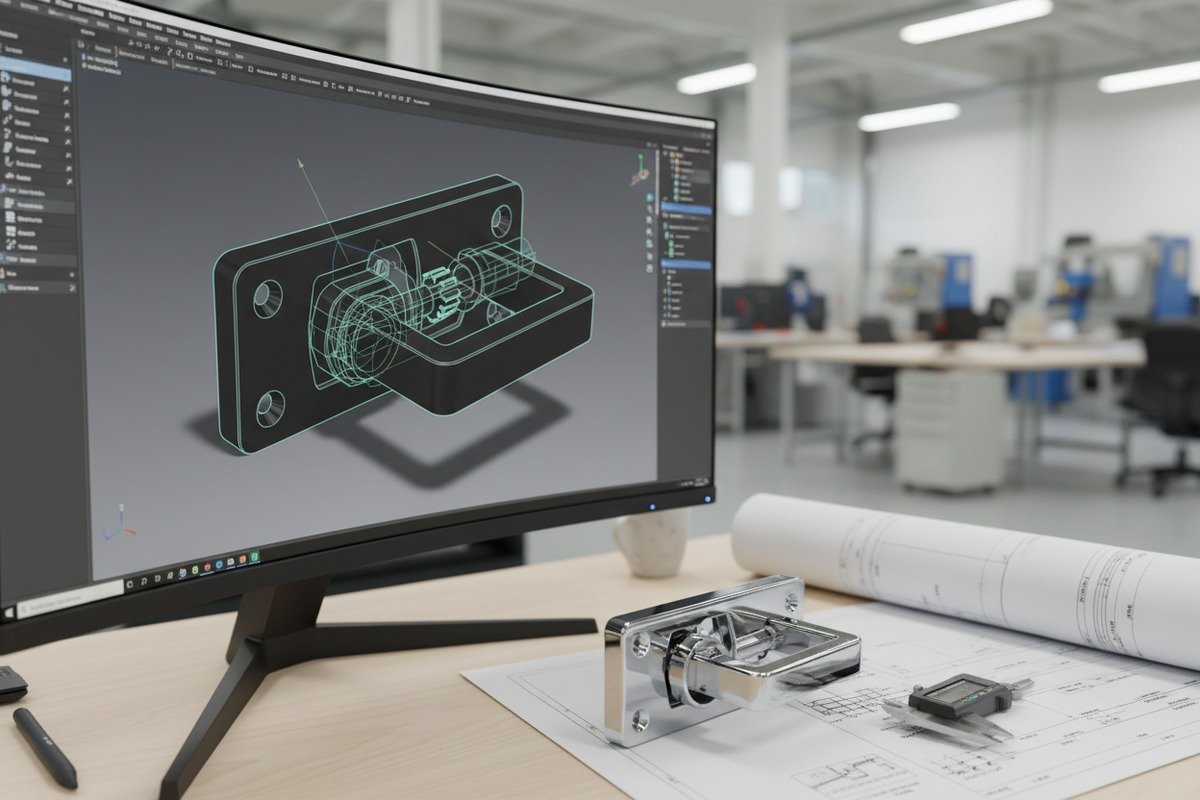
Can the supplier modify a lock design based on your 3D model? Do they offer free CAD design services? Can they prototype in 7–10 days? These capabilities compress your development cycle dramatically.
3. Certifications and Testing
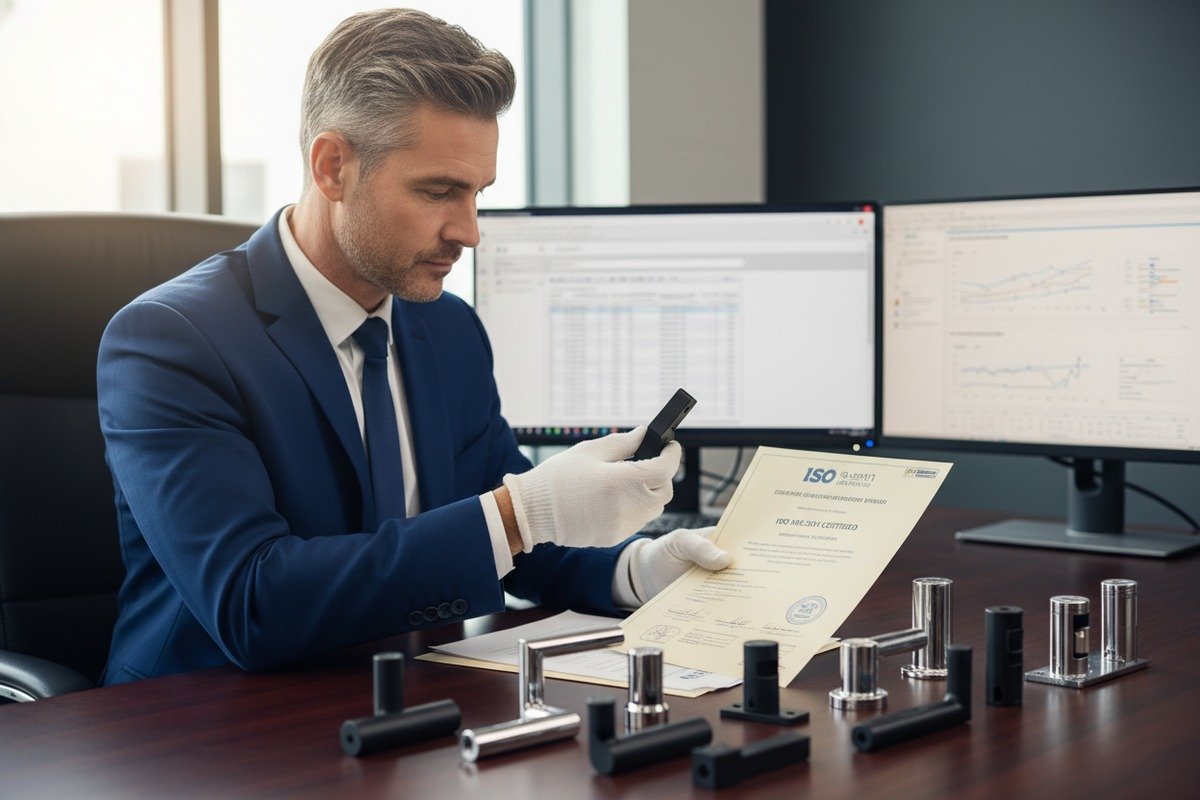
UL, TÜV, and IAPMO certifications are non-negotiable for North American and European markets. Ask how many testing devices the supplier operates. We run 35+ in-house testing devices covering salt spray, IP ingress, torque, cycle life, and UV residue analysis.
4. Material Traceability
Every batch of stainless steel should come with a mill certificate (EN 10204 3.1). Every silicone seal should have an FDA compliance declaration. If the supplier hesitates on traceability, walk away.
5. Lead Time and Small-Batch Flexibility
Food equipment projects often start with small validation batches before scaling. A good OEM partner supports this. Our standard lead time is 15–35 days, and we accept small-batch orders without punitive pricing.
6. After-Sales and Technical Support
When a lock fails in the field, how fast does the supplier respond? Do they offer replacement parts? Do they have engineers who can troubleshoot over video call? These soft factors matter enormously during an audit crisis.
Red Flags to Watch For
- Supplier cannot provide IP69K test reports from an accredited lab.
- No material certificates available.
- Lock designs feature external hinges, sharp edges, or PU foam seals marketed as "food-grade."
- No experience exporting to regulated food markets (US, EU, Canada, Australia).
- Pricing that seems too low—likely indicates inferior steel grade or surface finish shortcuts.
Smart Lock Integration—The Coming Wave
Some of our forward-thinking clients are now asking about locks that integrate with facility-wide access control. Audit trails, remote monitoring, and electronic access logging are becoming standard requirements in FSMA-compliant plants. Our engineering team is actively developing smart lock prototypes that maintain full IP69K hygiene while adding electronic access capabilities. This is the direction the industry is heading, and your OEM partner should be investing in it today.
Ergonomics Under Gloves
One detail many buyers overlook: operators in food plants wear thick nitrile or rubber gloves. A lock that works perfectly with bare hands can become frustrating with gloves. Quarter-turn mechanisms and compression latches with large gripping surfaces solve this. We test every lock design with gloved hands before approval.
Záver
Choosing food-grade stainless steel cabinet locks demands attention to steel grade, certifications, washdown-resistant design, and the right OEM partner. Get these right, and your hygiene audits become routine wins.
Footnotes
1. Compares properties and food-grade applications of 304 and 316 stainless steel. ↩︎
2. Details the hygienic design requirements for meat and poultry processing equipment. ↩︎
3. Explains the importance of surface roughness (Ra) standards for food contact surfaces. ↩︎
4. Describes how biofilms form and their implications for food safety in processing environments. ↩︎
5. Explains the IP69K rating for protection against high-pressure, high-temperature washdowns. ↩︎
6. Provides access to guidelines for hygienic engineering and design in food processing. ↩︎
7. Explains the EN 10204 3.1 certificate for metallic products, ensuring material compliance and traceability. ↩︎
8. Provides official FDA guidelines for Hazard Analysis and Critical Control Point (HACCP) principles. ↩︎
9. Explains thermal cycling and its effects on materials and components in various industries. ↩︎
10. Outlines FDA regulations (21 CFR 177.2600) for silicone rubber in repeated food contact. ↩︎



 Slovak
  English
  Spanish
  French
  German
  Japanese
  Arabic
  Korean
  Swedish
  Dutch
Dutch  Greek
Greek  Hindi
Hindi  Hebrew
  Italian
  Vietnamese
  Thai
Thai  Bulgarian
  Czech
Czech  Hungarian
  Finnish