
In the world of electrical enclosure design, not all locks are created equal. For high-voltage (HV) switchgear, power distribution units, and cabinets located in high-vibration environments (like railways or heavy machinery), a standard latch often falls short.
The industry standard for these demanding applications is the Compression Latch. But what makes the "compression" action so vital, and how does it protect your critical infrastructure?
How Does a Compression Latch Work?
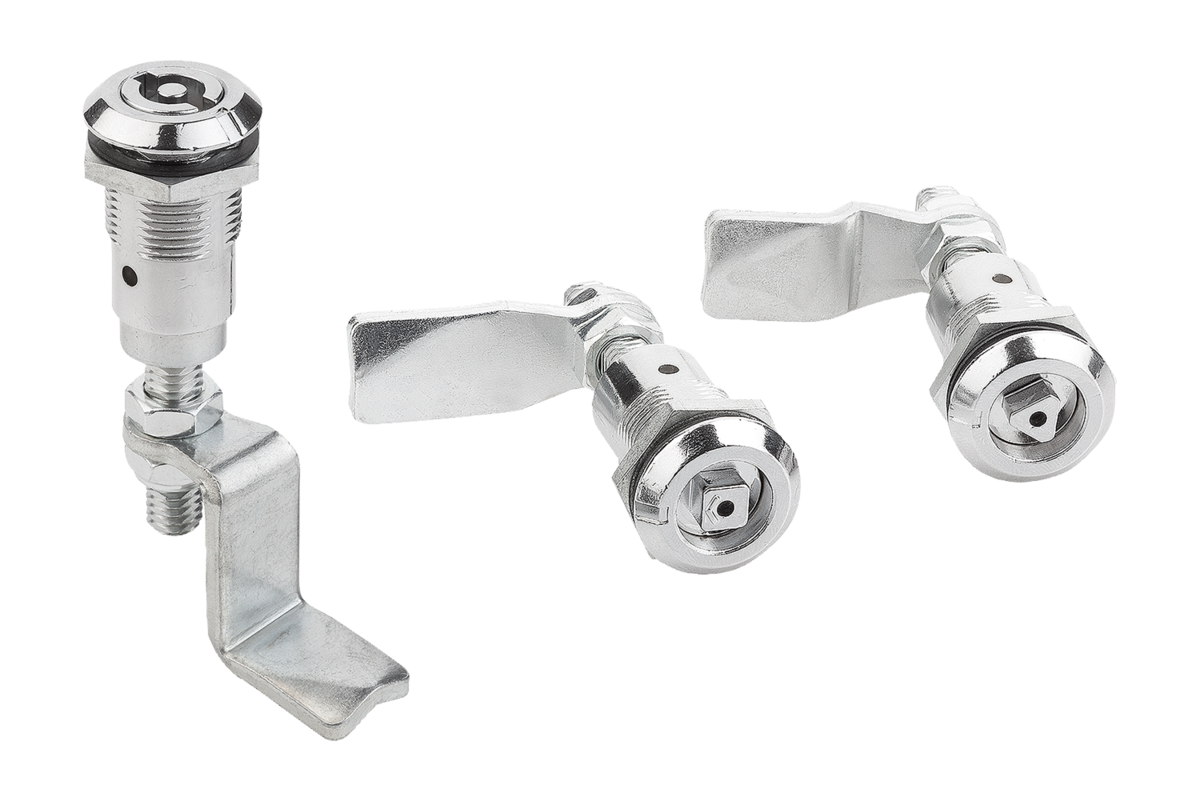
Unlike a standard 1/4 turn lock where the cam simply rotates behind the frame, a compression latch performs a dual-action movement:
- Rotation: The cam rotates 90° to reach the locking position.
- Compression (The Pull-in): Once positioned, the mechanism pulls the cam axially (usually between 3mm to 6mm) toward the door.
This pull-in action tightly draws the door against the cabinet frame, exerting uniform pressure on the sealing gasket.
Why High-Voltage Cabinets Require Compression
A. Superior IP Rating & Environmental Sealing
High-voltage cabinets are often located in harsh outdoor environments or dusty industrial basements. A standard latch might leave "micro-gaps" if the door panel is slightly warped.
By providing constant mechanical pressure, compression latches ensure that the EPDM or Silicone gasket is fully engaged. This is essential for maintaining IP65, IP66, or even IP67 ratings, preventing moisture and fine conductive dust from causing catastrophic short circuits.
B. Vibration Dampening & "Anti-Rattle"
High-voltage equipment, such as transformers or heavy-duty breakers, often generates constant low-frequency vibration.
- The Risk: Standard cams can "walk" or vibrate loose over time, leading to accidental door openings.
- The Solution: The friction created by the compression stroke locks the cam in place. This eliminates "door rattle," reducing noise pollution and preventing mechanical wear on the hinges and lock components.
C. EMI and RFI Shielding
In high-voltage environments, electromagnetic interference (EMI) is a major concern. To effectively shield sensitive electronics, the cabinet door must have a continuous, high-pressure metal-to-metal (or conductive gasket) contact with the frame. Compression latches provide the necessary force to maintain this electrical continuity across the entire door perimeter.
Key Types of Compression Latches
Depending on your cabinet's design, you may choose from several formats:
| Typ | Best Application | Key Feature |
|---|---|---|
| Trigger Compression Latch | Toolboxes, small HV units | Flush-mounted, easy "push-to-close" operation. |
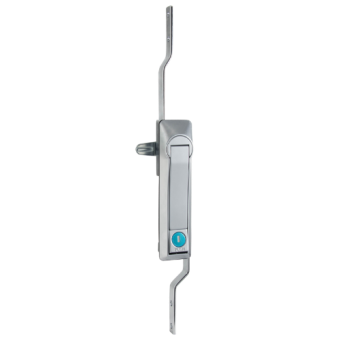
| Lever / Swing-Handle Compression | Large switchgear cabinets | High leverage for heavy doors and thick gaskets. |
| Fixed Grip vs. Adjustable Grip | OEM Manufacturing | Adjustable grips allow for variations in door thickness or gasket wear over time. |
The "Safety" Factor: Tactile Feedback
For maintenance engineers working with high-voltage equipment, safety is paramount.
A compression latch provides clear tactile feedback. When the handle is closed, the operator can feel the resistance as the gasket compresses. This physical confirmation ensures the door is not just "closed," but sealed and secured.
Summary: Is the Upgrade Worth It?
While compression latches have a higher initial cost than basic 1/4 turns, the Return on Investment (ROI) is found in:
- Reduced Maintenance: Fewer gasket replacements and no need to tighten loose cams.
- Equipment Longevity: Superior protection against dust and moisture ingress.
- Operational Safety: Reliable performance in high-vibration zones.
Optimize Your Cabinet Security
Are you designing an enclosure for a high-vibration or high-voltage project? Our technical team can help you calculate the required compression force for your specific gasket type.




 Czech
Czech  English
  Spanish
  French
  German
  Japanese
  Arabic
  Korean
  Swedish
  Dutch
Dutch  Greek
Greek  Hindi
Hindi  Hebrew
  Italian
  Vietnamese
  Thai
Thai  Bulgarian
  Slovak
  Hungarian
  Finnish