
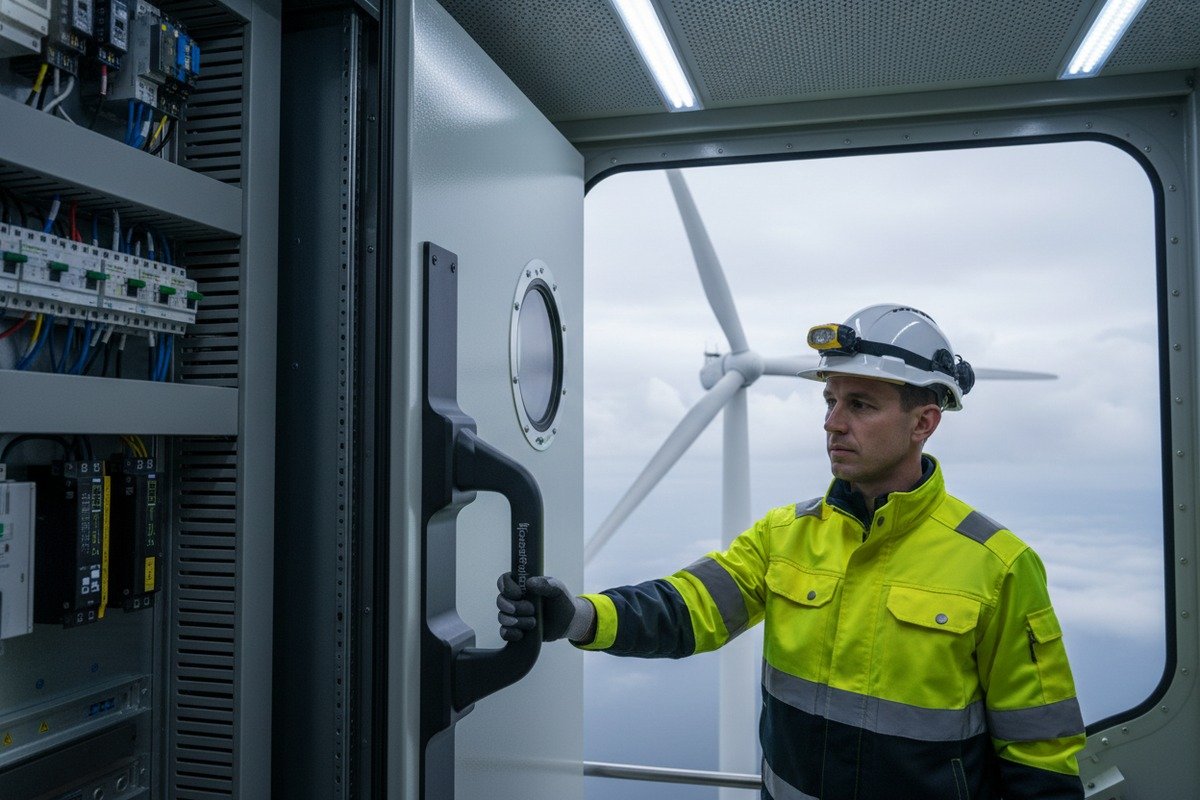
High-frequency vibrations inside wind turbine nacelles 1 and tower cabinets have rattled our production priorities for years. Every month, we hear from European procurement teams about cam locks that shake loose, enclosures that pop open, and secondary damage to sensitive electronics. The problem is real, costly, and growing as turbines get bigger.
European wind power operators solved high-frequency vibration failures by working with OEM suppliers to customize cam lock materials, spring tension, and locking geometry. These purpose-built cam locks resist constant oscillation, maintain secure closure under harsh conditions, and dramatically reduce unplanned maintenance on offshore and onshore turbine cabinets.
This article breaks down the root causes of vibration-induced cam lock failure, the customization options that actually work, the testing standards you should demand, and the real cost savings that follow. Let's get into it.
Why are my standard cabinet cam locks failing due to high-frequency vibrations in wind turbines?
When we first started shipping cabinet hardware to wind energy clients in northern Europe, the failure reports surprised us. Locks rated for general industrial use were coming loose within months.
Standard cam locks fail in wind turbines because they are designed for static environments. Turbine-generated vibrations—especially vortex-induced and edgewise rotor oscillations—create repetitive micro-movements that gradually disengage conventional locking mechanisms, leading to enclosure breaches and component damage.
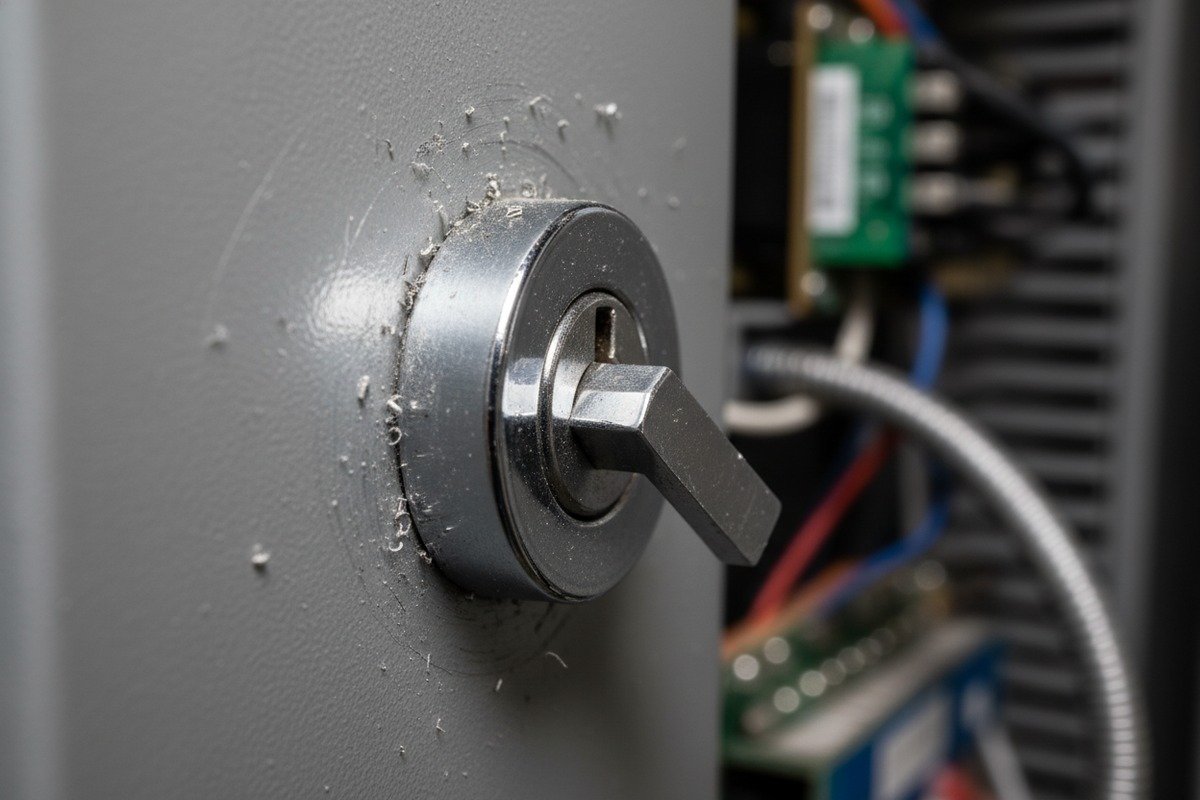
The Vibration Problem Is Bigger Than You Think
Wind turbines are not calm structures. Even when they are standing still, large modern turbines experience vortex-induced vibrations (VIV) 2. Research from the EU-funded VIV-WISE project and Denmark's PRESTIGE project (2020–2023) confirms that VIV during installation and standstill conditions causes fatigue damage 3 before the turbine even begins operating. The PRESTIGE findings showed vibration amplitude growth spiking after 800 seconds and reaching limit cycles—meaning the vibration sustains itself at a consistent, damaging level.
For cabinet cam locks, these oscillations translate into constant lateral and rotational stress. The cam arm slowly rotates out of its locked position. The spring loses preload. The strike plate wears. Eventually, the door pops open.
How Standard Locks Are Built vs. What Turbines Demand
Standard cam locks use a simple quarter-turn mechanism with a flat spring or minimal detent. That works fine on a factory floor. It does not work 80 meters up in a North Sea wind turbine tower.
| Caratteristica | Standard Cam Lock | Turbine Environment Requirement |
|---|---|---|
| Vibration rating | Up to 5 Hz, low amplitude | 10–50+ Hz, sustained amplitude |
| Materiale | Zinc alloy, basic chrome | 316 stainless steel 4, powder-coated |
| Locking detent | Single flat spring | Multi-point or compression detent |
| Corrosion resistance | Light indoor use | Salt spray 1,000+ hours |
| Temperature range | 0°C to 50°C | -40°C to 80°C |
Vortex-Induced Vibrations and Edgewise Oscillations
There are two primary vibration sources. First, VIV affects the tower and nacelle structure during low-wind or standstill conditions. The wind flows around the cylindrical tower and sheds vortices, causing the structure to oscillate sideways. Second, edgewise rotor vibrations occur when blades encounter high angles of attack. The first edgewise blade mode gets excited, and amplitude grows until it hits a limit cycle. Both of these generate high-frequency energy that transmits directly into every cabinet, panel, and enclosure inside the turbine.
Our engineering team ran internal shake-table tests simulating these profiles. Standard cam locks began to rotate open after just 72 hours of continuous vibration at 15 Hz. That is less than a week in real-world conditions.
Secondary Failures Are the Real Cost
When a cam lock fails, the door opens. Dust, moisture, and salt air enter the enclosure. Electrical connections corrode. Circuit boards short. Control systems go offline. The turbine stops producing power. For offshore installations, a single repair visit by boat or helicopter can cost €50,000 or more. The cam lock that failed might have cost €3.
How can I customize cam lock specifications to ensure they stay secure under constant industrial oscillation?
Our R&D team in Xi'an has spent years refining cam lock designs specifically for vibration-prone applications. The answer is never a single change—it is a system of coordinated upgrades.
You can customize cam lock specifications by upgrading to 316 stainless steel bodies, adding multi-point compression detents, increasing spring preload force, using vibration-dampening gaskets, and tailoring the cam arm geometry to resist rotational loosening under specific oscillation frequencies and amplitudes.
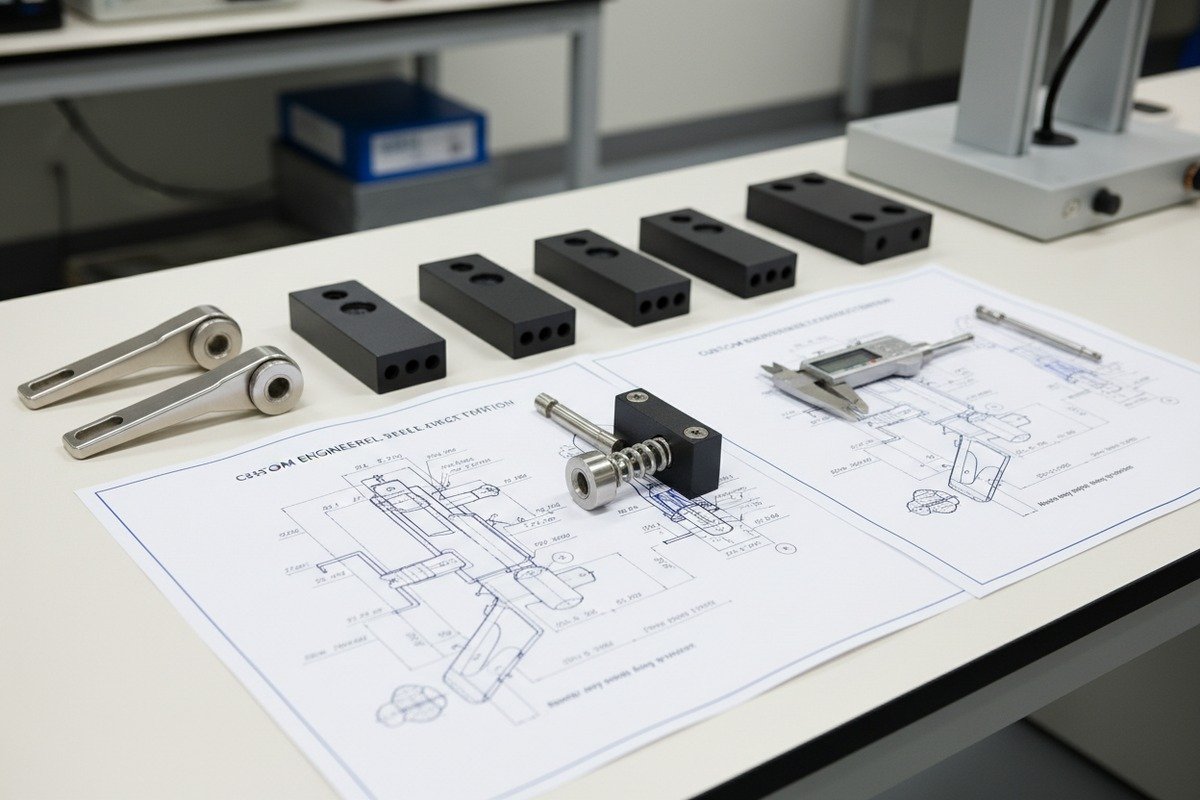
Material Selection Comes First
The body and cam arm material determines how long the lock survives in a corrosive, vibrating environment. Zinc alloy is common in general hardware. But offshore wind demands 316 stainless steel or, at minimum, 304 stainless steel with a heavy-duty powder coat. We have also tested nickel-plated brass for certain lower-vibration nacelle applications, but stainless remains the gold standard.
| Materiale | Vibration Fatigue Life | Salt Spray Resistance | Cost Index |
|---|---|---|---|
| Zinc alloy (standard) | Basso | 200–500 hrs | 1.0x |
| 304 stainless steel | Medium–High | 500–1,000 hrs | 1.8x |
| 316 stainless steel | Alto | 1,000–2,000 hrs | 2.3x |
| Nickel-plated brass | Medio | 300–700 hrs | 1.5x |
Compression Detent and Spring Redesign
The biggest single improvement is switching from a flat spring detent to a multi-point compression detent 5. A flat spring relies on friction to hold the cam in the locked position. Under vibration, friction is the first thing to fail. A compression detent uses a spring-loaded ball or pin that physically seats into a machined groove. The cam cannot rotate without intentionally overcoming that engagement force.
We typically calibrate the spring preload between 15 N and 40 N, depending on the vibration profile. Higher is not always better—too much preload makes the lock hard for maintenance technicians to operate with gloved hands in cold conditions. Finding the right balance is part of our OEM/ODM process.
Cam Arm Geometry and Anti-Rotation Features
Standard cam arms are flat L-shapes. For vibration environments, we modify the arm profile to include a hook or over-center feature. This creates a mechanical lock that holds the door closed even if the spring loses some tension. Some European clients also request a secondary latch or safety catch as a redundant lock point.
Gaskets and Dampening
Compression gaskets between the lock body and the panel serve two purposes. They seal the enclosure against water and dust ingress (critical for IP66 or NEMA 4X ratings). IP66/NEMA 4X ingress protection 6 And they absorb vibration energy, reducing the transmission of oscillation into the locking mechanism. We use EPDM and silicone gaskets rated for -40°C to 120°C.
Tailoring to Specific Vibration Profiles
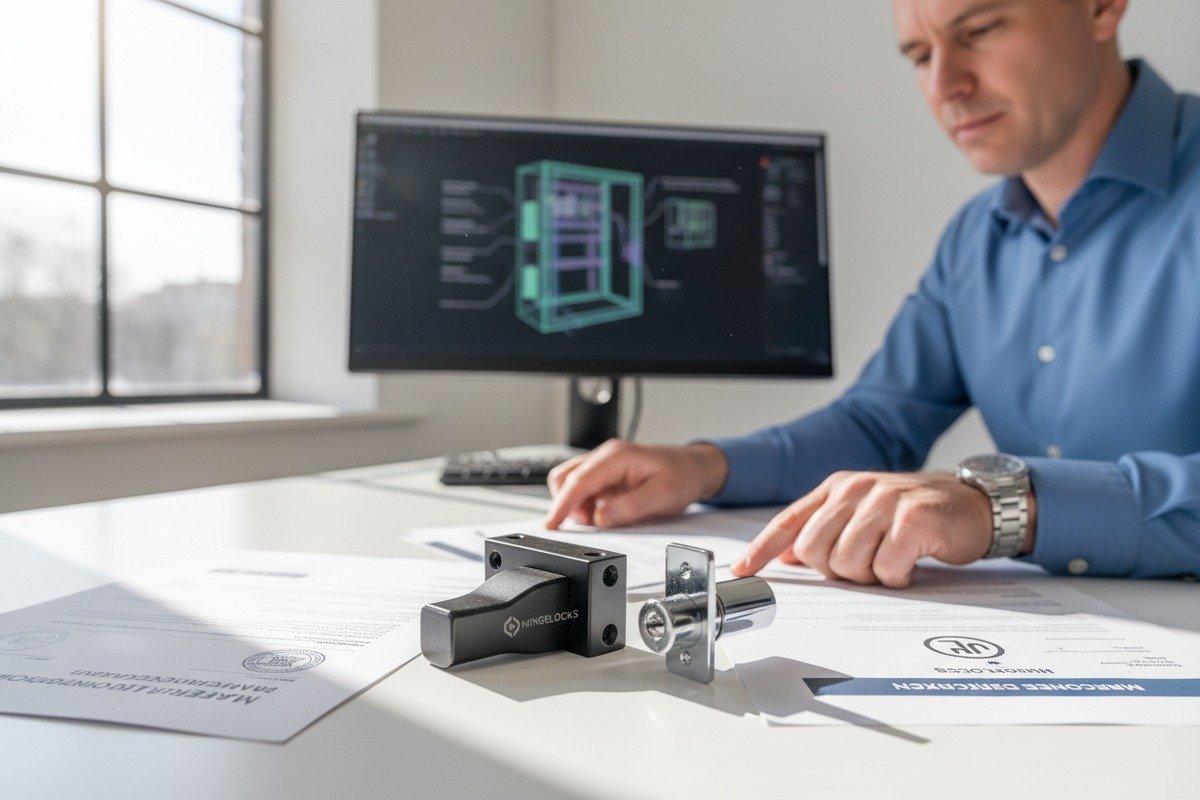
Advanced customers send us vibration data from their turbine models. We then run finite element analysis (FEA) 7 on the lock assembly to ensure no resonant frequencies overlap with the operating vibration range. If resonance is detected, we adjust the mass distribution or geometry of the cam arm to shift the natural frequency away from the danger zone. This is where additive manufacturing and topology optimization could play a larger role in the future—enabling cam lock shapes that are impossible with traditional stamping.
What testing standards should I require from my OEM supplier to guarantee long-term durability in harsh outdoor environments?
When we quote a project for a European wind energy client, the conversation always moves quickly from design to testing. Our facility in Xi'an houses over 35 testing devices, and we know that certifications are not optional—they are the entry ticket.
You should require salt spray testing (ISO 9227, 1,000+ hours), vibration endurance testing (IEC 60068-2-6 or equivalent), IP66/NEMA 4X ingress protection verification, UV resistance testing, cycle life testing exceeding 10,000 operations, and certifications from bodies like UL, TUV, or IAPMO to guarantee long-term durability.
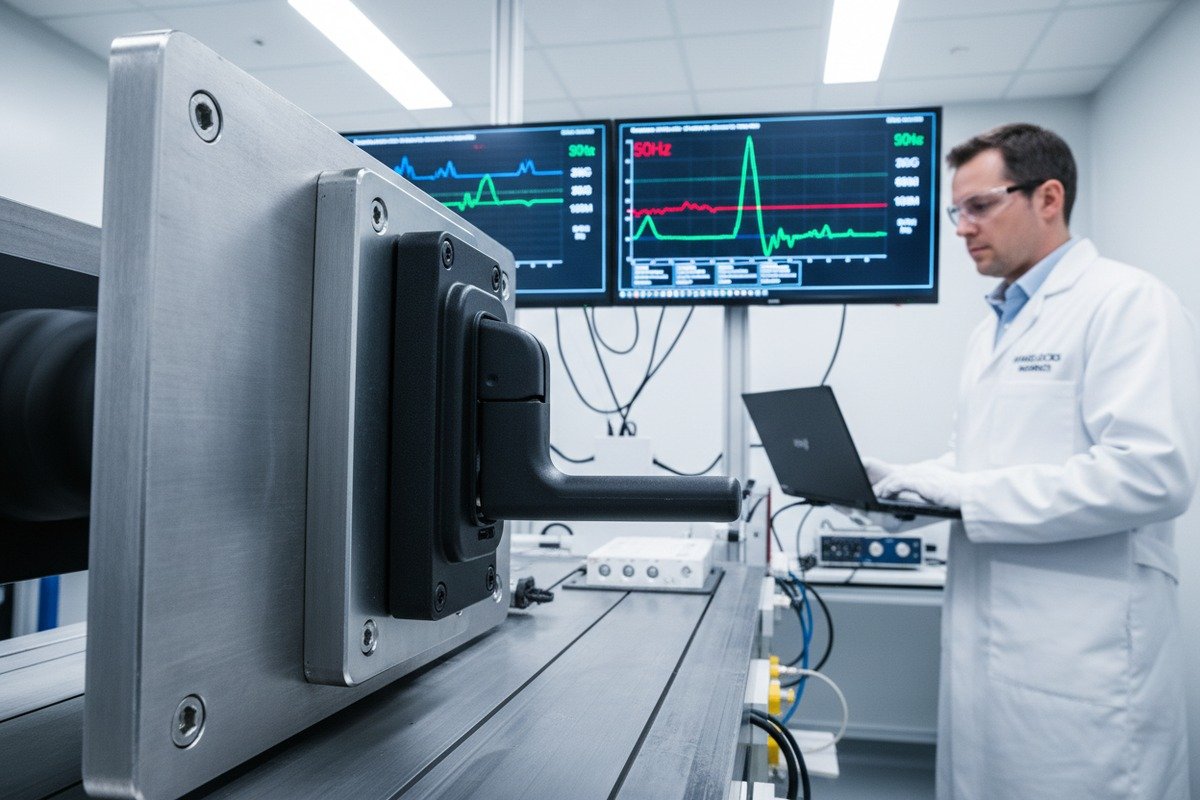
Core Testing Standards Explained
There are several layers of testing that matter for cam locks in wind power applications. Each addresses a different failure mode.
| Test Standard | What It Measures | Minimum Requirement for Wind |
|---|---|---|
| ISO 9227 (Salt Spray) 8 | Corrosion resistance | 1,000 hours for offshore, 500 for onshore |
| IEC 60068-2-6 9 (Sinusoidal Vibration) | Mechanical endurance under vibration | 10–50 Hz, 2–5 g acceleration, 500+ hours |
| IEC 60529 (IP Rating) | Dust and water ingress protection | IP66 minimum |
| ASTM G154 (UV Exposure) | UV and weathering resistance | 1,000 hours QUV cycling |
| Cycle Life | Mechanical durability | 10,000+ open/close cycles |
| UL / TUV / IAPMO Certification | Third-party safety and quality | Required for EU and North American markets |
Why Vibration Testing Matters Most
Salt spray and IP testing are well understood. But vibration testing is where many suppliers fall short. IEC 60068-2-6 defines sinusoidal vibration testing. However, real turbine vibrations are not purely sinusoidal. They include random and broadband components. We recommend asking your supplier to also perform random vibration testing per IEC 60068-2-64. This better simulates actual turbine conditions.
During our internal validation, we mount cam locks on a shake table and run profiles that replicate documented VIV and edgewise vibration data. We check for loosening, material fatigue, and gasket degradation at intervals of 100, 500, and 1,000 hours. Locks that pass all three checkpoints earn our internal "V-Rated" designation.
Third-Party Certifications Are Non-Negotiable
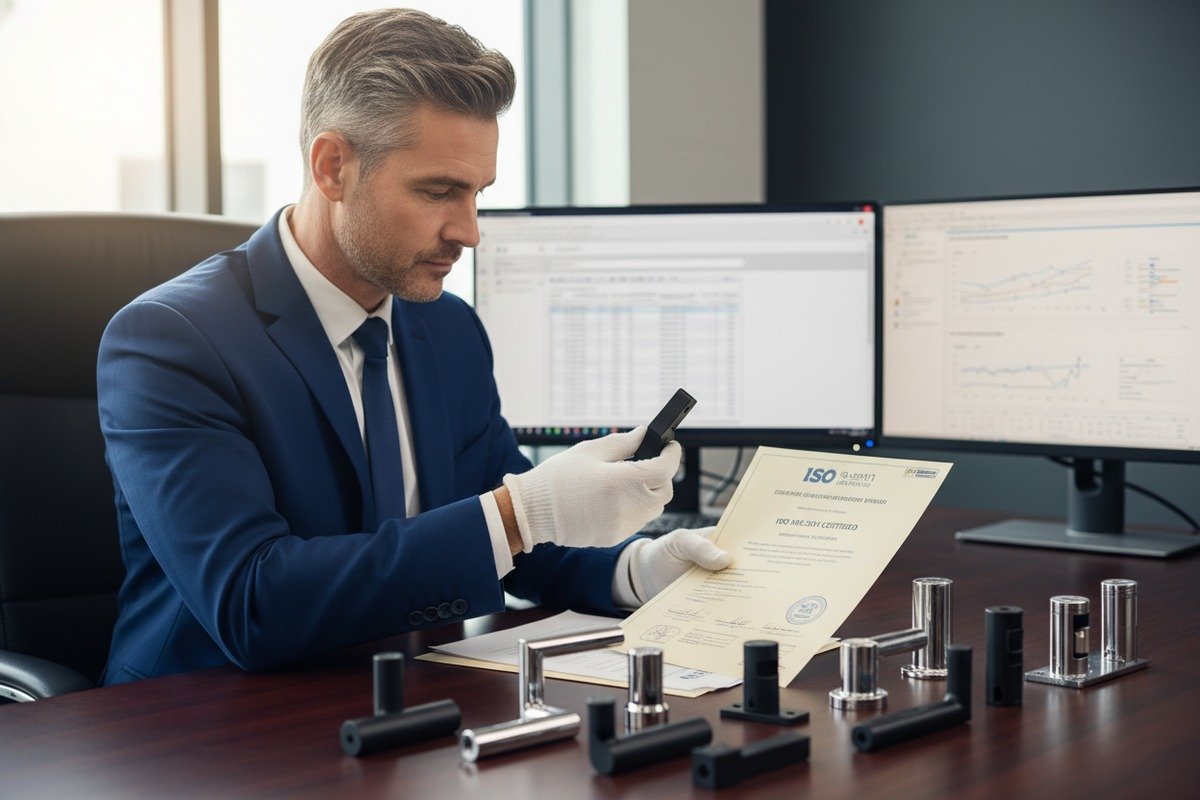
A supplier telling you their product "meets" a standard is not the same as having a third-party lab confirm it. Our products carry UL, TUV, and IAPMO certifications. These involve independent audits of both the product and the manufacturing process. For European wind installations, TUV certification is especially valued. For North American projects, UL listing is typically required by code.
Ask for Real Data, Not Just Claims
Request the actual test reports. Look for acceleration levels, frequency ranges, duration, and pass/fail criteria. If a supplier cannot provide this documentation, that is a red flag. We provide full test data packages as part of our OEM quoting process, including photographs and video from shake-table runs.
The Role of AI-Driven Monitoring
An emerging trend is combining physical hardware quality with digital monitoring. Range-resolved interferometry (RRI) combined with machine learning can now detect bearing failures and mechanical degradation remotely, even at scanning angles up to 4 degrees with no quality loss. While this technology focuses on bearings today, the principle applies to any mechanical component. Future cam locks could embed micro-sensors that feed into these AI monitoring platforms, providing real-time alerts before a lock fails.
Will upgrading to vibration-resistant cam locks help me lower my overall equipment maintenance expenses?
This is the question that finally convinces procurement managers to act. We have seen the numbers from our European clients, and the math is overwhelming.
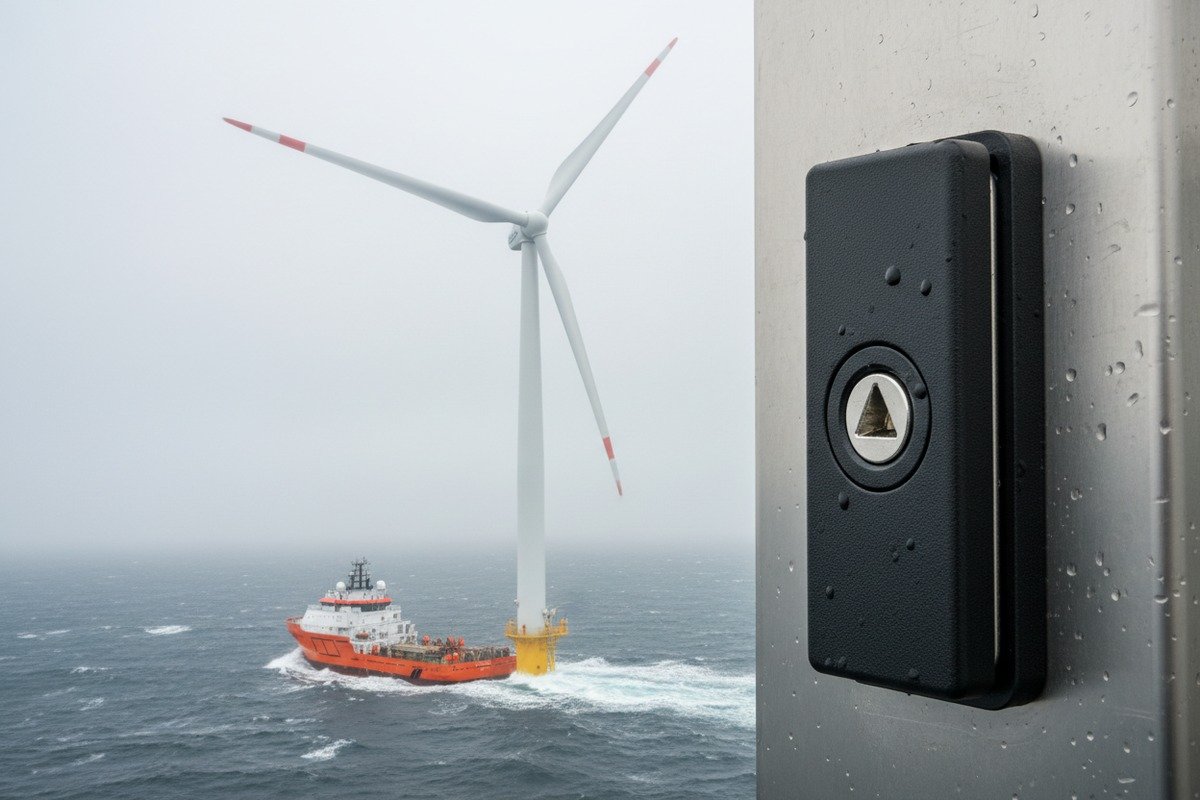
Yes, upgrading to vibration-resistant cam locks dramatically lowers maintenance costs by preventing enclosure breaches, protecting internal electronics from corrosion and contamination, reducing unplanned turbine downtime, and eliminating expensive emergency repair visits—especially for offshore installations where a single service call can exceed €50,000.
The True Cost of a Failed Cam Lock
A standard cam lock costs between €2 and €5. A vibration-resistant customized version might cost €8 to €15. That price difference is trivial compared to the cost of what happens when the cheap lock fails.
Consider the chain of events. The lock vibrates open. The enclosure door swings or cracks open. Salt air, rain, or dust enters. Electrical connectors corrode. A circuit board shorts. The turbine's control system faults. The turbine shuts down. A maintenance crew must be dispatched. If the turbine is offshore, that means a crew transfer vessel or helicopter, weather-dependent scheduling, and specialized technicians.
Cost Comparison: Standard vs. Customized Cam Locks
Let us look at realistic numbers from a 50-turbine offshore wind farm over a five-year period.
| Cost Factor | Serrature a camme standard | Customized Vibration-Resistant Cam Locks |
|---|---|---|
| Lock unit cost (per turbine, ~20 locks) | €60 | €240 |
| Replacement frequency (5 years) | 3x average | 0.5x average |
| Total lock hardware cost (50 turbines) | €9,000 | €12,000 |
| Estimated enclosure breach incidents | 75–120 | 5–10 |
| Average repair cost per incident (offshore) | €15,000 | €15,000 |
| Total repair costs (5 years) | €1,125,000–€1,800,000 | €75,000–€150,000 |
| Downtime revenue loss per incident | €5,000–€10,000 | €5,000–€10,000 |
| Total downtime loss (5 years) | €375,000–€1,200,000 | €25,000–€100,000 |
The customized locks cost €3,000 more in hardware. They save over €1 million in repair and downtime costs. The return on investment is not close.
Maintenance Planning Gets Simpler
Beyond direct savings, reliable cam locks simplify maintenance scheduling. When you know your enclosures will stay sealed, you can move from reactive maintenance to planned inspections. Technicians check locks on a scheduled basis rather than responding to emergency faults. This reduces crew mobilization costs and improves overall equipment availability.
The Portfolio Optimization Angle
Research on optimized wind farm portfolios shows that site selection reduces power output fluctuations at 1–3 hour scales by up to 15% compared to worst-case combinations. But hourly variability remains. Hardware reliability is the complement to portfolio optimization. You cannot diversify away from a cabinet that keeps popping open. Mechanical fixes and site strategy work together, not as alternatives.
Future-Proofing With Smart Hardware
Looking ahead, customized cam locks could integrate piezoelectric materials 10 that harvest vibrational energy to power embedded sensors. These sensors would monitor vibration levels, lock engagement status, and enclosure seal integrity in real time. Self-healing surface coatings could repair micro-damage from continuous oscillation. Micro-fluidic dampening channels within the lock body could offer tunable absorption of specific frequency ranges. We are watching these technologies closely and exploring feasibility in our R&D lab.
For now, the practical recommendation is clear. Invest in properly customized cam locks today. The proven materials, detent mechanisms, and testing protocols already exist. The savings are immediate and measurable.
Conclusione
Customized cam locks are a small investment that prevents enormous costs. European wind power proved that upgrading materials, detent designs, and testing protocols keeps enclosures sealed and turbines running. Contact us at sales@hingelocks.com to start your customization project.
Footnotes
- Explains the function and components of a wind turbine nacelle. ↩︎
- Provides a technical definition and engineering context for VIV. ↩︎
- Authoritative and comprehensive Wikipedia article on material fatigue. ↩︎
- Highlights the corrosion resistance and properties of 316 stainless steel. ↩︎
- Illustrates a robust latching system designed for secure closure. ↩︎
- Compares and explains these common ingress protection ratings. ↩︎
- Explains the computational technique used for structural analysis. ↩︎
- Describes the international standard for salt spray corrosion testing. ↩︎
- Official IEC standard page for IEC 60068-2-6. ↩︎
- Authoritative and comprehensive Wikipedia article on piezoelectricity. ↩︎



 Italian
  English
  Spanish
  French
  German
  Japanese
  Arabic
  Korean
  Swedish
  Dutch
Dutch  Greek
Greek  Hindi
Hindi  Hebrew
  Vietnamese
  Thai
Thai  Bulgarian
  Czech
Czech  Slovak
  Hungarian
  Finnish