

Every year, we see containers of cabinet hardware held at European ports because compliance paperwork fell apart under scrutiny.
To ensure RoHS and REACH compliance when sourcing electrical cabinet hardware from China, you must verify supplier certificates through accredited third-party labs, demand homogeneous material test reports for all restricted substances, and maintain full supply chain documentation from raw material to finished product.
The rules around hazardous substances keep tightening EU directive 1. China RoHS 2 2 now aligns closely with the EU directive, and phthalates have joined the restricted list. If you build or distribute electrical enclosures, every latch, hinge, and cam lock you import must pass these tests UKAS in the UK 3. This guide walks you through verifying certificates, choosing the right tests, finding compliant suppliers, and understanding the real business risks of getting it wrong.
How can I verify that my Chinese supplier's RoHS and REACH certificates are actually authentic?
We have shipped cabinet hardware to over 30 countries, and the most common question buyers ask our sales team is whether our certificates are real XRF (X-Ray Fluorescence) 4.
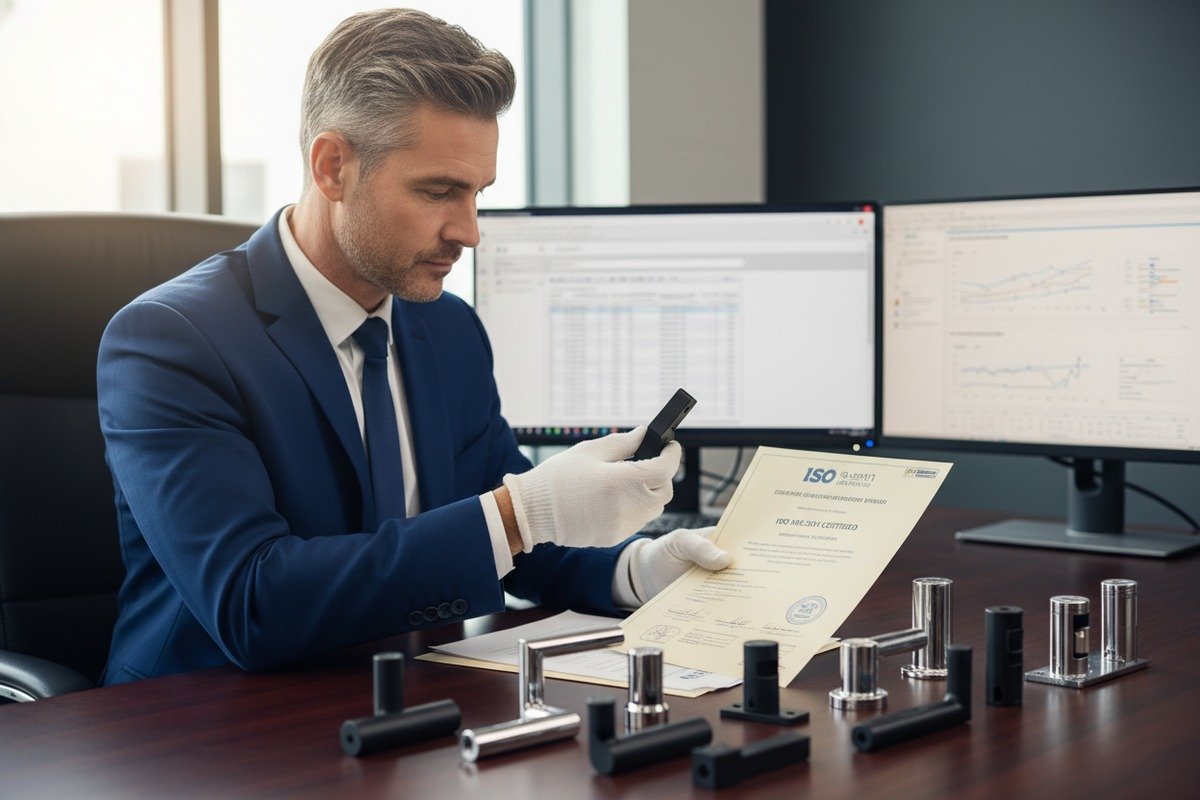
Verify authenticity by cross-checking certificate numbers directly with the issuing laboratory, confirming the lab holds ISO 17025 accreditation, ensuring the certificate references your specific product and not a generic category, and requesting the underlying raw test data.

Why Fake Certificates Are More Common Than You Think
The problem is straightforward. Some suppliers buy generic RoHS or REACH certificates that cover broad product categories. These documents look professional. They carry lab logos. But they do not test the actual materials in your specific cabinet latch or swing handle. When our engineering team reviews competitor samples, we sometimes find certificates dated years before the product was even designed.
A genuine certificate ties to a specific product, tested at a specific time, by a specific accredited lab. If any of those links are missing, the certificate is worthless.
Step-by-Step Verification Process
Here is what procurement managers should do before accepting any compliance document:
- Check the lab's accreditation. The testing lab must hold ISO/IEC 17025 accreditation. ISO 17025 accreditation 5 Look up the lab on the accreditation body's public database (e.g., CNAS in China 6, UKAS in the UK).
- Contact the lab directly. Call or email the lab with the certificate number. Ask them to confirm the certificate is valid and matches the product description.
- Match the product scope. The certificate must name your exact product model, material composition, or at minimum the homogeneous material 7 groups tested. A certificate for "metal hardware" does not cover a zinc alloy cam lock with a nylon insert.
- Check the date. RoHS testing is valid only for the specific production batch or material lot tested. If the supplier changed raw material vendors since the test date, the certificate no longer applies.
- Request full test reports. Certificates are summaries. The full test report shows the analytical method (XRF screening, ICP-MS confirmation), sample preparation, and measured values for each restricted substance.
Red Flags to Watch For
| Red Flag | What It Means | What to Do |
|---|---|---|
| Certificate covers "all products" | Not tested per product | Request product-specific testing |
| No lab contact info on certificate | Possibly fabricated | Search the lab independently |
| Test date is over 2 years old | Materials may have changed | Request retesting on current batch |
| Certificate lists only 6 substances | Misses phthalates (DEHP, DBP, BBP, DIBP) | Demand full 10-substance RoHS testing |
| Lab is not ISO 17025 accredited | Results not internationally recognized | Require accredited lab |
The Phthalate Gap
Many older certificates only cover the original six RoHS substances 8. Since the 2024 amendment added four phthalates 9 (DEHP, DBP, BBP, DIBP) to China RoHS, and EU RoHS has required them since 2019, any certificate missing these four substances is incomplete. Our quality team updated all test protocols in 2023 to include phthalates across every product line — from our matte black cam latches to our polished chrome swing handles. Not every supplier has done the same.
What specific material testing reports should I demand for my custom cabinet latches?
When we develop a custom latch — say a triangular-drive cam lock with a zinc alloy body and a chrome finish — our lab runs tests on every homogeneous material layer individually.
For custom cabinet latches, demand XRF screening reports and ICP-MS confirmation tests on each homogeneous material — base metal, plating layers, plastic inserts, rubber gaskets, and surface coatings — covering all 10 RoHS substances plus REACH SVHC declarations for your target market.
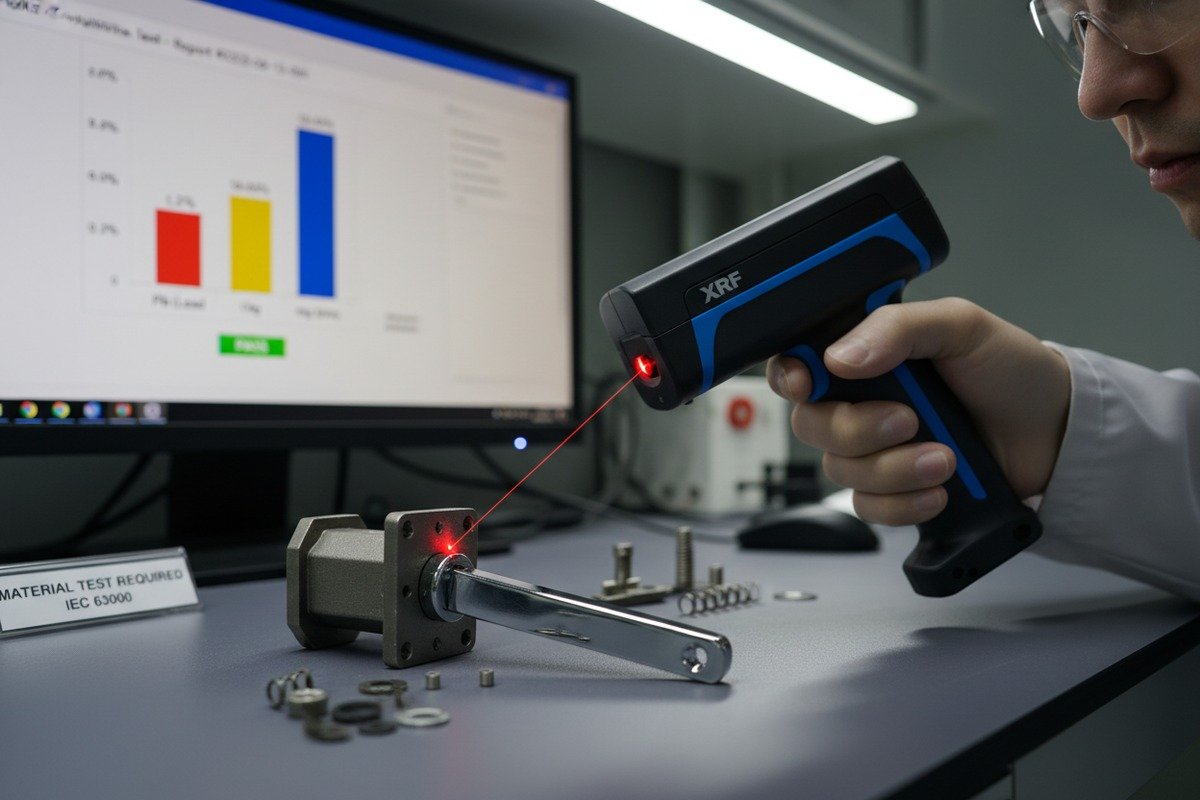
What Is Homogeneous Material Testing?
RoHS compliance is measured at the homogeneous material level, not the whole product level. A single cam latch can contain five or more homogeneous materials: the zinc alloy body, the chrome plating, the steel spring, the nylon cam arm, and the lubricant. Each must individually meet the concentration limits.
This distinction matters enormously. A latch could pass a whole-product XRF scan because lead in the brass insert gets diluted by the zinc body. But at the homogeneous material level, that brass insert might contain 3% lead — far above the 0.1% limit.
RoHS Restricted Substances and Their Limits
| Substance | Chemical Symbol | Max Concentration (by weight) | Common Sources in Cabinet Hardware |
|---|---|---|---|
| Lead | Pb | 0.1% (1000 ppm) | Brass alloys, solder, PVC stabilizers |
| Mercury | Hg | 0.1% (1000 ppm) | Switches, relays (rare in hardware) |
| Cadmium | Cd | 0.01% (100 ppm) | Plating, pigments, PVC stabilizers |
| Hexavalent Chromium | Cr(VI) | 0.1% (1000 ppm) | Chrome plating passivation layers |
| PBB | — | 0.1% (1000 ppm) | Flame retardants in plastics |
| PBDE | — | 0.1% (1000 ppm) | Flame retardants in plastics |
| DEHP | — | 0.1% (1000 ppm) | Plasticizer in PVC, rubber gaskets |
| DBP | — | 0.1% (1000 ppm) | Plasticizer in PVC, adhesives |
| BBP | — | 0.1% (1000 ppm) | Plasticizer in PVC, sealants |
| DIBP | — | 0.1% (1000 ppm) | Plasticizer in PVC, coatings |
Testing Methods You Should Understand
XRF (X-Ray Fluorescence) is a screening tool. It is fast and non-destructive. But it cannot distinguish between trivalent chromium (safe) and hexavalent chromium (restricted). It also struggles with layered materials like plated hardware.
ICP-MS (Inductively Coupled Plasma Mass Spectrometry) is the confirmation method. It requires destroying a sample, but it gives precise concentrations. When XRF results are near the threshold, ICP-MS provides the definitive answer.
UV-Vis Spectrophotometry is used specifically for hexavalent chromium detection. This is critical for polished chrome cabinet hardware. Our chrome-finished cam locks undergo this test on every production batch because the passivation layer in chrome plating is the most common source of Cr(VI) in our product category.
For REACH compliance, the testing scope expands significantly. You need a Substances of Very High Concern (SVHC) declaration. The SVHC candidate list currently exceeds 230 substances and is updated twice per year. Rather than testing for all of them, a practical approach is to identify which SVHCs are relevant to your materials (metals, plastics, coatings) and test for those specifically.
What Your Test Report Package Should Include
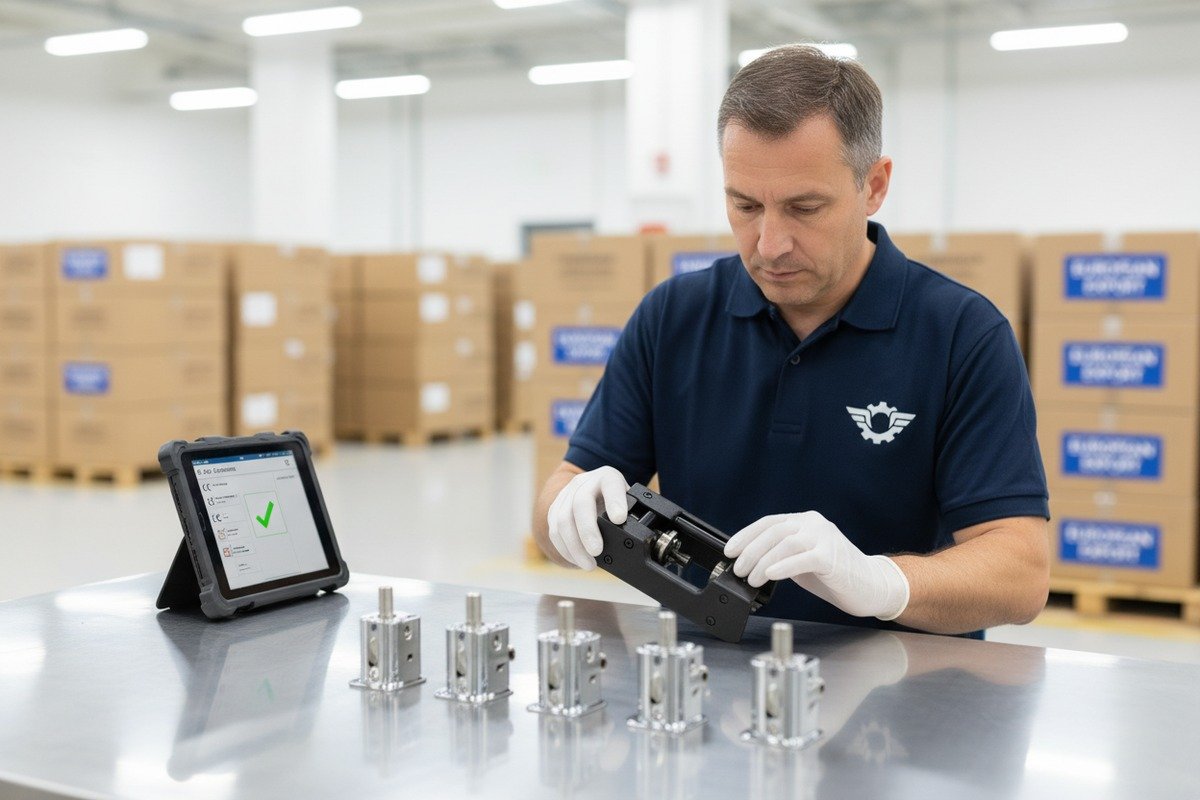
At minimum, your supplier should provide: a full XRF screening report per homogeneous material, ICP-MS confirmation for any substance near the limit, a Cr(VI)-specific test for any chrome-plated part, phthalate testing for any plastic or rubber component, and a signed REACH SVHC declaration 10. We provide this full documentation package with every shipment, and our 35+ in-house testing devices allow us to screen materials before they even reach the third-party lab.
How do I find a Chinese manufacturer that truly understands the compliance needs of my international projects?
Over the past 35 years, our team in Xi'an has learned that understanding compliance is not about having a certificate on the wall — it is about building systems that prevent non-compliant materials from entering the production line in the first place.
Find a compliant Chinese manufacturer by evaluating their in-house testing capabilities, asking for material traceability systems, reviewing their experience with international certifications like UL and TUV, and confirming they proactively track regulatory updates such as GB 26572-2025 and REACH SVHC list revisions.

The Difference Between "Having Certificates" and "Understanding Compliance"
Many factories can hand you a stack of certificates. Fewer can explain what those certificates actually mean. The manufacturer you want is the one whose engineers can tell you exactly which homogeneous materials were tested, which analytical method was used, and what the measured values were — not just that they "passed."
When we onboard a new buyer — whether they manufacture distribution cabinets in the US or telecom racks in Germany — our first step is a compliance alignment meeting. We map their target market's regulatory requirements to our material specifications. EU RoHS, China RoHS 2, EAEU TR 037/2016, and individual customer requirements all have nuances.
Key Indicators of a Compliance-Ready Manufacturer
| Indicator | What to Look For | Why It Matters |
|---|---|---|
| In-house testing lab | XRF, salt spray, material hardness testing | Catches issues before mass production |
| Third-party certifications | UL, TUV, IAPMO listings | Demonstrates ongoing quality system audits |
| Material traceability | Lot tracking from raw material to finished good | Enables root cause analysis if issues arise |
| Regulatory awareness | Knowledge of GB 26572-2025, SVHC updates | Proactive adaptation, not reactive scrambling |
| Dedicated quality team | Not just a single QC person | Shows systemic commitment to quality |
| Export experience | Track record with US, EU, AU markets | Familiar with destination country requirements |
Questions to Ask During Supplier Evaluation
Do not just send a questionnaire. Have a technical conversation. Ask: "How do you control hexavalent chromium in your chrome plating process?" A manufacturer who truly understands compliance will explain their passivation chemistry, their testing frequency, and their corrective action process when a batch fails.
Ask about phthalates. If they look confused, that is a red flag. The addition of DEHP, DBP, BBP, and DIBP to the restricted list caught many factories off guard. Manufacturers who updated their material specifications and supplier agreements promptly — as we did in 2023 — demonstrate genuine compliance maturity.
The China RoHS 2 Factor
With GB 26572-2025 taking effect on August 1, 2027, Chinese manufacturers face new mandatory requirements. The standard now covers 10 substances (matching EU RoHS) and expands the product scope. Factories that are already compliant with EU RoHS have a head start. Those that only followed the older China RoHS requirements will need significant adjustments.
For buyers, this alignment is actually good news. A manufacturer compliant with the new China RoHS 2 is largely compliant with EU requirements as well. But the labeling differs. China requires green (compliant) or orange (contains exceedances with disclosure) marks. EU requires CE marking with a Declaration of Conformity. Make sure your manufacturer understands both systems.
Our facility supports OEM/ODM customization for brands and distributors across North America and Europe. This dual-market experience means we handle NEMA, IP, CE, and China-specific requirements simultaneously. That cross-market fluency is what you should look for in a partner.
What are the risks to my business if my imported electrical enclosure hardware fails a compliance audit?
We once helped a European distributor re-source their entire latch inventory in under three weeks because their previous supplier's hardware failed a REACH audit at the border.
If imported enclosure hardware fails a compliance audit, your business faces product seizure at customs, mandatory recalls, fines up to €10 million or 2% of annual turnover under EU REACH, loss of CE marking, project delays, contract penalties from your customers, and lasting reputational damage.
Immediate Financial Consequences
The direct costs hit fast. Customs authorities in the EU can detain non-compliant shipments. You pay storage fees while the issue is resolved. If the goods cannot be brought into compliance, they are destroyed at your expense. For a container of cabinet hardware, this can mean tens of thousands of dollars lost before you even consider the replacement order.
Under EU REACH, penalties for placing non-compliant products on the market can reach €10 million or 2% of global annual turnover, whichever is higher. EU member states set their own penalty structures, but the trend is toward stricter enforcement. Germany, France, and the Netherlands have been particularly active in market surveillance for hardware and electrical components.
Supply Chain Ripple Effects
The bigger damage is often indirect. If you supply latches and hinges to an electrical enclosure manufacturer, and their finished product fails certification because of your component, you face contract penalties. Many OEM supply agreements include compliance warranty clauses. A single non-compliant cam lock can halt an entire production line.
Project timelines suffer. Our typical lead time for compliant hardware is 15–35 days. If a buyer needs emergency replacement after a failed audit, they may face 6–8 weeks of delays factoring in retesting and reshipping. For time-sensitive projects like data center buildouts or EV charging infrastructure, those delays carry enormous costs.
Reputational Damage and Market Access
In specialized industrial markets, reputation travels fast. Distributors talk. Engineers share supplier experiences in forums and at trade shows. One compliance failure can cost you years of relationship building.
More importantly, repeated non-compliance can lead to enhanced scrutiny from customs authorities. Your future shipments get flagged for inspection. Your import clearance times increase. Your competitors, meanwhile, sail through.
A Real-World Risk Assessment
| Risk Category | Probability (Without Proper Controls) | Impact Severity | Mitigation Strategy |
|---|---|---|---|
| Customs detention | Medium-High | High (costs + delays) | Pre-shipment third-party testing |
| Regulatory fine | ミディアム | Very High (up to €10M) | Full documentation trail |
| Customer contract penalty | 高い | High (direct financial loss) | Compliance warranty from supplier |
| Product recall | Low-Medium | Very High (logistics + reputation) | Batch-level material traceability |
| Loss of market access | 低い | Critical (business viability) | Ongoing regulatory monitoring |
| Reputational harm | ミディアム | High (long-term revenue loss) | Transparent compliance communication |
How to Protect Yourself
The cost of prevention is a fraction of the cost of failure. Invest in three things: first, a supplier with genuine compliance infrastructure — in-house labs, third-party certifications, and material traceability. Second, independent verification through your own third-party testing on incoming goods, at least for initial shipments and whenever materials change. Third, a documentation system that stores test reports, supplier declarations, and SVHC notifications for the lifetime of the product.
At our facility, we maintain complete material traceability from raw material receipt through finished goods shipping. Every batch of our matte black cam latches, polished chrome locks, and custom swing handles carries a documentation package that our buyers can present directly to auditors. That is not just a service — it is risk insurance for our partners.
結論
Compliance is not paperwork — it is a system built into every material choice, every production batch, and every shipment your supplier sends.
Footnotes
1. Official European Commission page detailing the RoHS Directive and its objectives. ↩︎
2. Explains China RoHS 2 scope, restricted substances, and labeling requirements. ↩︎
3. Official website of the United Kingdom Accreditation Service (UKAS). ↩︎
4. Explains XRF as a non-destructive analytical technique for elemental composition. ↩︎
5. Explains ISO/IEC 17025 accreditation for testing laboratories and its importance. ↩︎
6. Official website of China National Accreditation Service for Conformity Assessment (CNAS). ↩︎
7. Defines homogeneous material in the context of RoHS compliance and its importance. ↩︎
8. Lists and explains the original six hazardous substances restricted by the initial RoHS directive. ↩︎
9. Details the addition of four phthalates (DEHP, BBP, DBP, DIBP) to the RoHS restricted substances list. ↩︎
10. Explains Substances of Very High Concern (SVHCs) under REACH and declaration obligations. ↩︎





 Japanese
  English
  Spanish
  French
  German
  Arabic
  Korean
  Swedish
  Dutch
Dutch  Greek
Greek  Hindi
Hindi  Hebrew
  Italian
  Vietnamese
  Thai
Thai  Bulgarian
  Czech
Czech  Slovak
  Hungarian
  Finnish