
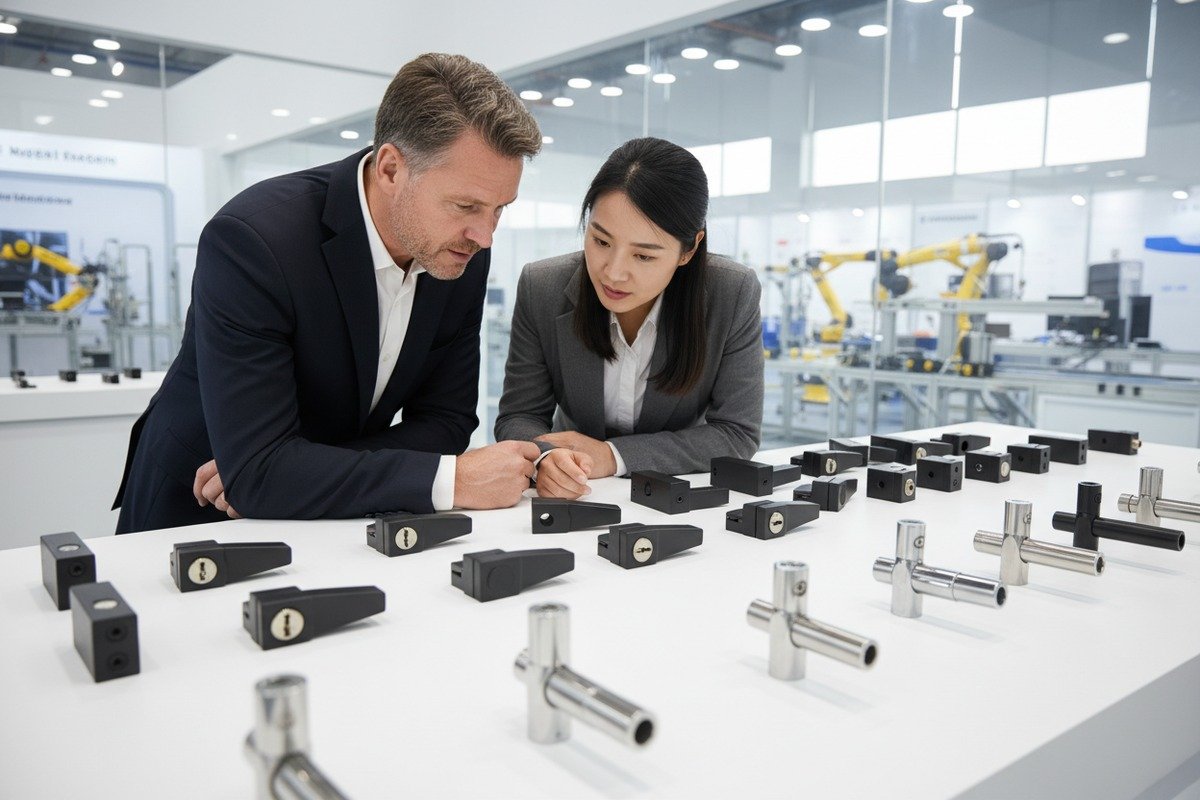
Over the years, our production floor has handled thousands of custom cam lock requests — and each one taught us something about what real manufacturing flexibility looks like.
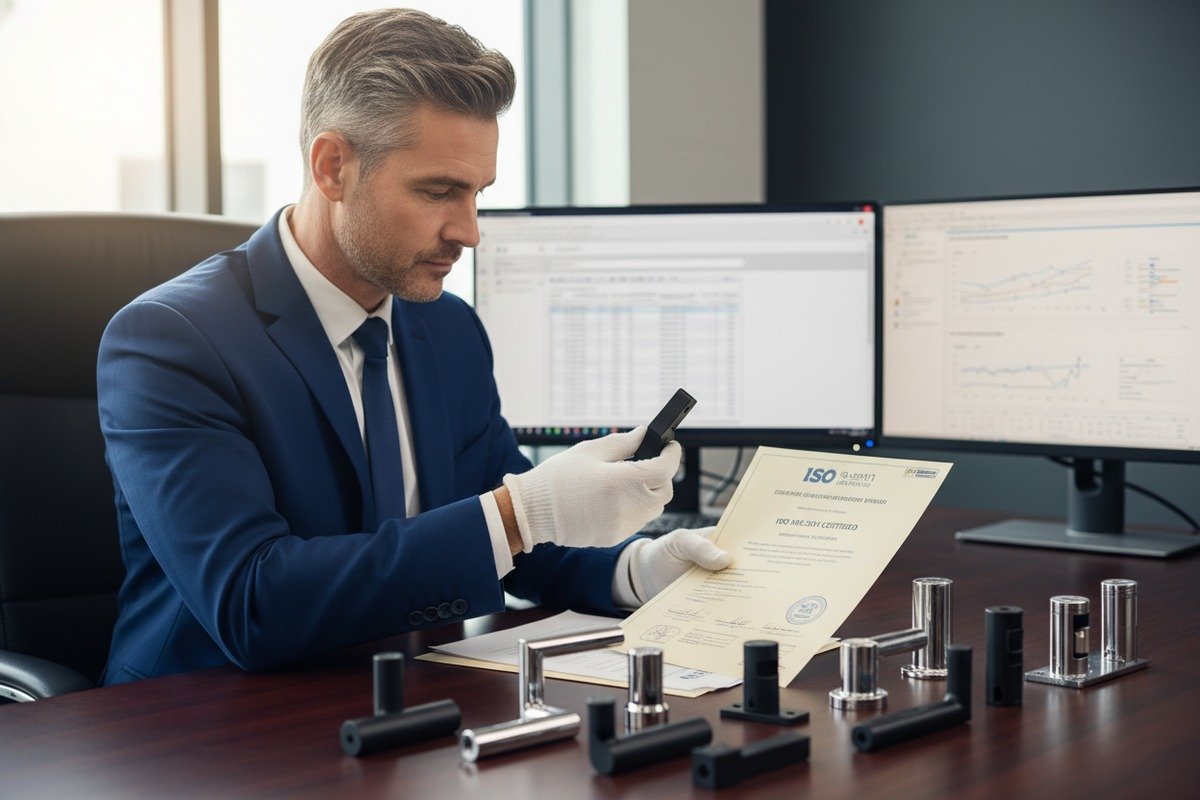
To assess manufacturing flexibility in Chinese cam lock factories, evaluate their customization range, production scalability, equipment adaptability, quality certifications like ISO 9001 and UL, lead time consistency, minimum order quantities, and R&D support capabilities. Factory audits and trial orders are essential verification steps.
Flexibility is not just about saying "yes" to every request SGS-level testing 1. It means having the systems, equipment, and people to actually deliver. Below, we break down the key areas you shoul 2d investigate before committing to a Chinese cam lock supplier.
Can the factory handle my custom OEM requirements for unique cam lock dimensions and finishes?
When we first started receiving OEM requests from European distributors, the biggest challenge was not the design itself — it was proving we could replicate exact dimensions and finishes consistently across every batch.
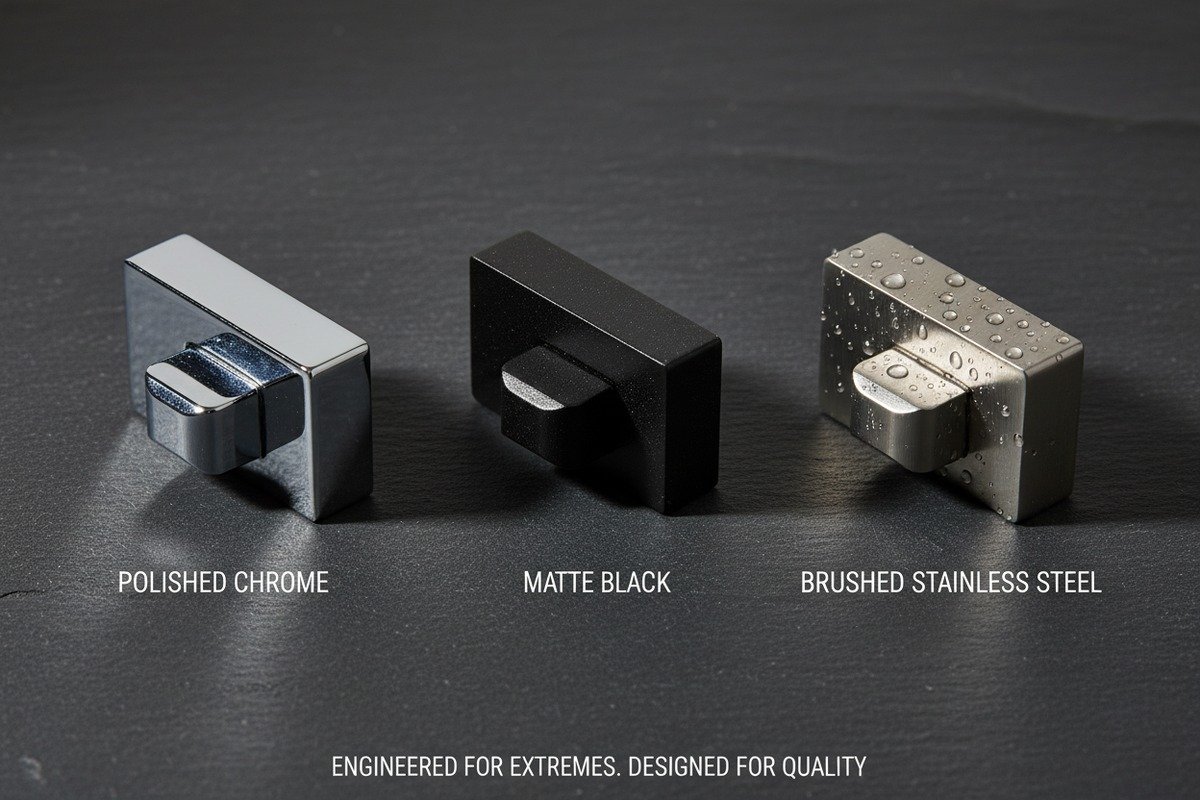
A capable Chinese cam lock factory should offer full OEM customization including unique dimensions, cam shapes, key systems, and surface finishes like chrome, matte black, or powder-coated zinc alloy — all backed by in-house tooling and verifiable quality certifications.
Why Dimensions Matter More Than You Think
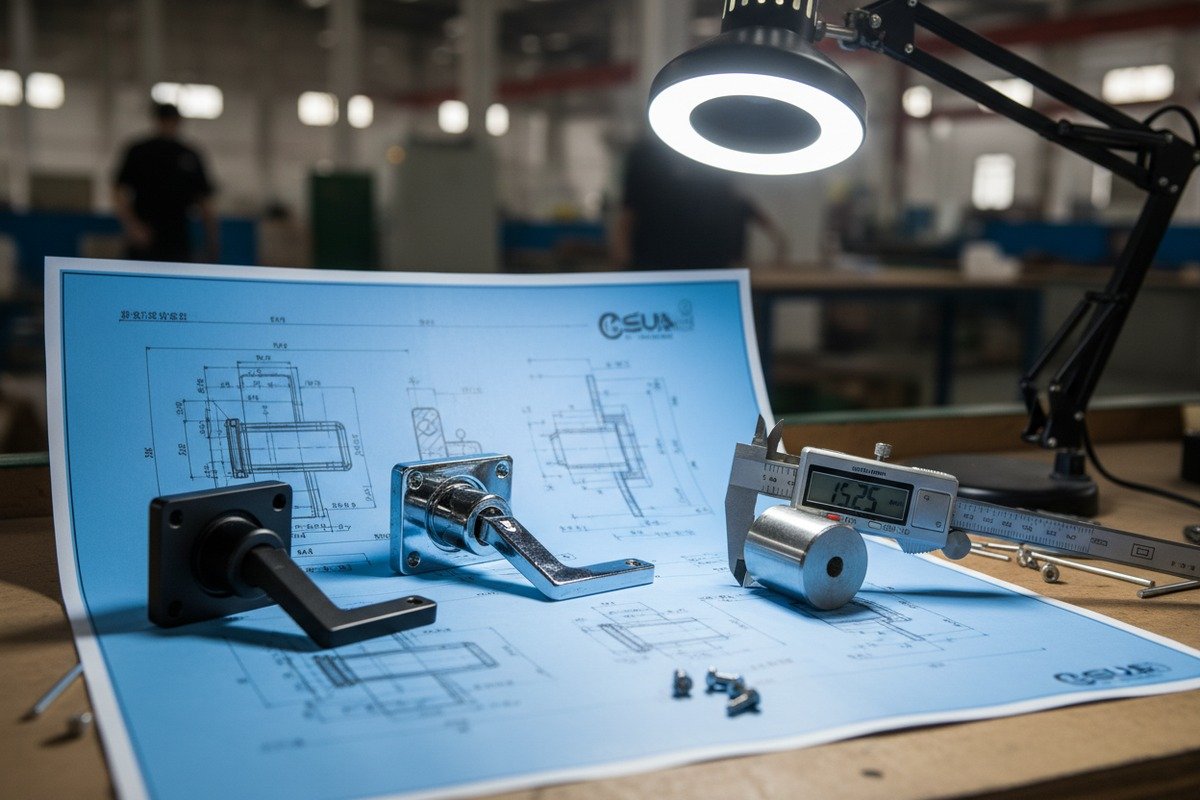
Custom cam lock dimensions are not just about fitting a hole. They affect the locking throw, the door thickness compatibility, and the overall security rating. A factory that cannot adjust body length, cam arm angle, or cylinder diameter with precision is not truly flexible.
In our facility, we use Japanese-imported mold centers and CNC auto lathes to achieve tolerances within ±0.05mm. This matters when your enclosure doors require exact alignment for IP66 or NEMA 4X sealing 3. Even a small deviation can compromise ingress protection.
Finish Options and Material Versatility
Surface finish is where many factories fall short. A truly flexible supplier should offer at least these common options:
| Finish Type | Material Compatibility | Typical Application |
|---|---|---|
| Polished Chrome | Zinková zliatina 4, Brass | Indoor cabinets, server racks |
| Matte Black (Powder Coat) | Zinc Alloy, Steel | Outdoor enclosures, telecom |
| Brushed Stainless Steel | 304/316 Stainless Steel 5 | Marine, food processing |
| Nickel Plating | Brass, Zinc Alloy | Electrical distribution panels |
| Black Zinc Plating | Carbon Steel | Cost-effective industrial use |
Ask the factory for finish samples on different substrates. We always recommend requesting a sample set before committing — it reveals more than any catalog can.
Key Systems and Branding
OEM also means custom key systems. Some buyers need master key compatibility. Others need proprietary keyways for security. A factory with real flexibility will have its own key blank designs and the ability to create new ones. At our facility, we maintain over 200 key profiles and can develop new ones within 10–15 days.
Branding options like laser-engraved logos, custom packaging, and private labeling should also be standard. If a factory hesitates on any of these, their OEM capability is limited.
How to Verify
Request a factory tour — virtual or in-person. Ask to see their die-casting machines 6, mold workshop, and surface treatment line. Count the equipment. A factory with 20+ die-casting machines and dedicated finishing lines has the infrastructure to handle complex OEM work. One with only outsourced finishing does not.
How do I know if their production capacity can scale quickly to meet my urgent project deadlines?
We have had clients call on a Tuesday asking for 10,000 cam locks by month's end — and we have delivered. But that is only possible because our production system was designed for exactly these situations.
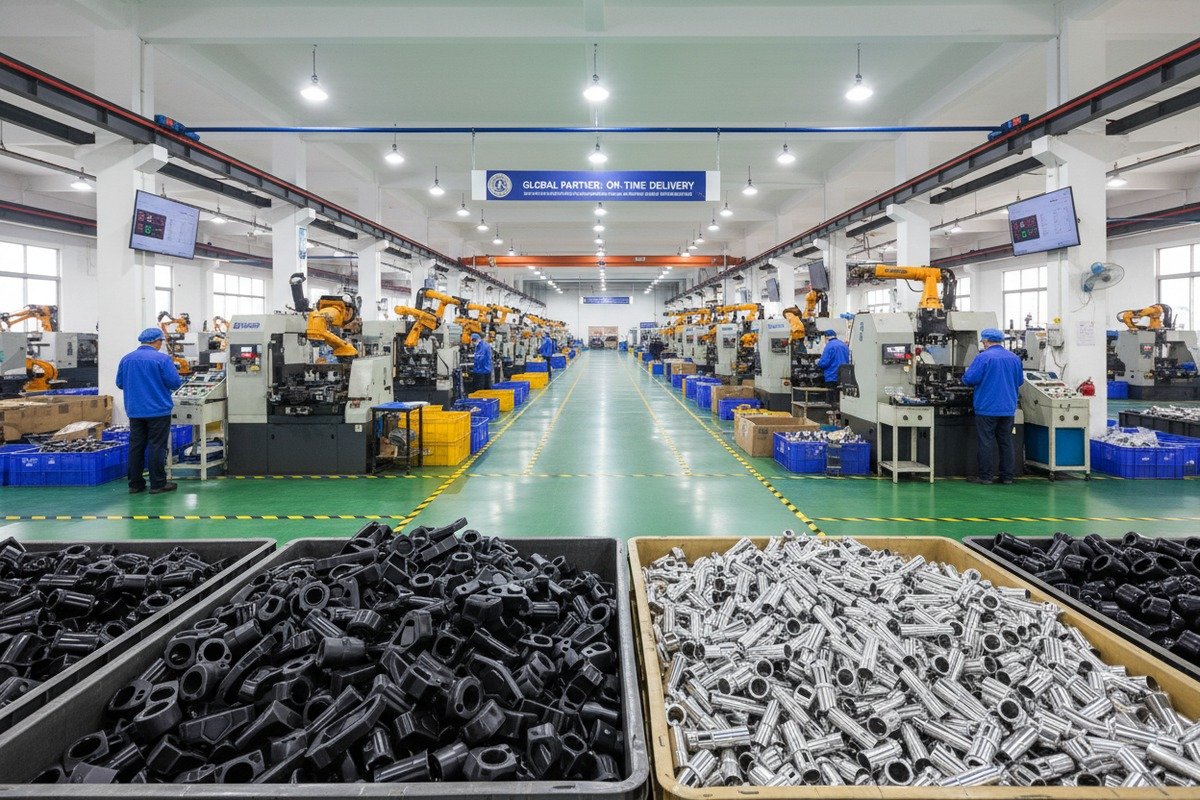
Evaluate production scalability by checking monthly output capacity, number of production lines, workforce flexibility, raw material stock levels, and historical performance on rush orders. Factories producing 4 million+ sets monthly with 20+ die-casting machines typically offer reliable scaling.
Key Metrics to Request
Do not accept vague answers like "we can handle big orders." Ask for specific numbers. Here is what to benchmark:
| Metric | Strong Factory | Weak Factory |
|---|---|---|
| Monthly Output | 4M+ sets | Under 500K sets |
| Die-Casting Machines | 20+ units | Under 5 units |
| Auto Lathes | 10+ units | Under 3 units |
| Raw Material Buffer Stock | 200+ tons zinc alloy on-hand | Order-by-order procurement |
| Workforce (Cam Lock Division) | 100+ dedicated workers | Shared across product lines |
| Standard Lead Time | 15–25 days | 45–60 days |
| Rush Order Capability | Yes, with 30% premium | No rush option |
These numbers tell you whether a factory can actually flex when you need it. Our facility maintains a buffer stock of over 150 tons of zinc alloy and 304 stainless steel specifically so we do not bottleneck on material procurement during demand spikes.
Regional Advantages You Should Leverage
Chinese cam lock manufacturing clusters in Zhejiang — particularly around Ningbo and Pujiang — offer a distinct advantage. Ningbo port 7 is one of the world's busiest, cutting export shipping time by days. The surrounding supplier ecosystem means raw materials, plating services, and packaging are all within a 50km radius. This geographic density translates directly into faster scaling.
When we source components locally, our procurement cycle drops from 10 days to 3. That difference compounds across a rush order timeline.
How to Stress-Test Scalability
Place a small initial order with a tight deadline. Track how the factory performs. Did they meet the date? Was quality consistent? Then gradually increase volume and complexity. This staged approach is safer than committing a six-figure order to an untested supplier.
Also ask for references. A factory that has successfully scaled production for US or European distributors will have case studies or client testimonials available. If they cannot provide any, that is a red flag.
Automation Versus Manual Labor
Factories relying heavily on manual labor can scale by adding shifts, but quality often drops. Factories with automated die-casting, CNC machining, and robotic polishing maintain consistency even at higher volumes. Ask about their automation ratio. In our experience, the best balance is about 70% automated processes with 30% skilled manual assembly and inspection.
Will they support my small-batch trial orders without compromising on quality or lead times?
One thing we learned early on is that small orders often lead to the biggest long-term partnerships. A distributor in Germany once started with just 300 cam locks — today they order 50,000 units per quarter from us.
Reputable Chinese cam lock factories accept small-batch trial orders as low as 200 units with standard lead times of 15–21 days, maintaining full quality control protocols including 100% inspection, SGS-level testing, and the same certifications applied to large production runs.
Why Small-Batch Capability Signals True Flexibility
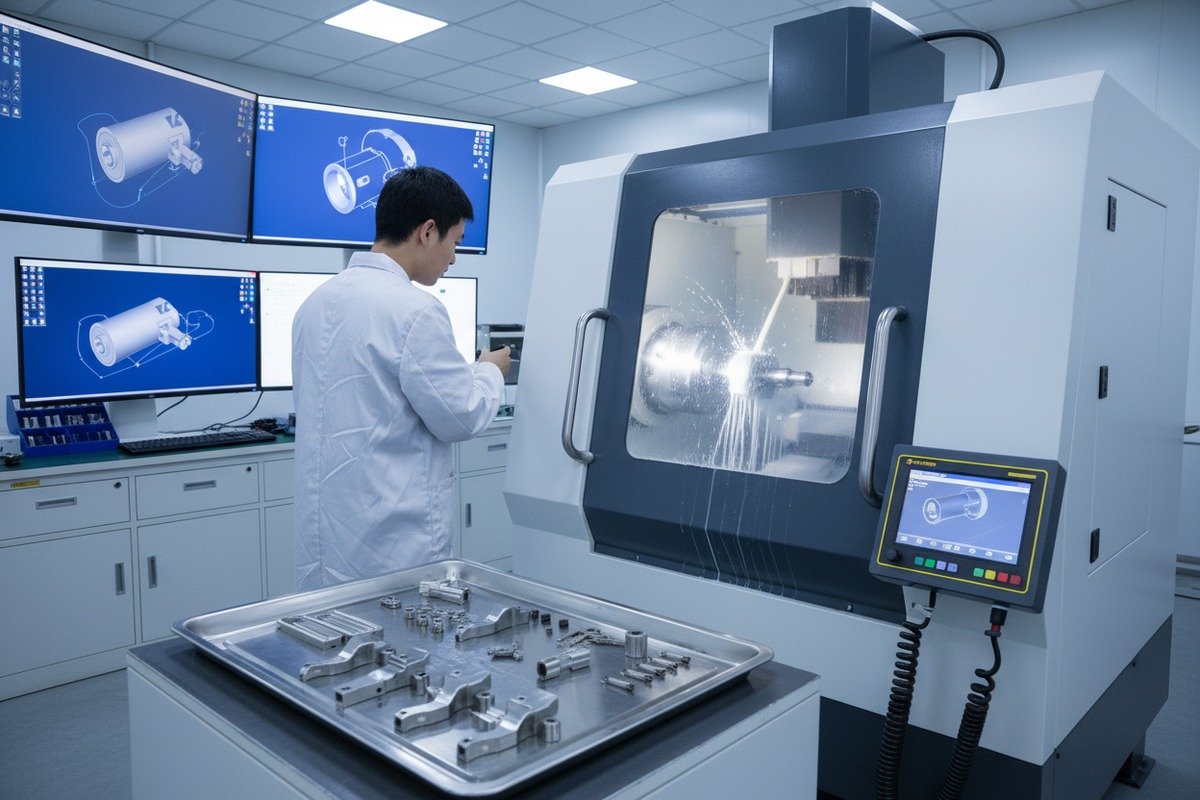
Any factory can perform well on a 100,000-unit order — there is economy of scale, dedicated production runs, and financial motivation. The real test of flexibility is how they treat a 200-unit trial. Do they assign it to the same production line? Do they run the same quality checks? Or do they rush it through a secondary line with fewer controls?
At our facility, every order — regardless of size — goes through the same 35+ testing devices. Torque testing, salt spray testing, cycle life testing, and dimensional verification happen on trial batches exactly as they do on full production runs. This is non-negotiable for us because our IAPMO, UL, and TUV certifications require process consistency.
What to Watch For in Small-Batch Pricing
Small batches naturally cost more per unit. But the markup should be reasonable. Here is a rough framework:
| Order Size | Expected Price Premium Over Bulk | Acceptable Lead Time |
|---|---|---|
| 200–500 units | 15–25% above bulk price | 15–21 days |
| 500–2,000 units | 8–15% above bulk price | 18–25 days |
| 2,000–10,000 units | 3–8% above bulk price | 20–30 days |
| 10,000+ units | Bulk pricing | 25–35 days |
If a factory quotes you 50% above bulk price for a trial order, they are either discouraging small orders or their production system is not efficient enough to handle them economically. Neither is a good sign.
Quality Assurance on Trial Orders
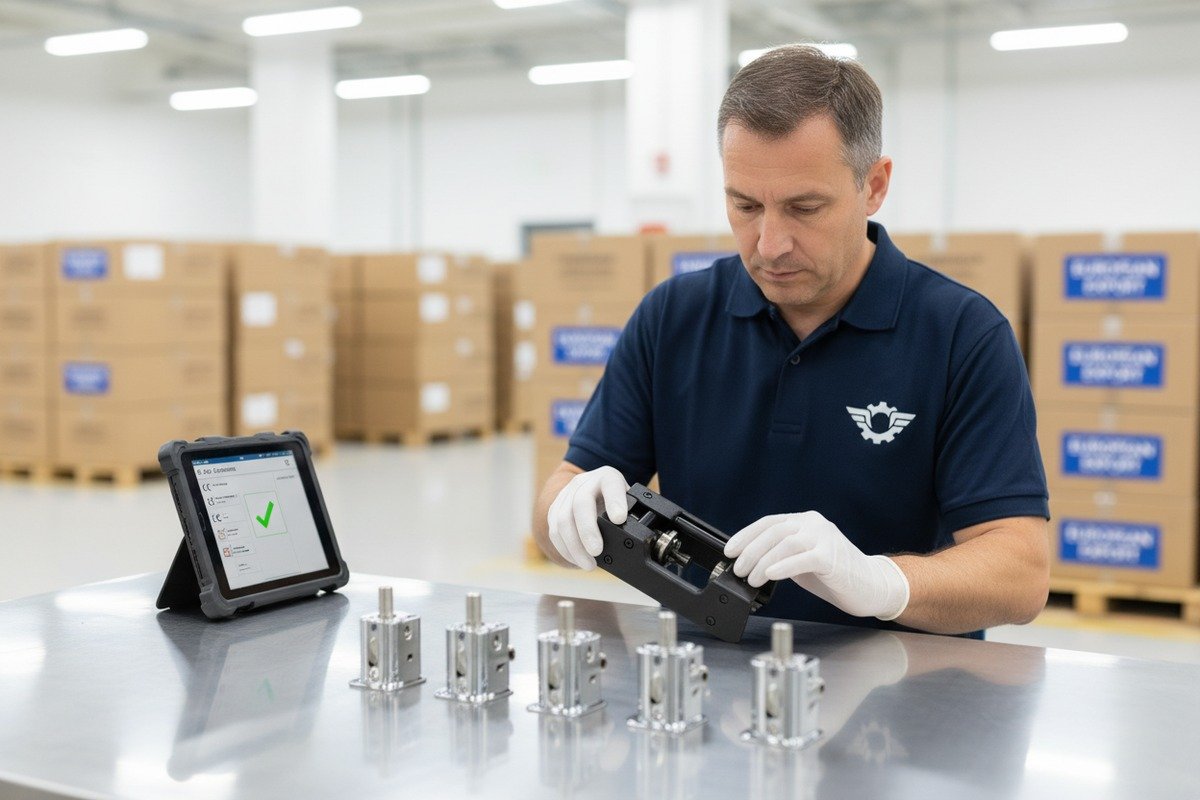
Ask for a full inspection report with your trial order. This should include dimensional measurements, finish thickness readings, torque test results, and photo documentation. We include these reports as standard — they serve as a baseline for future production runs and give the buyer confidence before scaling up.
Also verify that the factory uses the same raw materials on trial batches. Some factories substitute cheaper zinc alloy grades for small runs because the cost difference on premium materials is more noticeable at low volumes. Request a material certificate (mill cert) with your shipment.
The Trial-to-Production Transition
A good factory will treat your trial order as the first step in a relationship, not a one-off transaction. They should proactively offer feedback: suggestions on design optimization, material upgrades, or cost reductions for scaling. When we complete a trial run, our engineering team prepares a brief report highlighting any production observations and recommendations. This kind of engagement shows a factory that thinks long-term.
Can I rely on their R&D team to provide the CAD design assistance my specific application needs?
Early in our business, a telecom rack manufacturer in North America sent us a rough sketch on a napkin — literally a photo of a hand-drawn concept. Our R&D team turned that sketch into a production-ready CAD model in four days.
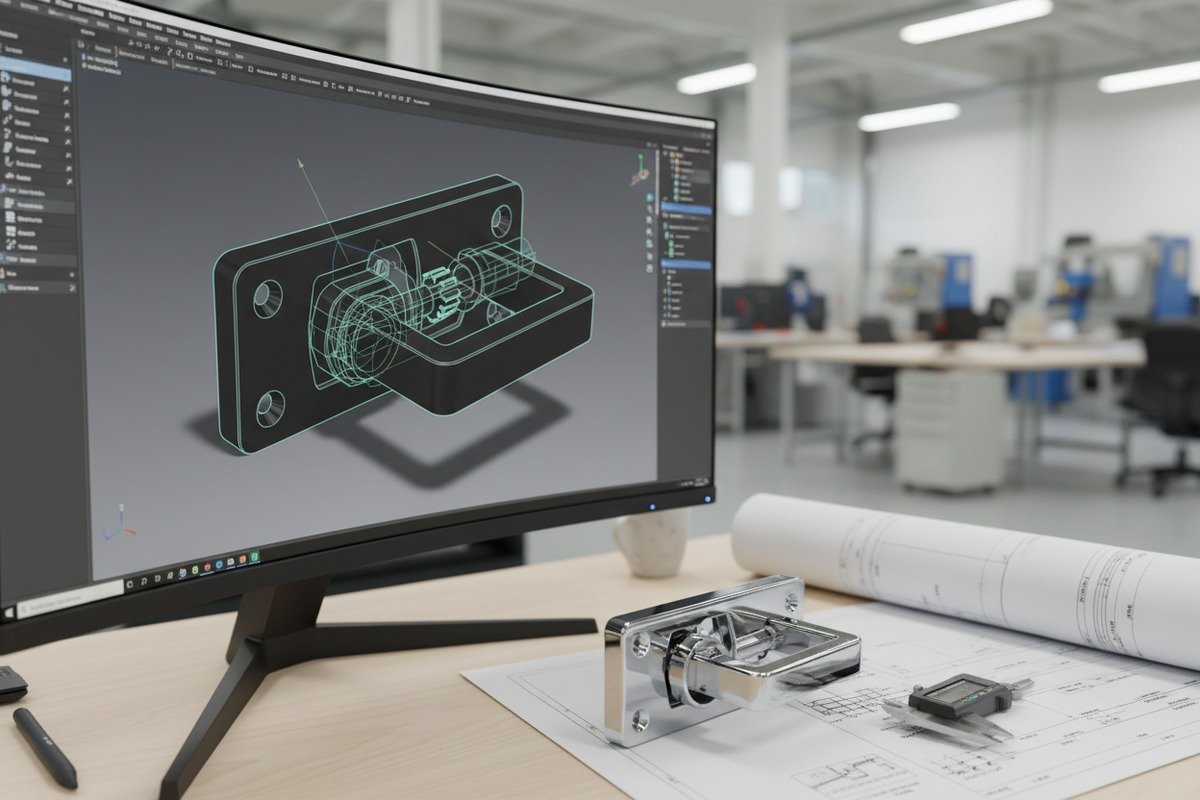
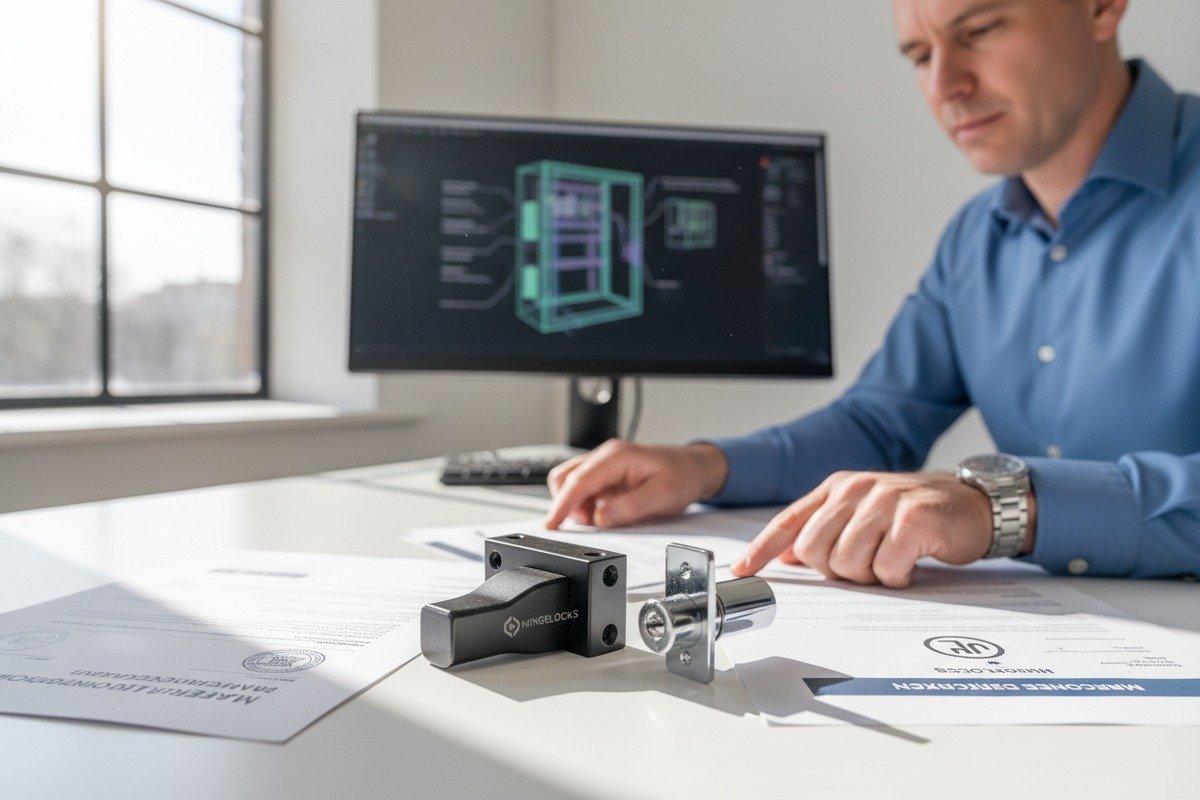
Yes, established Chinese cam lock factories with dedicated R&D teams offer free CAD design assistance, including 3D modeling, tolerance analysis, material selection guidance, and prototype development — typically delivering initial design drafts within 3–7 business days for custom application requirements.
What R&D Support Should Look Like
Real R&D support goes beyond just drawing a 3D model. It means the engineering team understands the application. For cam locks used in electrical enclosures, this includes knowledge of:
- Door thickness ranges and panel cutout standards
- IP and NEMA sealing requirements
- UL 508A enclosure compliance
- Vibration and shock resistance for industrial environments
- Corrosion resistance standards for outdoor installations
Our R&D team includes engineers with specific experience in NEMA-rated enclosure hardware. When a client sends a design request, we do not just model the lock — we evaluate whether it will work in the intended environment. If it will not, we say so and propose alternatives.
Evaluating R&D Capability
Here are practical ways to assess a factory's R&D strength:
Ask how many engineers are on staff. A team of 5–10 dedicated R&D engineers is a solid indicator. Fewer than 3 suggests design work is outsourced or handled by production staff part-time.
Request a portfolio of past custom designs. Any confident R&D team will have case studies showing custom cam locks they developed — including the problem, the design solution, and the production outcome.
Test their responsiveness. Send them a design challenge. Describe your application and ask for a preliminary concept. Track how quickly they respond and how thoughtful the proposal is. Our standard turnaround for an initial CAD concept is 3–5 business days, with a detailed feasibility report included.
The Value of Free Design Services
Many factories — ours included — offer free CAD design and sample services. This is not charity. It is a strategic investment in the relationship. A well-designed custom cam lock that solves your exact problem creates a natural barrier to switching suppliers. Both sides benefit.
However, "free" should not mean "low effort." The design package should include 2D engineering drawings with GD&T annotations, 3D renderings for approval, material specifications, and a cost estimate for tooling and production. If a factory sends you only a basic sketch and calls it CAD support, look elsewhere.
Prototyping and Validation
After CAD approval, the factory should offer rapid prototyping — either CNC-machined samples or 3D-printed models for fit testing. We typically deliver functional prototypes within 10–15 days of design approval. These prototypes are then tested against the same standards as production parts: torque, cycle life, corrosion resistance, and dimensional accuracy.
This step is critical for applications like energy storage enclosures or EV charger cabinets where the cam lock must meet specific safety certifications. Skipping prototyping and going straight to tooling is a common mistake that costs buyers both time and money.
Intellectual Property Protection
One concern buyers raise about sharing designs with Chinese factories is IP protection. Legitimate factories address this through NDA agreements 9, design ownership clauses in contracts, and — increasingly — patent co-registration. Ask the factory about their IP policy before sharing sensitive designs. Our standard practice includes signing an NDA before any design work begins, with clear terms stating the client owns all custom design IP.
Záver
Assessing manufacturing flexibility in Chinese cam lock factories comes down to verifiable evidence — audit their equipment, test their responsiveness with trial orders, and validate their R&D capability with a real design challenge.
Footnotes
1. Official SGS page describing their global laboratory testing services for various industries. ↩︎
2. Official site for UL Solutions, providing product safety certification and standards. ↩︎
3. Replaced broken link with an authoritative Wikipedia page explaining NEMA 4X enclosures and their comparison to IP ratings. ↩︎
4. Explains the properties, common applications, and uses of various zinc alloys. ↩︎
5. Replaced broken link with an authoritative article from Ryerson, a metals supplier, detailing the differences between 304 and 316 stainless steel. ↩︎
6. Provides a comprehensive overview of the die casting process and the types of machines used. ↩︎
7. Official website of Ningbo Zhoushan Port Group, detailing its operations and global connections. ↩︎
8. Official information on the ISO 9001 quality management system standard. ↩︎
9. Defines non-disclosure agreements as legal contracts to protect confidential information. ↩︎



 Slovak
  English
  Spanish
  French
  German
  Japanese
  Arabic
  Korean
  Swedish
  Dutch
Dutch  Greek
Greek  Hindi
Hindi  Hebrew
  Italian
  Vietnamese
  Thai
Thai  Bulgarian
  Czech
Czech  Hungarian
  Finnish