
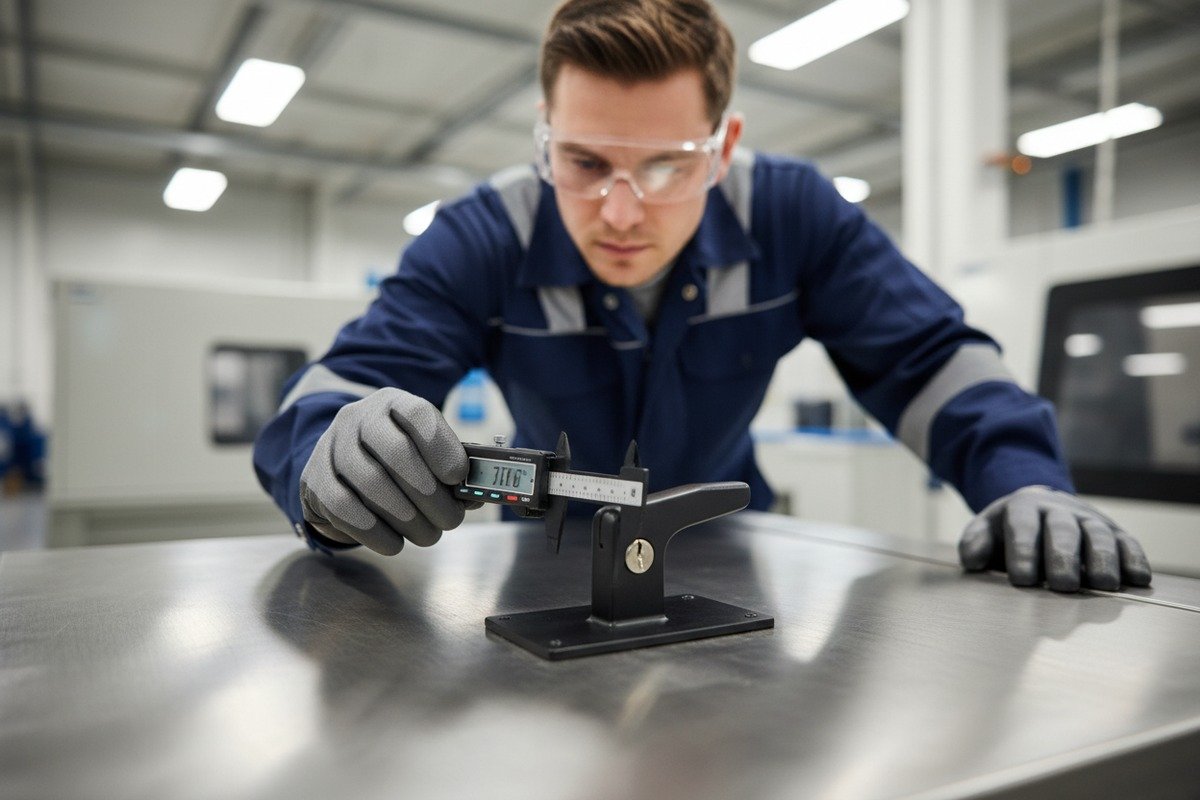
Every year, our technical support team fields dozens of urgent calls from engineers who installed locks that failed compliance audits 1—sometimes weeks before a facility was set to go live. The cost of getting it wrong is not just financial EU NANDO database 2. A single seal failure on a chemical tanker can run over $60,000 per fleet, and in explosive atmospheres 3, a non-compliant lock can become a direct ignition source. The problem is real, and it hits procurement managers and system integrators hardest when they realize their "certified" lock was never rated for their specific zone or gas group. explosion-proof cabinet locks 4
Engineers can avoid ATEX compliance pitfalls by verifying zone-specific certifications, selecting corrosion-resistant materials like 316L stainless steel, demanding full documentation from suppliers, and refusing any unauthorized modifications to certified explosion-proof cabinet locks.
This guide breaks down the four most common areas where engineers stumble. Each section gives you practical steps, data-backed insights, and clear criteria so you can make confident decisions the first time around.
How do I verify that a manufacturer's ATEX certification for cabinet locks is valid for my specific hazardous zone?
We have shipped ATEX-rated hardware to clients in over 20 countries, and the single biggest mistake we see is engineers assuming that one ATEX certificate covers all zones. It does not. A lock certified for Zone 2 will fail an audit if installed in a Zone 1 area, and the consequences are immediate.
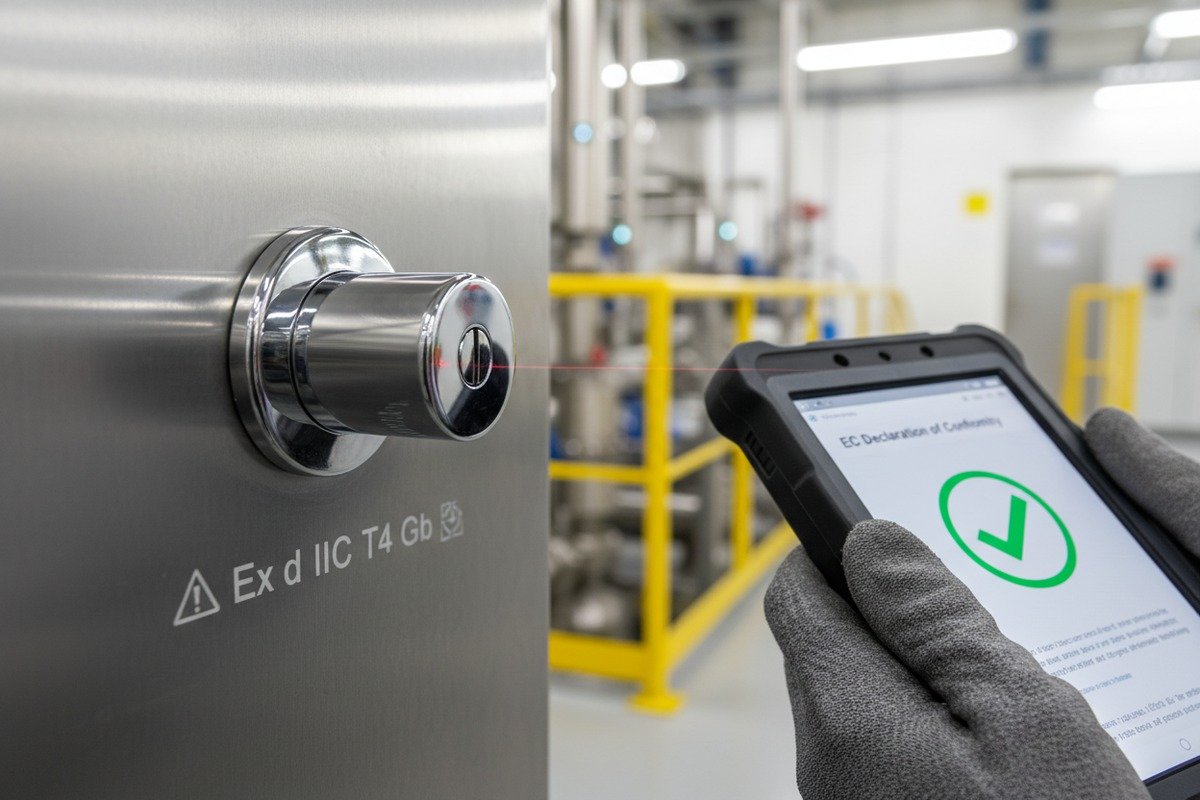
To verify ATEX certification validity, cross-reference the lock's EC Declaration of Conformity with directive 2014/34/EU, confirm the specific zone marking (e.g., Zone 1 or Zone 21), check the gas/dust group rating (IIA, IIB, IIC), and validate the certificate number with the issuing Notified Body.
Understanding Zone Classifications
ATEX zones define how frequently an explosive atmosphere is present. Getting the zone wrong is the root cause of most compliance failures. Here is a quick reference:
| Zone | Atmosphere Type | Frequency of Hazard | Typical Locations |
|---|---|---|---|
| Zone 0 / 20 | Gas / Dust | Continuously present | Inside tanks, silos |
| Zone 1 / 21 | Gas / Dust | Likely during normal operation | Near filling points, processing areas |
| Zone 2 / 22 | Gas / Dust | Not likely, but possible | Storage rooms, outer edges of hazardous areas |
A lock rated for Zone 2 uses a lower Equipment Protection Level 5 (EPL), typically Gc. If your cabinet sits beside a reactor vessel classified as Zone 1, you need EPL Gb or higher. There is no grey area here. The ATEX directive 2014/34/EU 6 is explicit: the equipment must match the zone.
How to Read an ATEX Marking
Every certified lock carries a marking string. Here is how to decode it:
- Ex — Explosion protection
- d — Protection method (e.g., flameproof enclosure)
- IIC — Gas group (IIC is the most restrictive, covering hydrogen)
- T4 — Temperature class (T4 = max surface temp of 135°C)
- Gb — Equipment Protection Level for Zone 1
If your hazardous area assessment specifies IIC gases and your lock is only rated for IIA, it is non-compliant. Period. Our engineering team always recommends requesting the full ATEX marking string from any supplier before placing an order.
Validating the Notified Body
The certificate number on the lock should trace back to a recognized Notified Body 7 listed on the EU NANDO database. If the Notified Body's accreditation has lapsed or the certificate number does not appear in the database, the lock is not legally compliant within the EU. We have seen cases where counterfeit certificates circulated in the market. A five-minute check on the NANDO website can save you months of project delay.
It is also critical to check whether the certificate is for the complete lock assembly or just a component. A certified cylinder does not make the entire latch assembly compliant. The full lock—including the cam, handle, gasket, and mounting hardware—must be covered under one certificate for the assembly to maintain enclosure integrity.
Which material grades should I prioritize to ensure my explosion-proof locks resist corrosion in harsh environments?
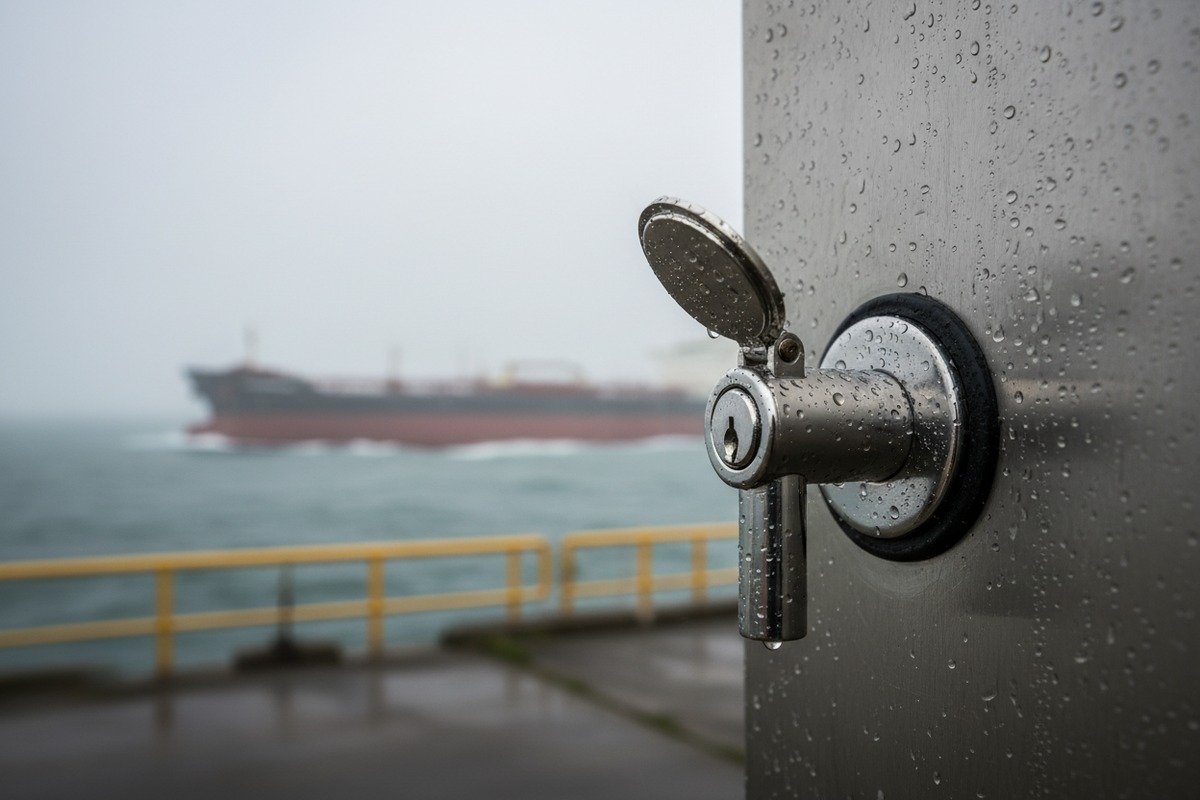
When our R&D team tested prototype locks on a North Sea chemical tanker, the results were eye-opening. Non-marine-rated enclosures showed 50% seal failure within just eight months due to saltwater corrosion. That single data point changed how we approach material selection for every ATEX-rated product on our production line.
For harsh environments, prioritize 316L stainless steel for maximum corrosion resistance, especially in marine or chemical settings. For less aggressive conditions, 304 stainless steel or powder-coated zinc alloy may suffice, but always match the material to the ISO 12944 corrosivity category (C3–C5M) of your installation site.
Material Comparison for ATEX Lock Applications
Choosing the right material is not just about longevity. A corroded lock compromises the gasket seal. corrosion resistance 8 A compromised seal allows spark escape or vapor ingress. The chain of failure is fast and expensive. Here is a practical comparison:
| Material | Corrosivity Rating | Best For | Limitations |
|---|---|---|---|
| 316L Stainless Steel 9 | C5M (Marine/Industrial) | Offshore platforms, chemical plants, coastal facilities | Higher cost, heavier |
| 304 Stainless Steel | C3–C4 (Urban/Industrial) | Indoor chemical storage, food processing | Pitting risk in chloride-rich environments |
| Powder-Coated Zinc Alloy | C2–C3 (Mild) | Indoor electrical cabinets, warehouses | Coating damage exposes base metal; not suitable for marine |
| Chrome-Plated Steel | C2 (Low) | Dry, controlled indoor environments | Rapid corrosion in any moisture; chrome can flake |
Why IP Rating and Material Work Together
A lock made from 316L stainless steel but poorly sealed will still fail. Material and ingress protection must work in tandem. For ATEX cabinets in harsh environments, you need at minimum IP66 (dust-tight, powerful water jets). For submerged or wash-down scenarios, IP67 is required.
Our production facility runs salt spray tests exceeding 1,000 hours on all stainless steel lock assemblies destined for marine or offshore clients. This is critical because corrosion does not just weaken the lock body. It attacks the gasket seat, the cam arm pivot, and the mounting screws. If any of these fail, enclosure integrity is lost—and so is your ATEX compliance.
Static Discharge Considerations
In explosive atmospheres, even the material surface finish matters. A lock surface that accumulates static charge can become an ignition source. This is why ATEX-compliant locks should use materials and coatings that dissipate static. Polished chrome finishes, while aesthetically clean, need to be verified for conductivity and grounding continuity. Matte black powder coatings often include anti-static additives for this reason. Always ask your supplier for the surface resistivity data sheet.
Data from post-2021 ATEX enforcement updates shows that stricter energy storage limits for capacitive and inductive components in locks have reduced fault risks by 25–40%. Material selection plays directly into this—conductive paths through the lock body must be continuous and grounded.
Can I customize the design of my cabinet latches without compromising their ATEX safety rating?
This is the question we hear most from OEM partners. They want a specific handle profile, a unique keying system, or a particular mounting footprint. And we understand—product differentiation matters. But ATEX regulations are unforgiving when it comes to modifications.
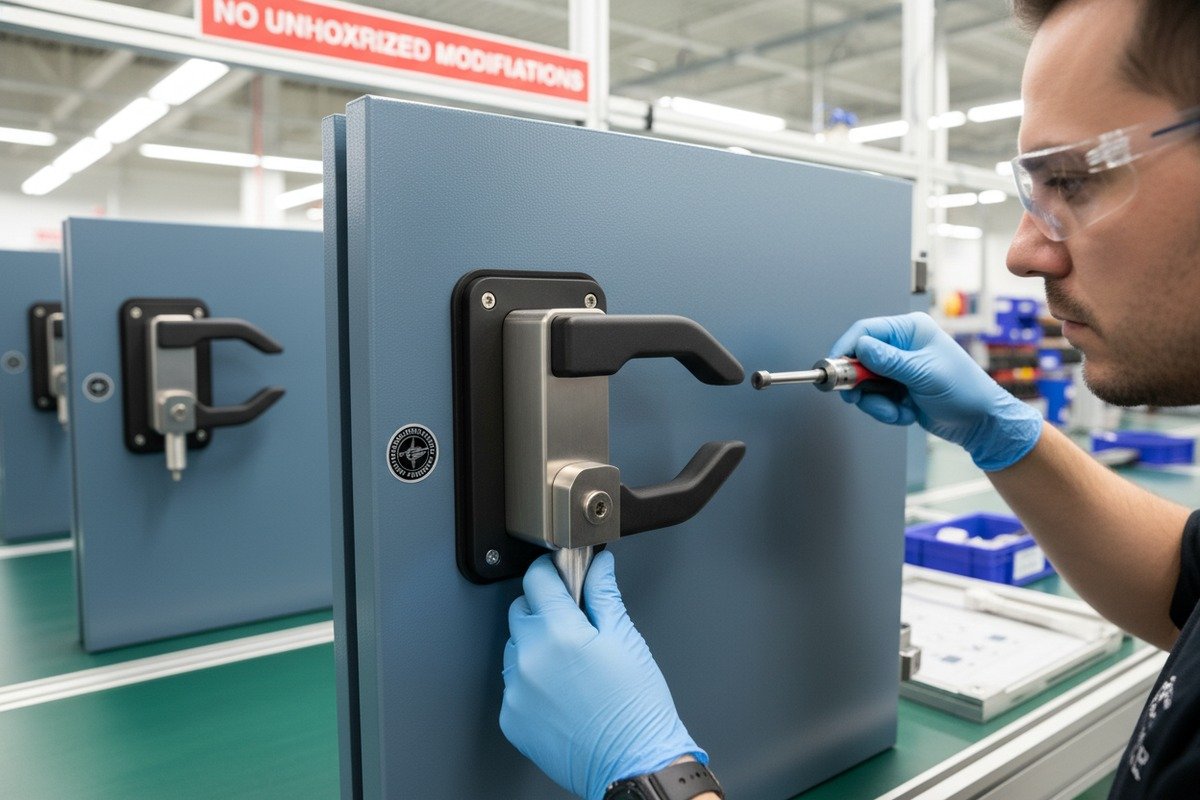
You can customize ATEX cabinet latches only if the modifications are tested and re-certified by an accredited Notified Body. Any unauthorized change—drilling new holes, swapping gasket materials, altering cam geometry—voids the existing ATEX certificate and creates a direct compliance and safety risk.

What Counts as a Modification?
The ATEX directive draws a hard line. Even changes that seem minor to an engineer can void a certification. Here are common examples:
- Drilling an additional mounting hole in the lock plate — this breaches the enclosure wall and creates a potential spark escape path.
- Replacing the gasket with a different material or durometer — the original gasket was tested as part of the certified assembly.
- Changing the cam arm length — this alters the compression force on the seal, potentially creating gaps.
- Adding a sensor or wiring to the lock mechanism — this introduces electrical energy into a certified mechanical device.
The regulation is clear: if it was not part of the original type-examination certificate, it is not covered. Some engineers argue that a small hole or a gasket swap is "practically harmless." Data tells a different story. Studies show that 20–30% of explosion-proof enclosure incidents trace back to improper cable glands, modified seals, or unauthorized hardware changes.
The Right Way to Customize
At our facility in Xi'an, we work with clients on custom ATEX lock designs from the ground up. The process looks like this:
- Define requirements — Handle style, keying, mounting dimensions, IP rating 10, zone classification.
- Engineering design — Our R&D team creates CAD drawings (free of charge) incorporating ATEX constraints.
- Prototype and test — Physical samples are built and subjected to explosion pressure, thermal cycling, salt spray, and vibration testing.
- Notified Body review — The custom design is submitted to an accredited body for type-examination.
- Certification issued — Only after passing all tests does the custom lock receive its own ATEX certificate.
This process takes longer than buying off-the-shelf, but it is the only legal and safe path to customization. We typically deliver custom certified locks within 25–35 days after certification is in hand.
Modular Lock Systems: A Practical Middle Ground
A growing trend in the industry is modular, pre-certified lock systems. These systems offer interchangeable components—different handle styles, cam lengths, and keying options—that have all been tested and certified as a family. This gives engineers flexibility without the risk of voiding compliance.
Our swing handle latches and cam latch families, for example, include multiple certified configurations. A client can choose between a matte black swing handle with an integrated keyhole or a polished chrome cam latch with a triangular drive socket, and both configurations are covered under the same ATEX family certificate. This approach eliminates the need for re-certification while still allowing meaningful design variation.
| Customization Type | Requires Re-Certification? | Risk Level if Unauthorized |
|---|---|---|
| Handle finish change (within certified options) | No | Low |
| Gasket material swap | Yes | High — seal integrity at risk |
| Additional mounting holes | Yes | Critical — enclosure breach |
| Cam arm length modification | Yes | High — compression force change |
| Keying system change (within certified family) | No | Low |
| Adding electronic sensor | Yes | Critical — introduces energy source |
What documentation should I demand from my supplier to guarantee full compliance during a safety audit?
During a recent factory audit by a European distributor, our quality team walked through every document in our ATEX compliance file. The auditor told us that fewer than half of the suppliers he visits can produce a complete set on request. That gap is where compliance failures—and legal liability—begin.
Demand these documents from your supplier: the EU Declaration of Conformity per 2014/34/EU, the type-examination certificate from a Notified Body, the full ATEX marking details, material certificates (e.g., EN 10204 3.1), test reports for IP rating and explosion pressure, and a quality assurance notification per Annex IV or VII.
The Complete Documentation Checklist
A safety auditor will look for a clear, traceable paper trail. Missing even one document can trigger a non-conformity finding. Here is the full list:
| Document | Purpose | Who Issues It |
|---|---|---|
| EU Declaration of Conformity | Legal declaration that the product meets 2014/34/EU | Manufacturer (us) |
| Type-Examination Certificate (Module B) | Proof that the design passed ATEX testing | Notified Body |
| Quality Assurance Notification (Module D or E) | Proof of production quality system | Notified Body |
| Material Certificates (EN 10204 3.1) | Traceability of metal grades (e.g., 316L) | Raw material supplier |
| IP Test Report | Proof of ingress protection rating | Accredited test lab |
| Explosion Pressure Test Report | Proof the lock withstands internal explosion | Accredited test lab |
| Installation Instructions | Correct mounting, torque specs, gasket placement | Manufacturer |
| Marking Label Specification | Shows the complete ATEX marking string on the product | Manufacturer |
Why "ATEX Certified" on a Datasheet Is Not Enough
We have seen competitors put "ATEX Certified" in bold on a product brochure with no supporting documentation. This is a red flag. A valid ATEX certification is not a marketing claim—it is a legal status backed by a specific certificate number, a Notified Body's audit, and a traceable production quality system.
When you ask a supplier for documentation and they hesitate, delay, or provide generic responses, consider it a serious warning sign. In our experience working with procurement managers across North America and Europe, the suppliers who cannot produce documents quickly usually do not have them at all.
Life Cycle Documentation and Maintenance Records
Compliance does not end at installation. ATEX regulations require ongoing documentation throughout the lock's operational life. This includes:
- Inspection logs — Regular visual and functional checks of the lock, gasket, and mounting.
- Maintenance records — Any seal replacement, re-torquing, or cleaning must be documented.
- Repair authorization — Self-repairs void the certificate. Only authorized service providers should perform work on ATEX-certified hardware.
- Obsolescence management — If a lock model is discontinued, you need documented proof that the replacement is equally or more stringently certified.
Our clients receive a full compliance package with every shipment, including digital copies of all certificates, material traceability reports, and installation guides in English. We also offer ongoing technical support for audit preparation—because we know that the audit does not care what your supplier promised over email. It cares what you can prove on paper.
Smart Locks and Digital Compliance Records
A newer trend driven by Industry 4.0 is the integration of smart monitoring into ATEX-certified lock systems. Temperature and humidity sensors embedded in the lock or cabinet can log environmental data continuously. This data becomes part of your compliance record, proving that the cabinet operated within its rated temperature class (e.g., T4, T5) throughout its service life.
However, any smart feature added to an ATEX lock must itself be ATEX-certified. And cybersecurity is an emerging concern—unauthorized digital access to a smart lock's control system could theoretically disable safety interlocks. Always verify that your smart lock supplier addresses both ATEX certification and cybersecurity protocols in their documentation.
Human Factors Engineering also plays a role in documentation. Locks that are intuitive to operate—with clear status indicators and ergonomic handles—reduce the risk of human error. Your documentation package should include usability guidelines and training materials so that maintenance personnel operate the locks correctly every time.
Conclusion
Selecting ATEX-compliant cabinet locks demands precision in certification verification, material selection, customization discipline, and documentation rigor. Cut corners here, and the cost is measured in safety failures, audit shutdowns, and six-figure replacement bills. If you need guidance on selecting or customizing explosion-proof locks for your specific zone and environment, reach out to our team at sales@hingelocks.com. We will help you get it right the first time.
Footnotes
1. Explains the purpose and typical inclusions of ATEX compliance audits for risk management. ↩︎
2. Official European Commission database listing Notified and Designated Organisations for conformity assessment. ↩︎
3. Defines explosive atmospheres and explains their causes and risks in workplaces. ↩︎
4. Provides an overview of ATEX equipment and its application in potentially explosive atmospheres. ↩︎
5. Explains Equipment Protection Levels (EPL) and their classification in ATEX and IEC standards. ↩︎
6. Provides the official scope and application of ATEX Directive 2014/34/EU for equipment. ↩︎
7. Defines a Notified Body and its crucial role in certifying products for the European market. ↩︎
8. Explains corrosion as a material degradation process and lists various resistant materials. ↩︎
9. Details 316L stainless steel's high corrosion resistance due to nickel and molybdenum content. ↩︎
10. Defines IP ratings (Ingress Protection) as per IEC 60529 for protection against solids and liquids. ↩︎





 Hindi
Hindi  English
  Spanish
  French
  German
  Japanese
  Arabic
  Korean
  Swedish
  Dutch
Dutch  Greek
Greek  Hebrew
  Italian
  Vietnamese
  Thai
Thai  Bulgarian
  Czech
Czech  Slovak
  Hungarian
  Finnish