

Every year, our export team fields dozens of calls from North American buyers scrambling to fix documentation gaps that stall their cabinet projects at customs or during final UL evaluation OSHA fines 1. The problem is real: missing or incomplete material declarations 2 can void insurance, trigger OSHA fines up to $15,625, and delay shipments by weeks. After 35 years of manufacturing electric cabinet hinges and latches at our Xi'an facility, we have learned that getting material declarations right from the start is the only way to avoid these costly setbacks.
UL-certified export power distribution cabinet hardware requires material composition declarations, RoHS/REACH compliance certificates, conflict mineral reports (3TG), UL Recognized Component marks, material test reports verifying fire resistance, corrosion resistance, and temperature performance, plus Environmental Product Declarations for sustainability-driven markets.
This article breaks down the exact documents you need, the standards that govern them, and how to work with your hardware supplier to keep your UL certification on track. Let's walk through each critical area step by step.
How do I ensure the stainless steel grade in my hinges meets UL standards for industrial enclosures?
Sourcing the wrong stainless steel grade for cabinet hinges is one of the fastest ways to fail a UL evaluation. In our experience shipping hinges to the US and Europe, grade mix-ups between 304 and 316 stainless steel cause more project delays than almost any other single issue.
To ensure your hinge stainless steel meets UL standards, request mill certificates (MTR/MTC) specifying the exact alloy grade, verify compliance with UL 50 or UL 50E enclosure requirements for corrosion and temperature resistance, and confirm the material is traceable to an approved supplier through your manufacturer's quality system.
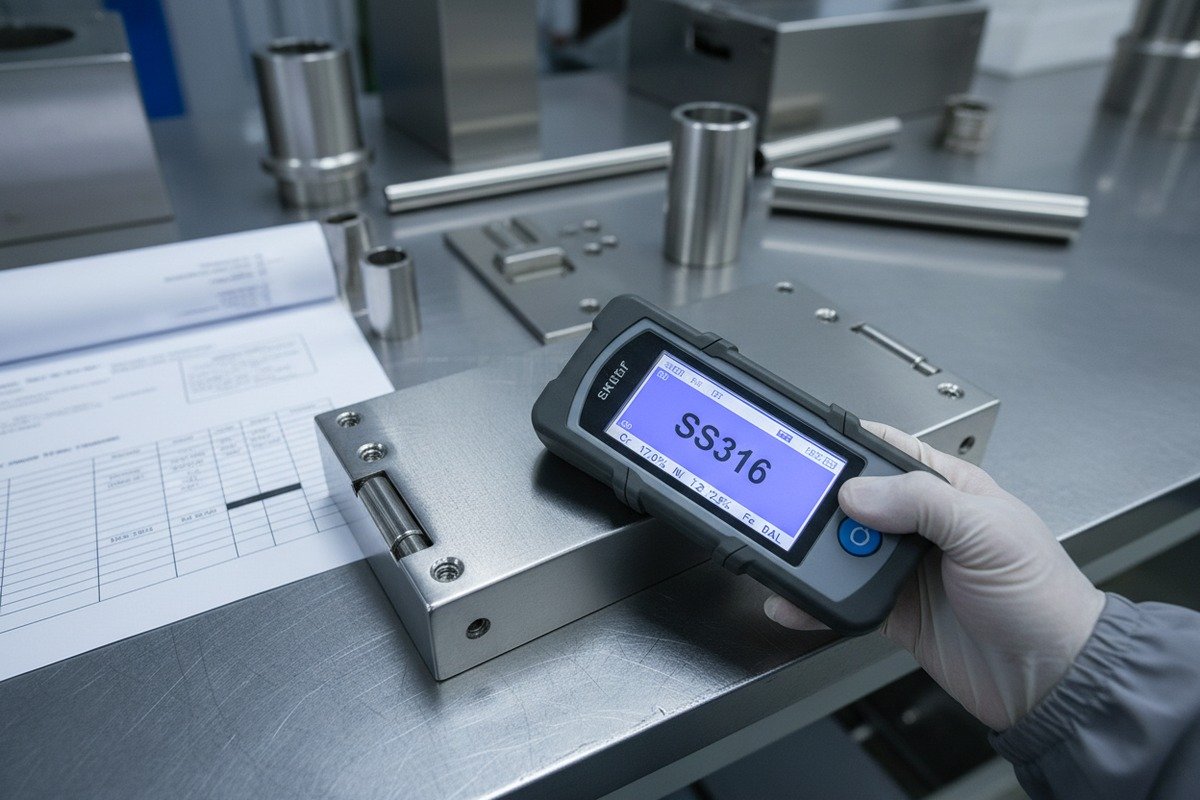
Why Stainless Steel Grade Matters for UL Compliance
UL 50 and UL 50E 3 set strict performance benchmarks for enclosure hardware. Hinges must withstand temperature ranges from -40°F to 140°F without warping, cracking, or losing mechanical strength. They must also resist corrosion in environments where moisture, chemicals, or salt spray are present. The stainless steel grade directly determines whether your hinge passes or fails these tests.
Grade 304 stainless steel works well for most indoor NEMA 12 applications. It offers good general corrosion resistance at a moderate cost. Grade 316 stainless steel 4 adds molybdenum, which provides superior resistance to chlorides and harsh chemicals. This makes 316 the go-to choice for NEMA 4X outdoor enclosures or coastal installations.
Key Documents to Request from Your Supplier
When we ship hinges to our North American distributors, every batch includes a package of traceability documents. Here is what you should ask for:
| Document | What It Proves | When You Need It |
|---|---|---|
| Mill Test Report (MTR/MTC) | Exact alloy composition, tensile strength, yield strength | Every shipment; required by UL auditors |
| Salt Spray Test Report (ASTM B117) | Corrosion resistance in hours | NEMA 4X or outdoor-rated projects |
| RoHS Declaration 5 | Absence of restricted hazardous substances | All exports to North America and EU |
| Certificate of Conformity (CoC) | Material meets stated specification | UL file review and AHJ inspections |
How to Verify Grade Authenticity
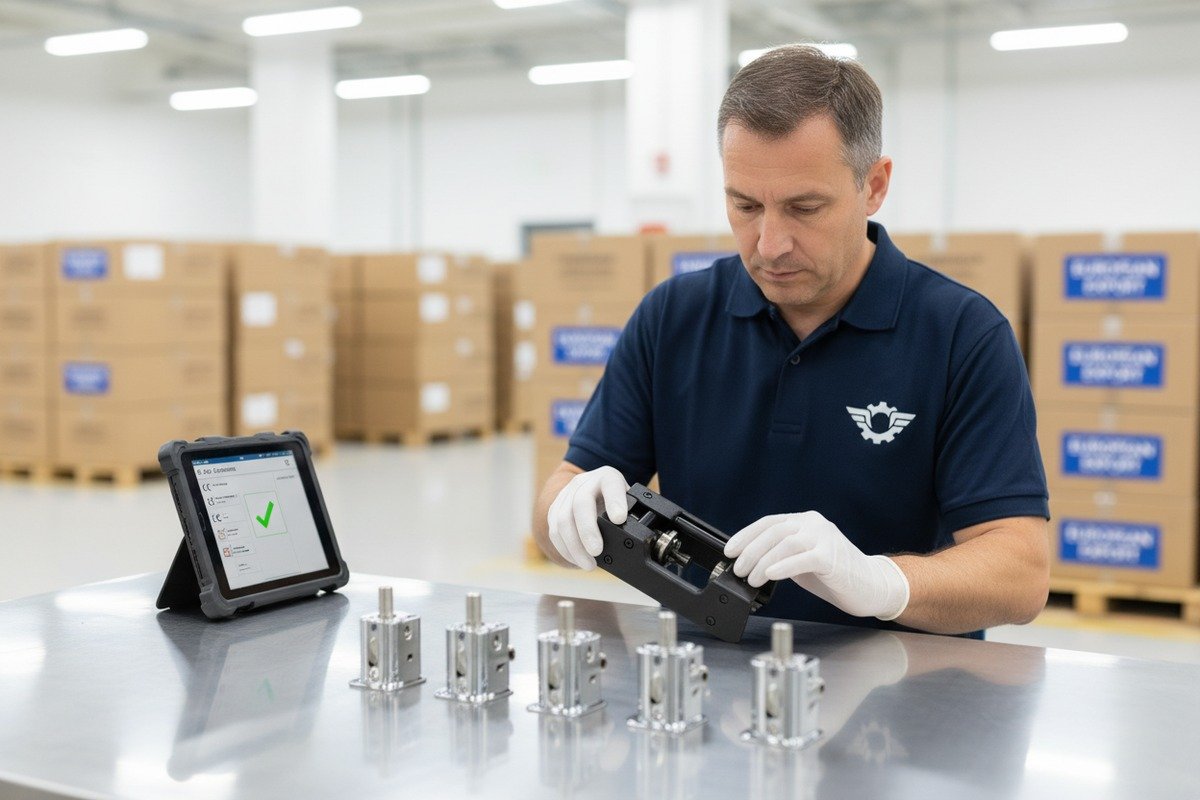
Counterfeit or mislabeled stainless steel is a real risk in global supply chains. Our quality team uses handheld XRF analyzers on incoming raw materials to verify alloy composition before production begins. If your supplier cannot provide an MTR from a reputable mill, that is a red flag. You can also request a third-party lab analysis. The cost is small compared to the risk of a failed UL evaluation or a field recall.
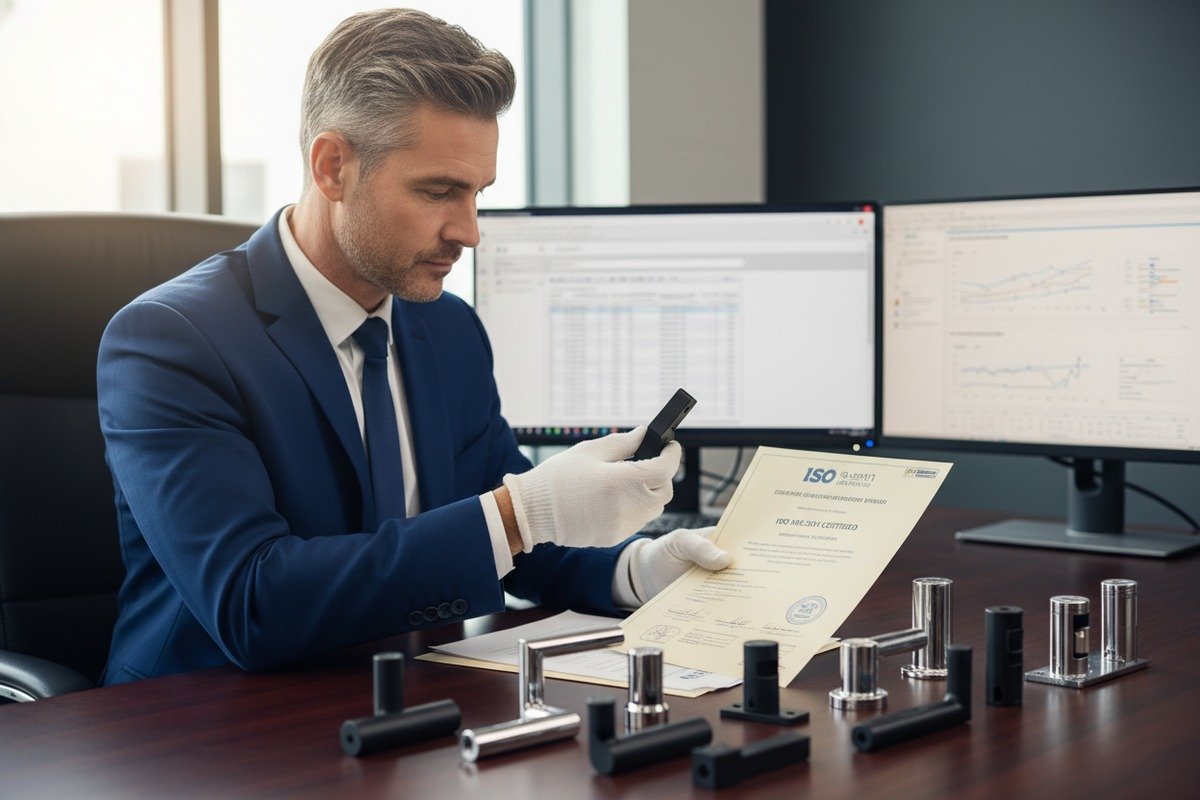
One practical tip: always cross-reference the MTR against the UL product file. UL auditors check that the material grade listed in the certification file matches what is actually used in production. Any mismatch—even an "upgrade" from 304 to 316 without notifying UL—can void the certification.
What environmental compliance documents should I request from my hardware manufacturer for UL certification?
When our team prepares export documentation for a new customer, the environmental compliance package often surprises buyers with its scope. Many procurement managers expect only a UL mark and a basic datasheet. The reality is far more involved.
For UL-certified cabinet hardware exports, request RoHS declarations, REACH SVHC compliance letters, conflict mineral reports (3TG per Dodd-Frank Section 1502), Environmental Product Declarations (EPDs), material safety data sheets (SDS), and California Proposition 65 statements where applicable to your destination market.
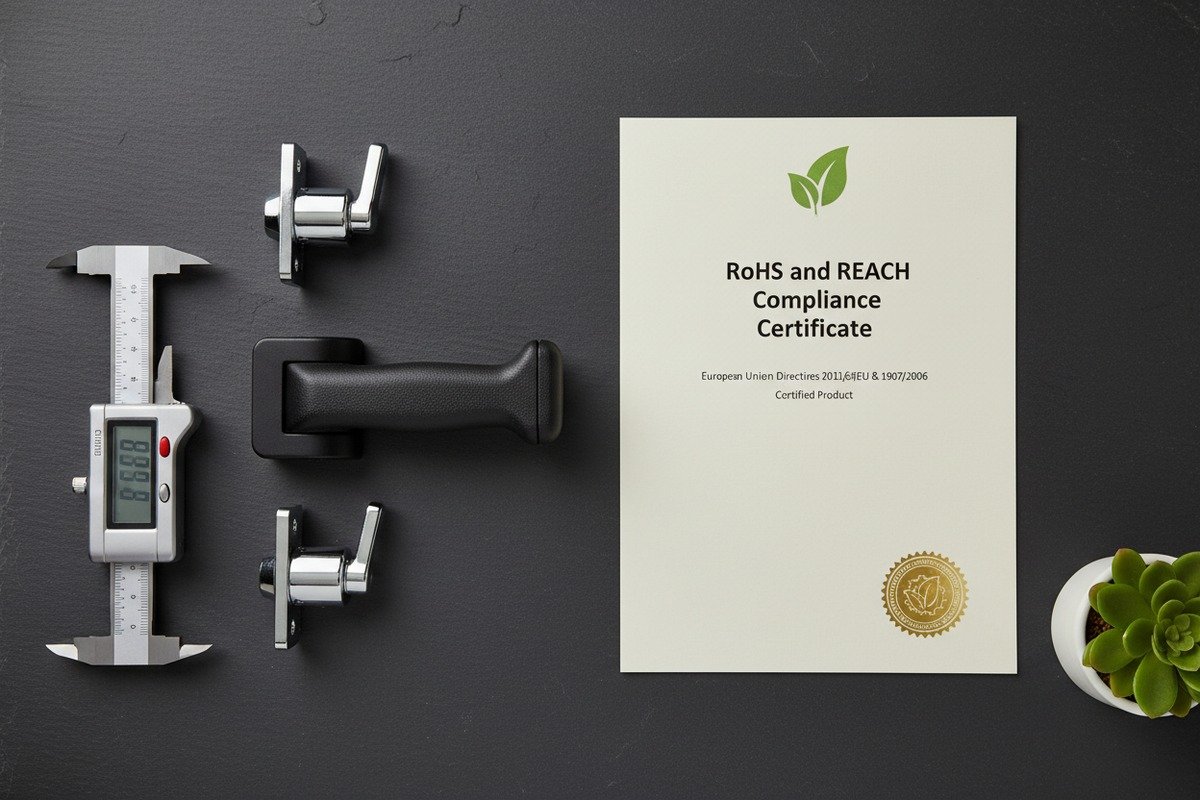
RoHS and REACH: The Non-Negotiable Baseline
RoHS (Restriction of Hazardous Substances) limits six hazardous substances in electrical and electronic equipment: lead, mercury, cadmium, hexavalent chromium, PBB, and PBDE. While RoHS originated in the EU, North American buyers increasingly require it as a procurement standard. Our latches and hinges use zinc alloy and stainless steel finishes that are tested and declared RoHS-compliant with every production run.
REACH goes further. It requires manufacturers to identify and declare Substances of Very High Concern (SVHCs) above 0.1% by weight in any article. REACH SVHC compliance 6 The SVHC candidate list updates twice a year. A responsible supplier maintains current REACH declarations and notifies you of any changes.
Conflict Minerals and Supply Chain Transparency
The Dodd-Frank Act Section 1502 7 requires publicly traded US companies to report on conflict minerals—tin, tantalum, tungsten, and gold (3TG)—in their supply chains. Even if your company is not publicly traded, your end customers may be. They will pass this requirement down to you. Our factory completes the Conflict Minerals Reporting Template (CMRT) published by the Responsible Minerals Initiative and provides it upon request.
The Full Environmental Compliance Package
| Document | Regulation/Standard | Applies To |
|---|---|---|
| RoHS Declaration of Conformity | EU Directive 2011/65/EU | All hardware with metallic finishes or coatings |
| REACH SVHC Statement | EU Regulation (EC) 1907/2006 | All articles exported to EU or requested by US buyers |
| Conflict Minerals Report (CMRT) | Dodd-Frank Act Section 1502 | Hardware containing tin, tantalum, tungsten, or gold |
| Environmental Product Declaration (EPD) | UL 10010-13 / ISO 14025 | Builders hardware; increasingly requested for green projects |
| Material Safety Data Sheet (SDS) | OSHA HazCom / GHS | Coatings, lubricants, or chemical treatments on hardware |
| California Prop 65 Statement | CA Health & Safety Code §25249.6 | Any product sold or distributed in California |
The Growing Role of EPDs
Environmental Product Declarations 8 are gaining traction fast. UL 10010-13 provides the framework for builders hardware EPDs, disclosing material composition as percentages—metals, finishes, packaging. While these EPDs currently focus on builders hardware and exclude power-operated components, the trend is clear. Green building standards like LEED v4.1 award credits for products with EPDs. If your cabinets go into data centers, hospitals, or government buildings, expect EPD requests to increase.
We started generating EPD-ready data two years ago. It adds a small cost to our documentation process, but it gives our buyers a competitive edge in sustainability-focused bids.
Digital Tools for Compliance Management
Advanced digital platforms now allow manufacturers to share compliance documents securely through cloud portals. Blockchain-based traceability is emerging for conflict mineral reporting. AI-driven tools can flag when an SVHC list update affects your product line. These tools reduce manual errors and speed up the compliance cycle. Our team uses a centralized document management system so that every buyer can access current certificates within 24 hours of a request.
Can my supplier provide the specific material test reports I need for my NEMA-rated cabinet project?
This question comes up in nearly every first conversation we have with a new distributor or system integrator. The short answer is yes—but only if you choose a supplier who builds testing into their production process, not as an afterthought.
A qualified supplier should provide material test reports including salt spray results (ASTM B117), tensile and hardness testing, temperature cycling data, UV resistance reports, and IP/NEMA ingress protection test results, all tied to specific batch or lot numbers for full traceability in your NEMA-rated cabinet project.
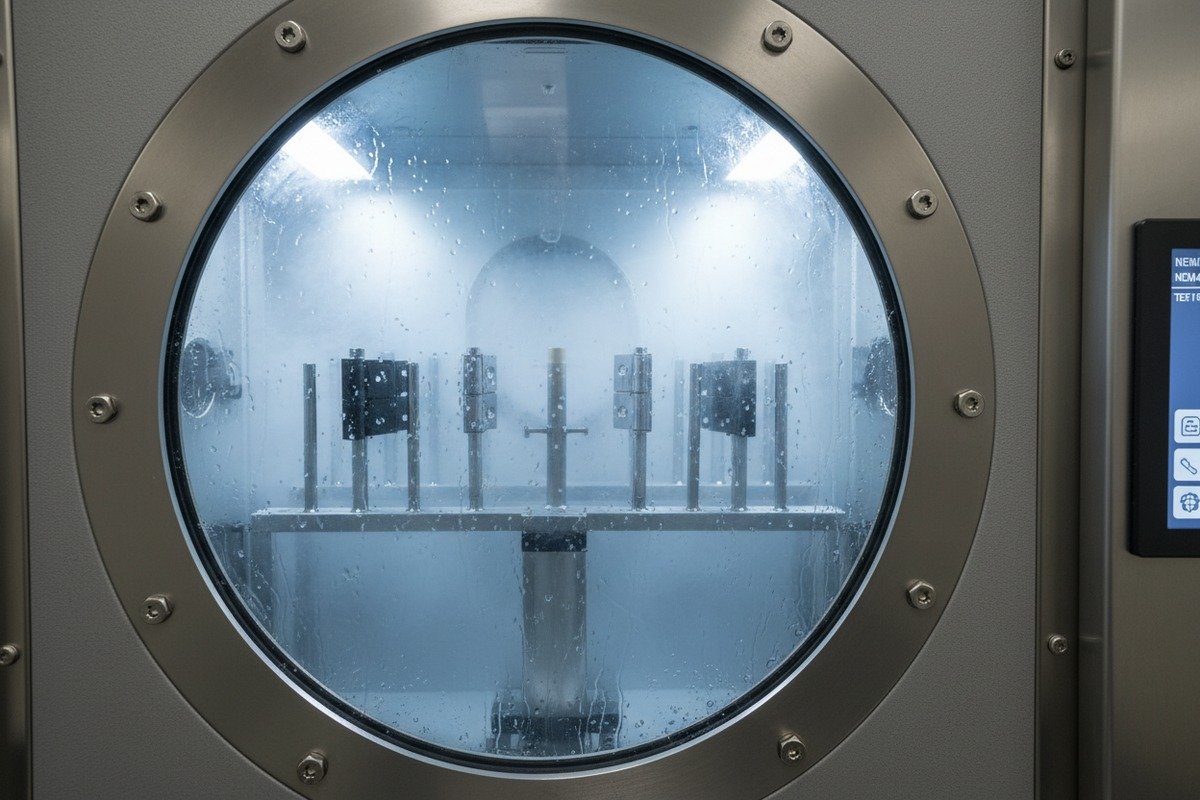
What NEMA Ratings Demand from Hardware Materials
NEMA ratings 9 define the environmental protection level of an enclosure. The hardware—hinges, latches, locks, gaskets—plays a direct role in maintaining that rating. A cabinet rated NEMA 4X must resist corrosion from hose-directed water, windblown dust, and external ice formation. If your hinge corrodes or your latch fails under thermal cycling, the entire enclosure loses its rating.
Here is how different NEMA ratings translate into material demands for hardware:
| NEMA Rating | Environment | Key Material Requirements for Hardware |
|---|---|---|
| NEMA 1 | Indoor, general purpose | Basic steel or zinc alloy, standard finish |
| NEMA 3R | Outdoor, rain/sleet/ice | Galvanized steel or 304 SS, weather-resistant coating |
| NEMA 4 | Outdoor, watertight | 304 SS minimum, tested gasket compression |
| NEMA 4X | Outdoor, corrosion-resistant | 316 SS, 1000+ hour salt spray rating |
| NEMA 12 | Indoor, dust/drip-tight | Zinc alloy or powder-coated steel, IP52+ |
What a Complete Test Report Package Looks Like
Our factory is equipped with over 35 testing devices. We run salt spray tests, tensile pull tests, cycle life tests (our standard hinges are tested to 10,000+ open-close cycles), and temperature endurance tests from -40°C to +85°C. Each report is linked to a batch number so that any component can be traced back to its raw material source, production date, and test results.
Red Flags When Evaluating a Supplier's Test Capabilities
Not every supplier can deliver genuine test reports. Here are warning signs:
- Reports without batch or lot numbers
- Generic reports that cover a product "family" rather than a specific SKU
- No mention of test method standards (ASTM, ISO, IEC)
- Inability to provide reports within a reasonable timeframe (we commit to 3–5 business days)
- Reports issued by in-house labs with no third-party verification option
If your project requires NRTL (Nationally Recognized Testing Laboratory) listed components, ask whether the supplier's products appear on UL's online certification directory. Our cam latches and swing handle latches, for example, carry UL recognition that buyers can verify directly on UL's website.
Bridging the Gap Between Supplier Data and Your UL File
Your UL file must list every material and component used in the certified assembly. When you change a hardware supplier, you must update that file. This is why test report consistency matters. If your new supplier provides reports in a different format or tests to different standards, it creates extra work during your UL audit. We format our reports to align with UL and NRTL expectations, which saves our buyers time and reduces back-and-forth during certification reviews.
How does the material composition of my latches affect the final UL safety rating of my power distribution cabinets?
When we first started exporting our cam latches and swing handle latches to North American OEMs, some buyers treated hardware as an afterthought—just something to hold the door shut. Then a UL field evaluation flagged a zinc alloy latch that could not maintain structural integrity during an arc flash simulation. That single component nearly derailed a six-figure project.
The material composition of your latches directly impacts the UL safety rating by determining fire resistance, arc flash survivability, mechanical strength under fault conditions, and long-term environmental durability—all tested during UL evaluation per standards like UL 508A, UL 50, and UL 1640.
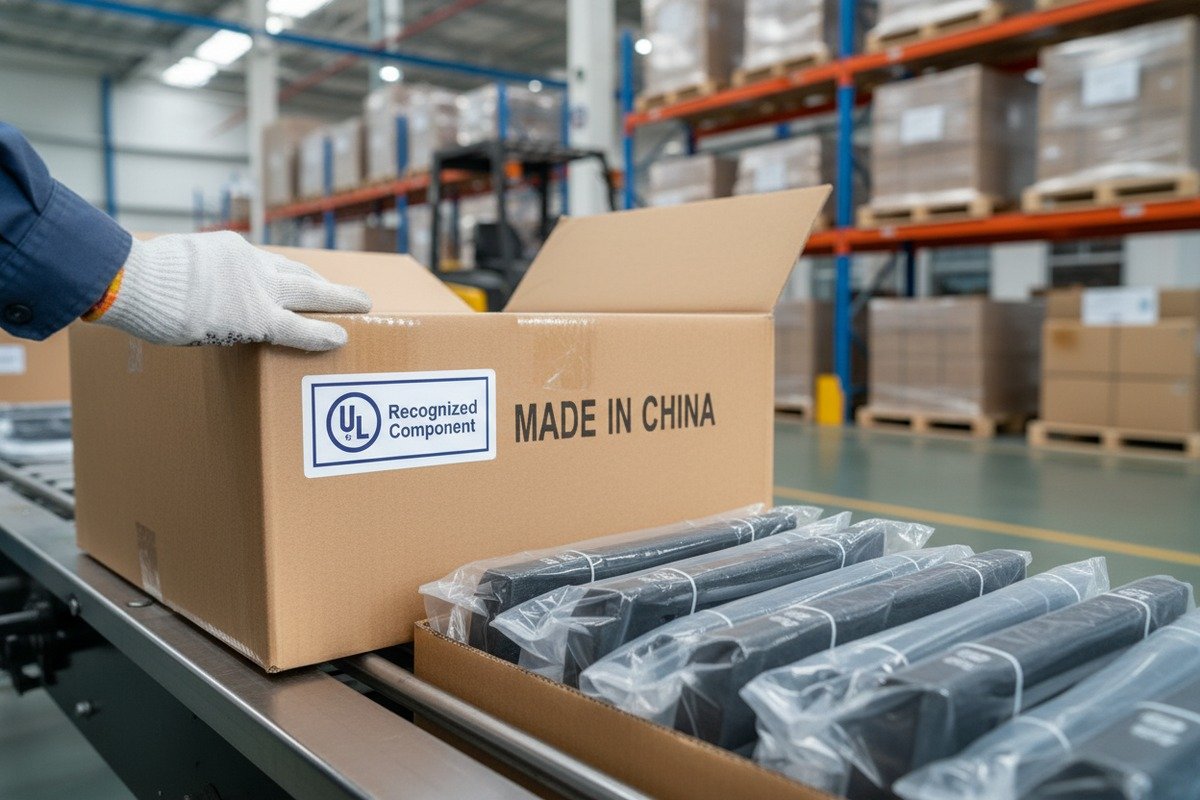
Fire Resistance and Flammability
UL standards require that materials in and on power distribution enclosures resist ignition and limit flame spread. Metallic latches (stainless steel, zinc alloy, aluminum) are inherently non-combustible. But many latches include non-metallic components—nylon handles, rubber gaskets, or plastic inserts. These must meet UL 94 flammability ratings 10, typically V-0 or V-1, meaning they self-extinguish within seconds after a flame source is removed.
Our matte black swing handle latches use a glass-fiber-reinforced nylon grip that is rated UL 94 V-0. This is not just a nice-to-have. If any plastic component in your assembly fails the flammability test, UL will not list the cabinet.
Arc Flash and Mechanical Integrity
In a short-circuit event, the forces inside a power distribution cabinet are extreme. Pressures can exceed 1,000 pounds per square foot. Latches must hold the door closed during an arc flash to protect personnel. If a latch deforms, melts, or shears, the door can blow open and direct superheated gases outward.
Material composition determines whether a latch survives this event. Die-cast zinc alloy (Zamak 3 or Zamak 5) offers good strength-to-weight ratio and is commonly used. But for higher fault-current applications, stainless steel latches provide superior mechanical integrity. Our engineering team selects materials based on the SCCR (Short-Circuit Current Rating) requirements of the end cabinet.
Material Composition and Corrosion Over Time
A latch that passes UL testing on day one may fail in the field if corrosion degrades its mechanical properties. UL evaluators consider long-term material behavior. This is why material declarations must include not just the base metal but also the surface finish—chrome plating thickness, powder coating type, passivation treatment. Each of these affects how the latch performs over 10, 15, or 20 years in service.
How Latch Materials Interact with Other Cabinet Components
UL 508A requires that all components within an industrial control panel be compatible. Galvanic corrosion is a common issue when dissimilar metals contact each other in the presence of moisture. For example, mounting an aluminum latch directly onto a mild steel door without an insulating barrier can accelerate corrosion in both materials. Our product design team accounts for this by specifying compatible mounting hardware and recommending isolation washers where needed.
Choosing the Right Latch Material for Your UL Rating
The table below summarizes how common latch materials align with UL performance criteria:
| Latch Material | Fire Resistance | Arc Flash Strength | Corrosion Resistance | Best For |
|---|---|---|---|---|
| 304 Stainless Steel | Excellent | High | Good (500+ hr salt spray) | Indoor NEMA 12, light outdoor |
| 316 Stainless Steel | Excellent | High | Superior (1000+ hr salt spray) | NEMA 4X, coastal, chemical plants |
| Zinc Alloy (Zamak 5) | Excellent | Moderate | Good with chrome/powder coat | General industrial, cost-effective |
| Die-Cast Aluminum | Excellent | Moderate | Moderate (requires anodizing) | Lightweight enclosures, telecom |
| Nylon/Composite | UL 94 V-0 required | Low | Excellent (non-metallic) | Non-load-bearing handles only |
The Bottom Line: Material Choices Ripple Through Your Entire Certification
Every material decision you make on your latches echoes through the UL evaluation. The base metal, the plating, the plastic inserts, even the screws—all must be declared and consistent with your UL file. Change one element without updating the file, and your certification is at risk. UL-certified cabinets reduce safety incidents by approximately 66% compared to non-certified units. That statistic is built on the integrity of every material declaration in the file.
Conclusion
Getting material declarations right protects your UL certification, your market access, and your customers. Work with a hardware supplier who builds testing, traceability, and documentation into every production run. If you need help assembling the right compliance package for your next power distribution cabinet project, reach out to our team at sales@hingelocks.com.
Footnotes
1. Replaced HTTP 404 link with official OSHA penalties page. ↩︎
2. Defines material declaration requirements in the context of environmental and product composition laws. ↩︎
3. Details UL 50 and UL 50E standards for electrical equipment enclosures and environmental requirements. ↩︎
4. Compares 316 stainless steel properties, emphasizing its superior corrosion resistance due to molybdenum. ↩︎
5. Explains what a RoHS Declaration of Conformity is and its importance for regulatory compliance. ↩︎
6. Provides an overview of REACH SVHC compliance, including the candidate list and notification obligations. ↩︎
7. Explains Section 1502 of the Dodd-Frank Act regarding conflict minerals disclosure requirements. ↩︎
8. Describes EPDs as transparent reports of a product's life cycle environmental impact, supporting sustainability. ↩︎
9. Official NEMA document defining enclosure ratings and their protection levels against environmental hazards. ↩︎
10. Explains UL 94 flammability standards for plastics, evaluating ignition and flame spread behavior. ↩︎





 Hindi
Hindi  English
  Spanish
  French
  German
  Japanese
  Arabic
  Korean
  Swedish
  Dutch
Dutch  Greek
Greek  Hebrew
  Italian
  Vietnamese
  Thai
Thai  Bulgarian
  Czech
Czech  Slovak
  Hungarian
  Finnish