
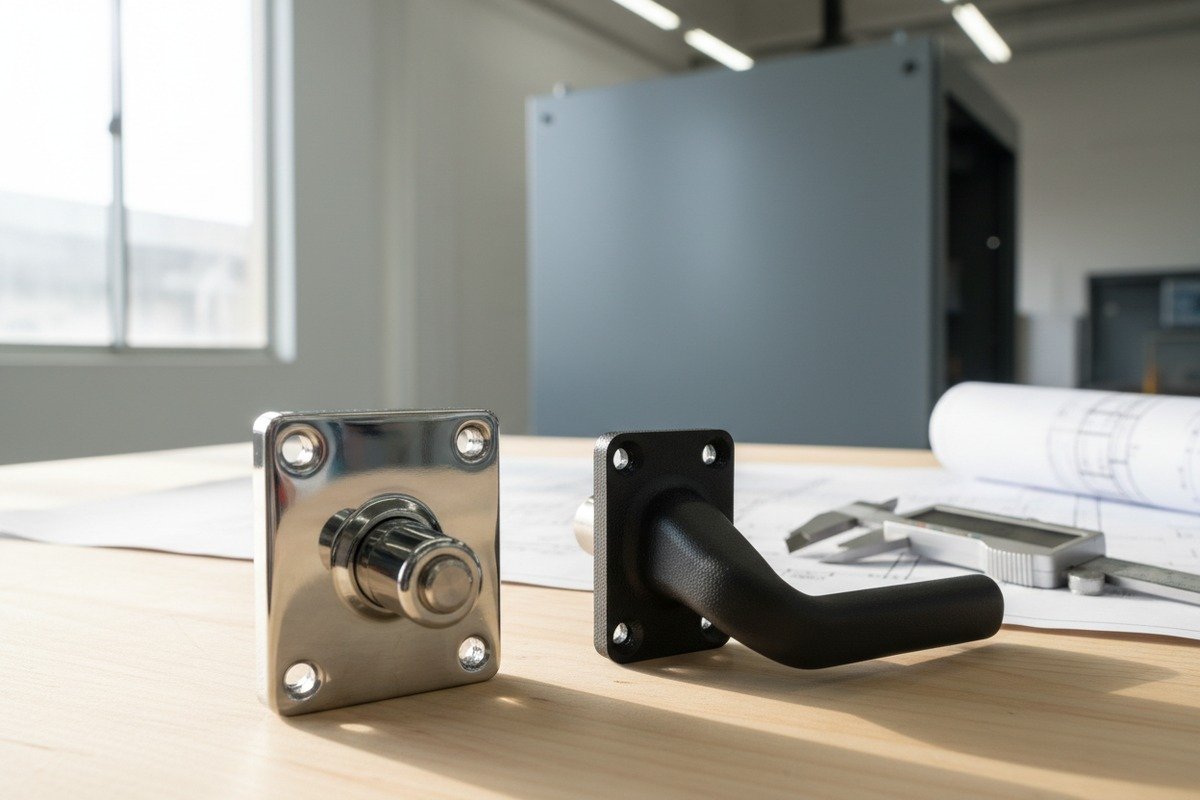
Every year, our engineering team fields hundreds of inquiries from enclosure manufacturers who lost time and money picking the wrong cam lock material for outdoor installations.
For most outdoor electrical enclosures, stainless steel cam locks outperform zinc alloy due to superior corrosion resistance, strength, and longevity. However, zinc alloy cam locks with quality surface treatments can serve well in milder outdoor environments at a significantly lower cost, making the best choice dependent on your specific conditions.
Choosing between zinc alloy and stainless steel is not just a material question Environmental Audit 1. It is a business decision that affects compliance, maintenance budgets, and product reputation. Below, we break down every factor you need to consider before placing your next order.
How do I determine if zinc alloy is durable enough for my harsh outdoor enclosure environments?
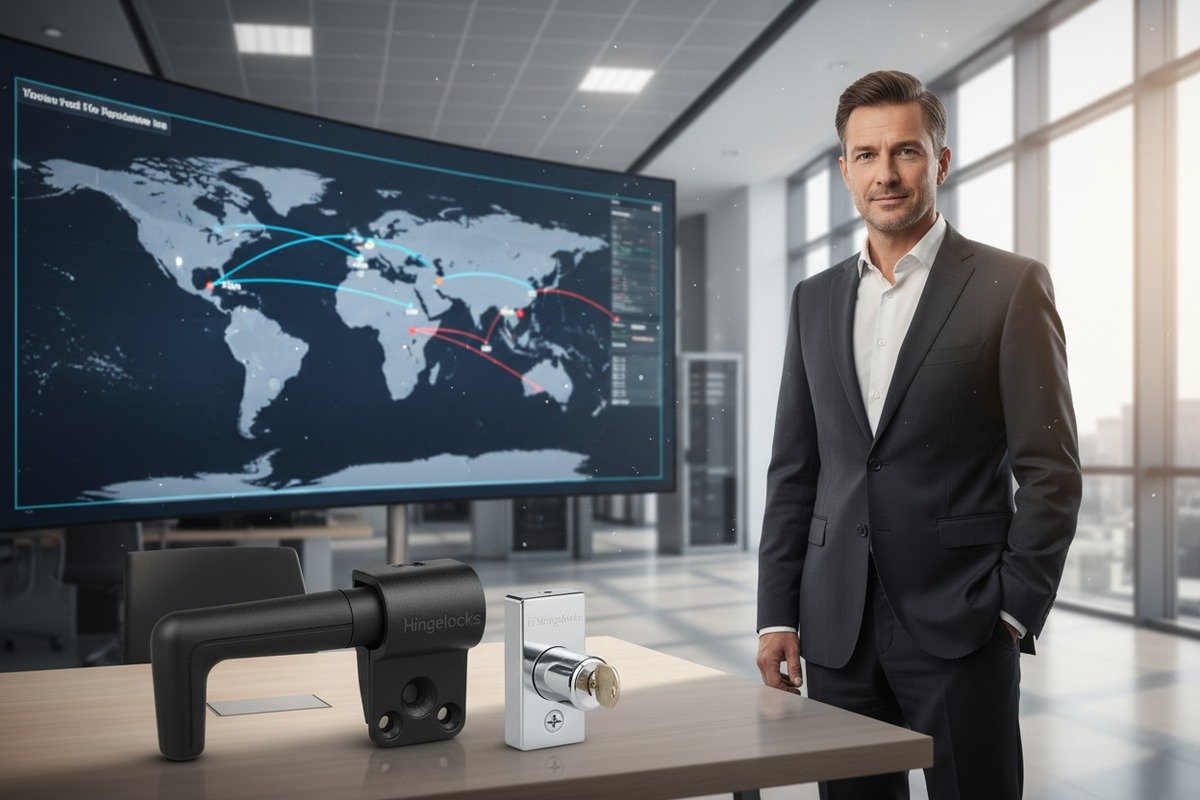
We have shipped zinc alloy cam locks to over 40 countries, and the feedback is consistent — environment dictates everything. A lock that lasts a decade in a Midwest warehouse can corrode within two years on a Gulf Coast substation.
To determine if zinc alloy is durable enough, audit your installation site for humidity levels, salt exposure, temperature extremes, UV intensity, and chemical contact. Zinc alloy with chrome plating or powder coating performs well in mild outdoor settings but degrades faster than stainless steel in coastal, marine, or heavily industrial environments.

Start With an Environmental Audit
Before you select any cam lock material, map out the real conditions your enclosure will face. This is not about guesswork. It is about data. Consider these five critical factors:
- Humidity — Is average relative humidity above 70%?
- Salt spray — Is the site within 10 miles of a coast or salt-treated roads?
- Temperature range — Will the lock face sub-zero winters or desert summers?
- Chemical exposure — Are there nearby industrial processes producing fumes or runoff?
- UV exposure — Is the enclosure in direct sunlight year-round?
If you answer "yes" to two or more of these, zinc alloy alone will struggle without serious surface treatment.
Zinc Alloy's Core Mechanical Properties
Zinc alloy is die-cast 2 at a low melting point of around 385°C. This makes it efficient for producing complex, thin-walled cam lock bodies with tight tolerances. Our die-casting line can produce intricate geometries that would cost three times as much in stainless steel. But those advantages come with trade-offs.
Zinc alloy has moderate tensile strength 3 at room temperature. It weakens noticeably below 0°C and softens in sustained high heat. For an enclosure mounted on a rooftop in Phoenix or a utility pole in Minnesota, that matters.
| Property | Zinc Alloy | 304 Stainless Steel |
|---|---|---|
| Melting Point | ~385°C | ~1,400°C |
| Tensile Strength | 280–330 MPa | 505–750 MPa |
| Cold Performance (<0°C) | Becomes brittle | Remains stable |
| Corrosion Resistance 4 (uncoated) | Moderate | Excellent |
| Die-Casting Suitability | Excellent | Not applicable |
| Weight | Lighter | Heavier |
When Zinc Alloy Works Outdoors
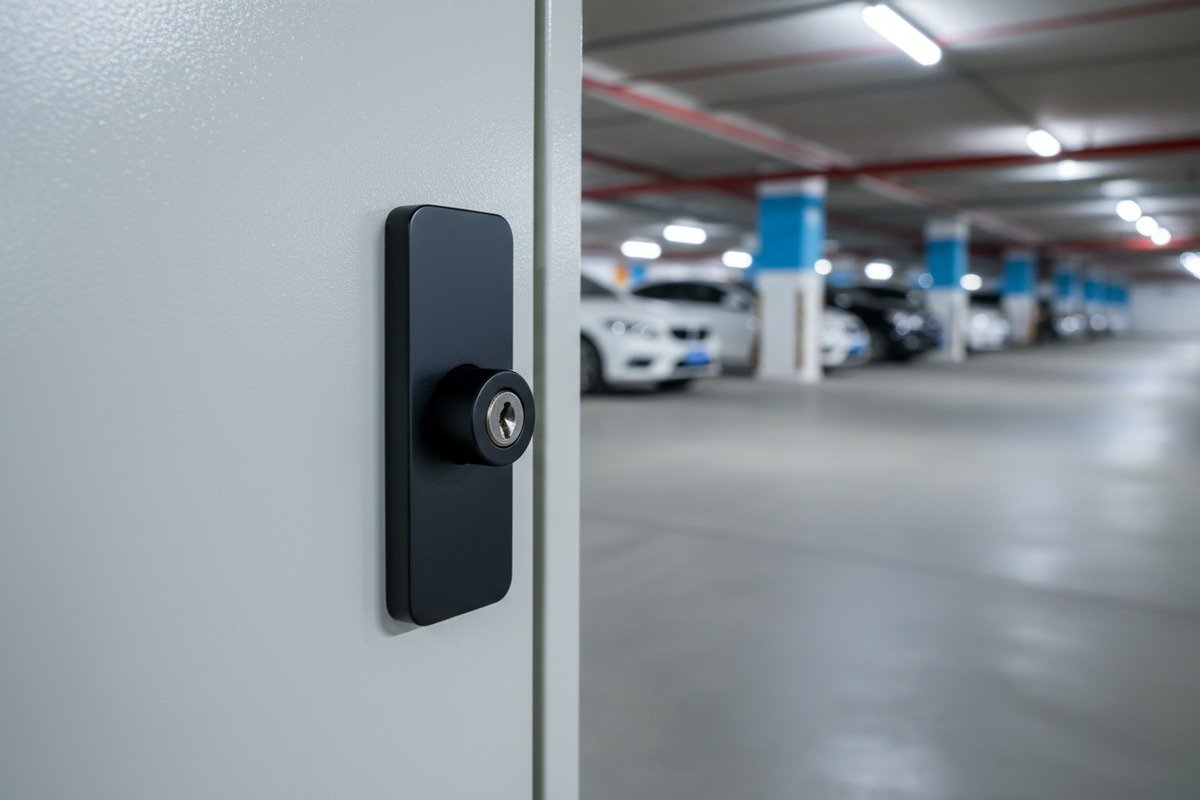
Zinc alloy is not a bad outdoor material in every case. When our clients install enclosures in sheltered urban locations — under canopies, inside fenced compounds, or in dry climates — zinc alloy cam locks with quality chrome or powder coat finishes perform reliably for five to eight years. The key is "sheltered" and "mild." Indoor-adjacent installations, like parking garages or covered loading docks, are also good fits.
When Zinc Alloy Fails Outdoors
The failures we see follow a pattern. Coastal oil rigs, seaside telecom cabinets, wastewater treatment plants, and solar farms in humid regions all push zinc alloy past its limits. Chrome plating chips. Powder coat fades. Once the base metal is exposed, zinc corrodes in accelerating cycles. The lock jams, and the enclosure seal is compromised. That one failed cam lock can void your NEMA 4X or IP66 rating on the entire panel.
Also consider galvanic corrosion 5. If your enclosure body is aluminum and you install a zinc alloy cam lock, the dissimilar metals in contact with moisture create an electrochemical reaction that accelerates corrosion on both parts.
Should I pay the premium for stainless steel cam locks to guarantee NEMA 4X compliance?
One question we hear weekly from US-based procurement managers: "Is stainless steel overkill for NEMA 4X?" The short answer is no. The longer answer involves understanding what NEMA 4X actually demands from every component on your enclosure.
Stainless steel cam locks are the most reliable path to maintaining NEMA 4X compliance in outdoor electrical enclosures. Their inherent corrosion resistance, dimensional stability, and gasket-seal integrity under extreme weather ensure the enclosure consistently meets watertight and corrosion-proof standards over its full service life.
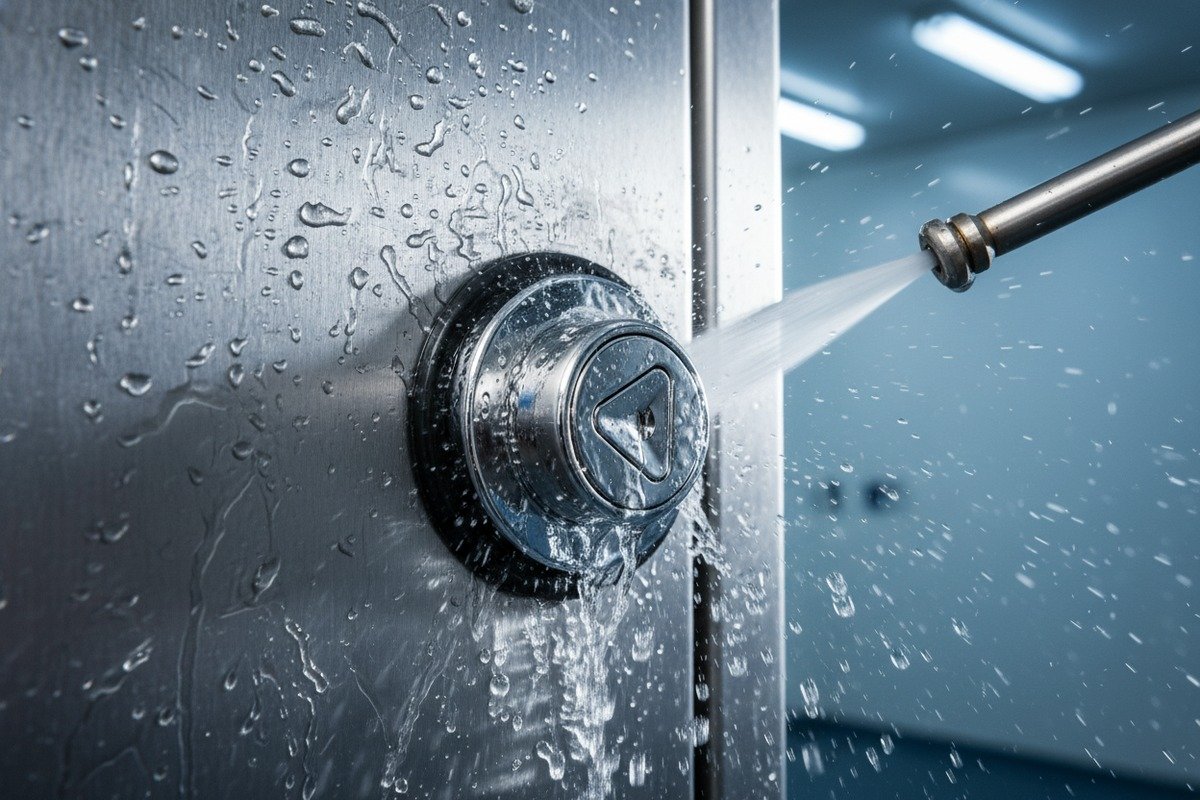
What NEMA 4X Actually Requires
NEMA 4X is not just about the enclosure box. It is about every point of entry, every seal, and every hardware component maintaining integrity against:
- Windblown dust and rain
- Splashing water and hose-directed water
- External ice formation
- Corrosion
A cam lock is a penetration point in the enclosure door. If the lock body corrodes, swells, or warps, the gasket seal behind it fails. Water enters. Dust enters. Your NEMA 4X rating is void, and the electrical components inside are at risk.
Stainless Steel's Self-Healing Advantage
The reason stainless steel dominates in NEMA 4X applications is its chromium oxide layer. This invisible film forms naturally on the surface and, critically, repairs itself when scratched. Zinc alloy has no equivalent self-healing mechanism. Once a zinc coating is breached, the base metal is exposed and corrosion begins immediately.
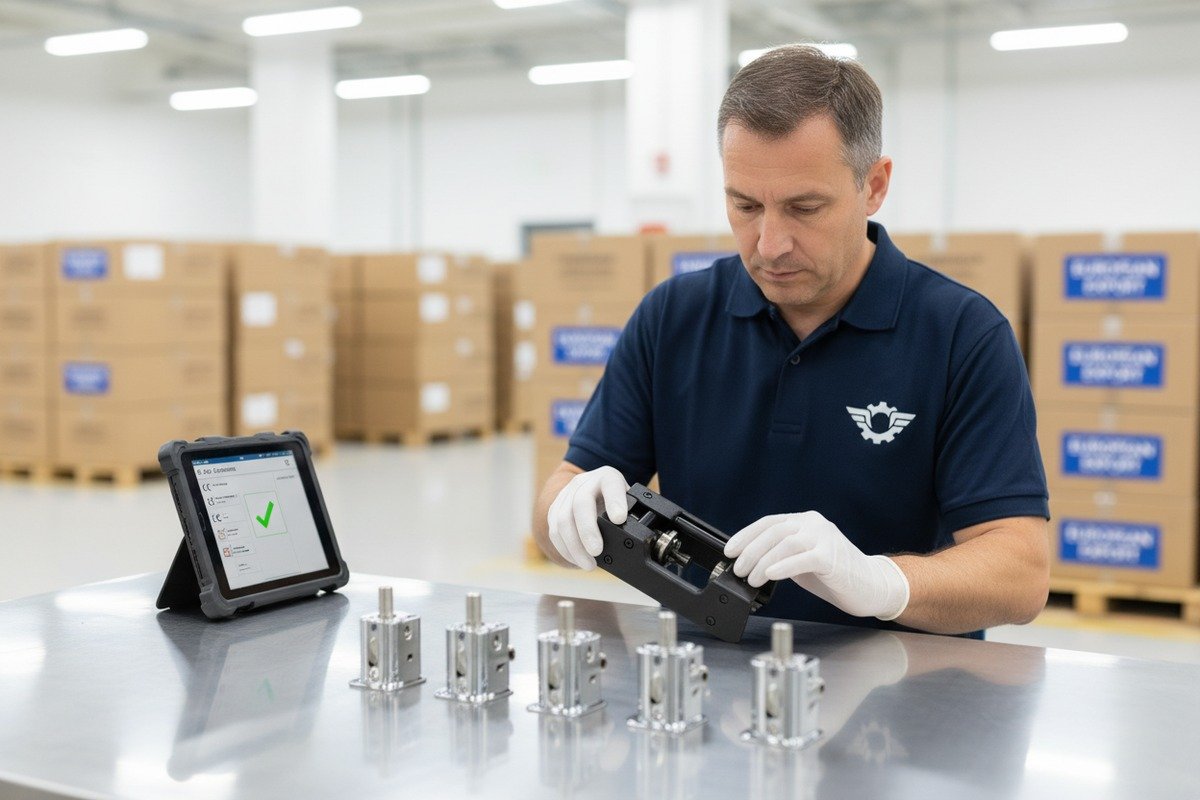
Our 304 stainless steel cam locks undergo 500+ hours of salt spray testing (per ASTM B117 7) without visible corrosion. Our zinc alloy locks, even with quality chrome plating, typically show white rust between 96 and 200 hours depending on plating thickness.
Cost-Benefit: The NEMA 4X Perspective
Yes, stainless steel cam locks cost more upfront — often two to three times the price of zinc alloy equivalents. But consider the downstream costs of a compliance failure:
| Cost Factor | Zinc Alloy Cam Lock | Stainless Steel Cam Lock |
|---|---|---|
| Unit Price (typical) | $2–$6 | $6–$18 |
| Expected Outdoor Lifespan | 3–5 years (coated) | 10–20+ years |
| Replacement Labor (per lock) | $25–$50 | Rarely needed |
| Risk of NEMA 4X Failure | Moderate to High | Very Low |
| Salt Spray Test (hours to first corrosion) | 96–200 hrs | 500+ hrs |
| Warranty Claim Risk | Higher | Lower |
When a $4 zinc lock fails on a $2,000 enclosure and causes a warranty claim, the real cost is not $4. It is the replacement enclosure, the site visit, the client relationship, and possibly a compliance audit. In our experience exporting to North American distributors, the clients who switched to stainless steel for outdoor NEMA 4X projects reduced their field failure rates by an order of magnitude.
When the Premium Is Not Necessary
If your enclosure is rated NEMA 3R (rainproof, not corrosion-proof) or used indoors, stainless steel is often more than you need. The premium makes sense specifically when the enclosure rating demands corrosion resistance — NEMA 4X, NEMA 6P, or IP66/IP67 in marine or chemical environments.
How can I balance my project budget without compromising the lifespan of my cabinet locks?
Budget pressure is real. When our sales team talks with distributors, the conversation always circles back to the same tension: "I need it to last, but I cannot afford top-tier pricing on every component." The good news is that material choice is not binary.
Balance your budget by using a hybrid approach: specify stainless steel cam locks for enclosures in harsh or compliance-critical locations, and use zinc alloy with quality coatings for sheltered or indoor-adjacent installations. This tiered strategy can reduce hardware costs by 30–40% without sacrificing overall project reliability.
The Tiered Material Strategy
Not every enclosure in a project faces the same conditions. A utility company installing 200 cabinets might have 50 in coastal areas, 80 in suburban zones, and 70 indoors. Applying stainless steel across all 200 wastes budget. Applying zinc alloy across all 200 risks failures on the 50 coastal units.
Our recommendation, refined over thousands of OEM projects, is to tier your material specification:
- Tier 1 (Harsh outdoor): Full stainless steel cam lock — body, cam, and fasteners.
- Tier 2 (Moderate outdoor): Zinc alloy body with stainless steel cam and chrome plating.
- Tier 3 (Indoor/sheltered): Standard zinc alloy with powder coat finish.
Hybrid Cam Lock Designs
Hybrid designs are a growing trend in our product line. The cam lock body — the visible part that goes through the door — is made from zinc alloy for cost-efficient die-casting and complex shapes. The cam itself, which bears mechanical load and contacts the frame, is stainless steel or zinc-plated steel for strength.
This hybrid approach gives you 70–80% of stainless steel's corrosion performance at perhaps 50% of the cost. It is not perfect for marine environments, but for Tier 2 installations it is a proven compromise.
Total Cost of Ownership Calculator
When presenting options to your finance team or client, frame the decision around total cost of ownership 9, not unit price.
| Scenario (10-Year Period) | Zinc Alloy (Tier 3) | Hybrid (Tier 2) | Full Stainless (Tier 1) |
|---|---|---|---|
| Unit Cost | $3 | $8 | $15 |
| Replacements (est. over 10 yrs) | 2 | 1 | 0 |
| Total Lock Cost per Unit | $9 | $16 | $15 |
| Labor for Replacements | $50–$100 | $25–$50 | $0 |
| Total Cost per Unit (10 yrs) | $59–$109 | $41–$66 | $15 |
| NEMA Compliance Risk | Higher | Moderate | Very Low |
The numbers speak clearly. For any installation where you expect a 10-year lifespan, stainless steel is often the cheapest option when you factor in labor and replacement costs.
Volume Ordering and MOQ Flexibility
We support small-batch orders starting from 500 pieces, which allows you to order different material specifications for different project tiers without committing to massive inventory. Lead times of 15–35 days mean you can adjust material mix between project phases based on field feedback.
Do Not Cut Corners on Fasteners
One mistake we see repeatedly: specifying a stainless steel cam lock body but using carbon steel screws and washers. The dissimilar metals cause galvanic corrosion at the fastener points. Always match your fastener material to your lock material. It adds pennies per unit but prevents dollars in field failures.
Can I customize zinc alloy locks with specialized coatings to match the performance of stainless steel?
Our R&D team has spent years testing coating technologies on zinc alloy cam locks. The honest answer is that coatings can close the gap — but they cannot fully eliminate it.
Specialized coatings like electroplated nickel-chrome, powder coating, and e-coating significantly improve zinc alloy cam lock performance in outdoor environments. They can extend corrosion resistance to 200–500 hours of salt spray testing. However, no coating makes zinc alloy fully equivalent to stainless steel's inherent, self-healing corrosion resistance in truly harsh conditions.
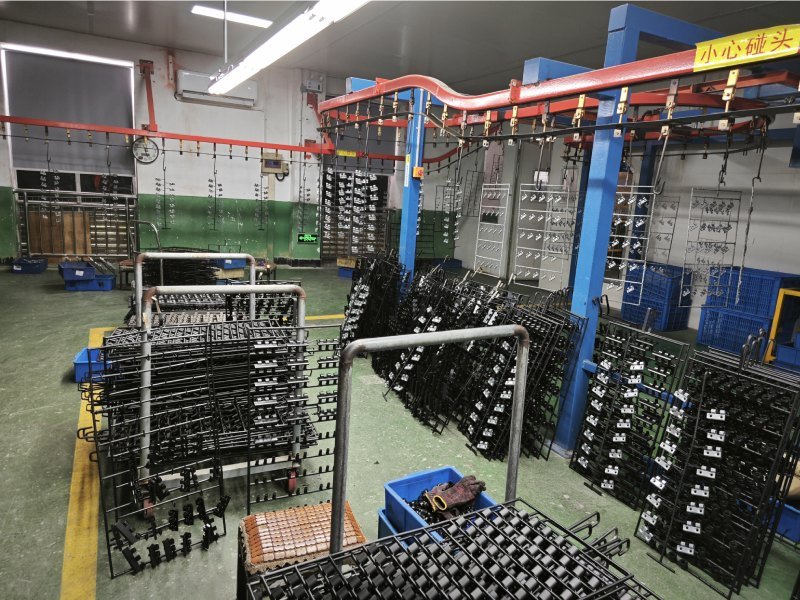
Coating Options for Zinc Alloy Cam Locks
There are several coating technologies available for zinc alloy cam locks. Each offers a different level of protection and aesthetic finish. Here is what we offer and what our testing shows:
- Chrome plating — The most common finish. Provides a bright, polished look and moderate corrosion protection. Typical salt spray performance: 96–200 hours.
- Nickel plating — Slightly better corrosion resistance than chrome alone. Often used as an undercoat beneath chrome.
- Powder coating — Applies a thick, durable polymer layer. Excellent UV resistance and color options. Salt spray: 200–400 hours depending on thickness.
- E-coating (electrodeposition) — Provides even, thin coverage including recesses. Good base layer. Salt spray: 150–300 hours.
- Zinc-nickel plating — An advanced electroplating option. Salt spray: 300–500 hours. Closest to stainless steel performance among coatings.
- Dacromet / Geomet — Chromium-free coatings used in automotive. Excellent corrosion resistance but limited aesthetic options.
Coating Durability vs. Stainless Steel: An Honest Comparison
Coatings are surface-level protection. They work until they do not. Scratches during installation, vibration-induced wear at contact points, and UV degradation over years all compromise coating integrity. Once breached, zinc corrodes underneath — sometimes faster than uncoated zinc because moisture gets trapped beneath the remaining coating layer.
Stainless steel does not rely on a coating. Its corrosion resistance is an inherent property of the alloy itself. Scratch it, and the chromium oxide layer reforms within hours.
When Coated Zinc Alloy Makes Sense
For projects in moderate outdoor environments with a five-year replacement cycle, coated zinc alloy is a pragmatic choice. Examples include:
- Rooftop enclosures with partial shelter
- Urban distribution cabinets not exposed to salt
- Temporary installations or equipment with planned upgrades
- High-volume orders where budget is the primary constraint
Smart Lock Integration and Material Choices
A growing trend in our industry is integrating electronic access features into cam locks. For smart lock assemblies, zinc alloy bodies are often preferred for the housing because they allow complex internal geometries for circuit boards and wiring channels. The external locking cam and contact surfaces can then be stainless steel. This hybrid approach keeps the smart lock affordable while ensuring the mechanical security components resist outdoor degradation.
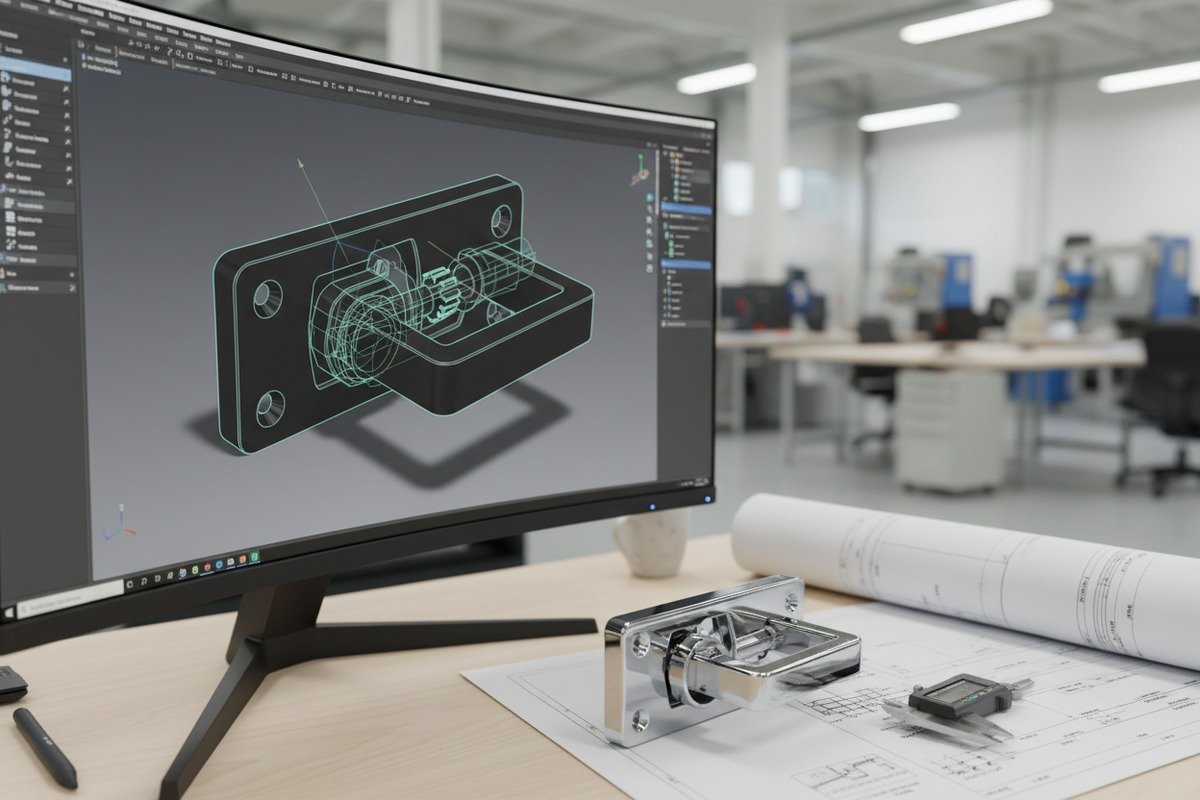
Our engineering team provides free CAD design services to help clients configure these hybrid assemblies for their specific enclosure dimensions and access control requirements.
The Bottom Line on Coatings
Coatings extend zinc alloy's outdoor viability. They do not replace stainless steel's fundamental advantages. Think of coatings as buying time — useful for budget-sensitive or shorter-lifecycle projects. For 10+ year installations in demanding environments, stainless steel remains the material that eliminates coating maintenance from your equation entirely.
Conclusion
Choosing between zinc alloy and stainless steel cam locks comes down to environment, compliance needs, budget, and expected lifespan. Use the tiered strategy, audit your site conditions, and contact us at hingelocks.com for tailored recommendations.
Footnotes
- Explains the process and importance of environmental audits. ↩︎
- Describes the die casting manufacturing process for metal parts. ↩︎
- Defines tensile strength as a critical mechanical property of materials. ↩︎
- Defines corrosion resistance, a key material property. ↩︎
- Replaced with a highly authoritative source (Stainless Steel Industry of North America) providing a clear definition and requirements for galvanic corrosion. ↩︎
- Replaced with a detailed explanation of the chromium oxide layer's role in stainless steel corrosion resistance from a metal fabrication company. ↩︎
- Describes ASTM B117, a widely used standard for salt spray testing. ↩︎
- Provides details on the NEMA 4X standard for electrical enclosures. ↩︎
- Replaced with an authoritative source (IBM) providing a clear definition and explanation of Total Cost of Ownership. ↩︎
- Highlights zinc-nickel plating as a high-performance solution for metal protection. ↩︎




 English
  Spanish
  French
  German
  Japanese
  Arabic
  Korean
  Swedish
  Dutch
Dutch  Greek
Greek  Hindi
Hindi  Hebrew
  Italian
  Vietnamese
  Thai
Thai  Bulgarian
  Czech
Czech  Slovak
  Hungarian
  Finnish