
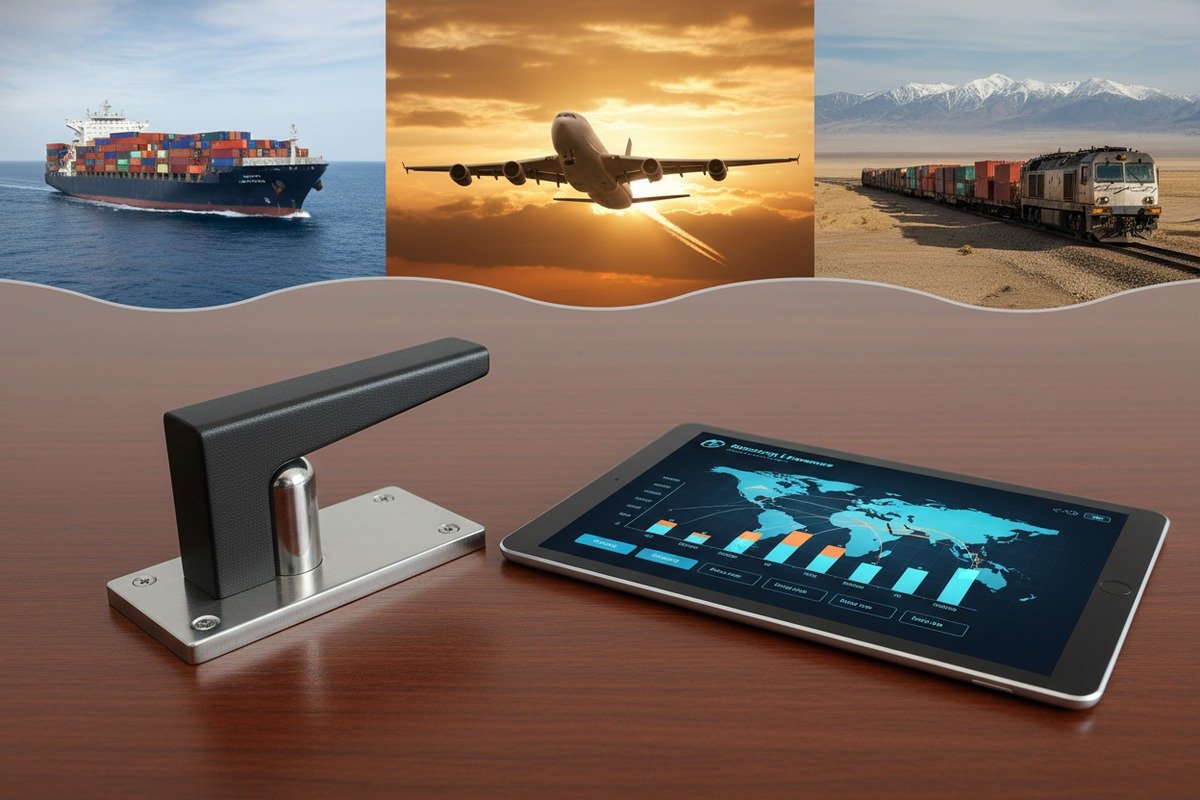
Every week, our shipping team in Xi'an fields the same question from distributors and OEMs across Europe and North America: "Which route actually saves me money?" It sounds simple, but the answer depends on far more than the freight quote on your screen. Hidden duties, capital tied up in transit, port surcharges, and even geopolitical disruptions along the Red Sea can flip the cheapest option into the most expensive one overnight. If you have ever been stung by an unexpected customs bill or a six-week delay that caused a stockout on your production line, you already know the pain.
To compare landed costs for electrical cabinet door locks shipped by sea, air, or China-Europe rail, sum the product cost, base freight, fuel surcharges, customs duties, insurance, port and border fees, inland trucking, and inventory holding costs for each mode, then evaluate total cost against transit time and risk.
Below, we break the calculation into four clear steps. Each section includes real 2025 rate data, worked examples for typical lock shipments, and tables you can adapt to your own orders. Let's dig in.
How do I accurately calculate the total landed cost for my cabinet lock shipment from China?
When we quote a new customer from our facility, the conversation always starts with one number—the unit price. But that number tells only half the story. The real cost of getting 5,000 zinc-alloy cam locks from our warehouse in Xi'an to a distribution center in Rotterdam involves at least eight separate line items, and missing even one can wreck your margin.
To accurately calculate total landed cost, use this formula: Total Landed Cost = Product Cost + International Freight + Surcharges + Customs Duties + Insurance + Port/Border Fees + Inland Transport + Inventory Holding Cost. Each component must reflect your specific shipment weight, volume, value, and chosen transport mode.
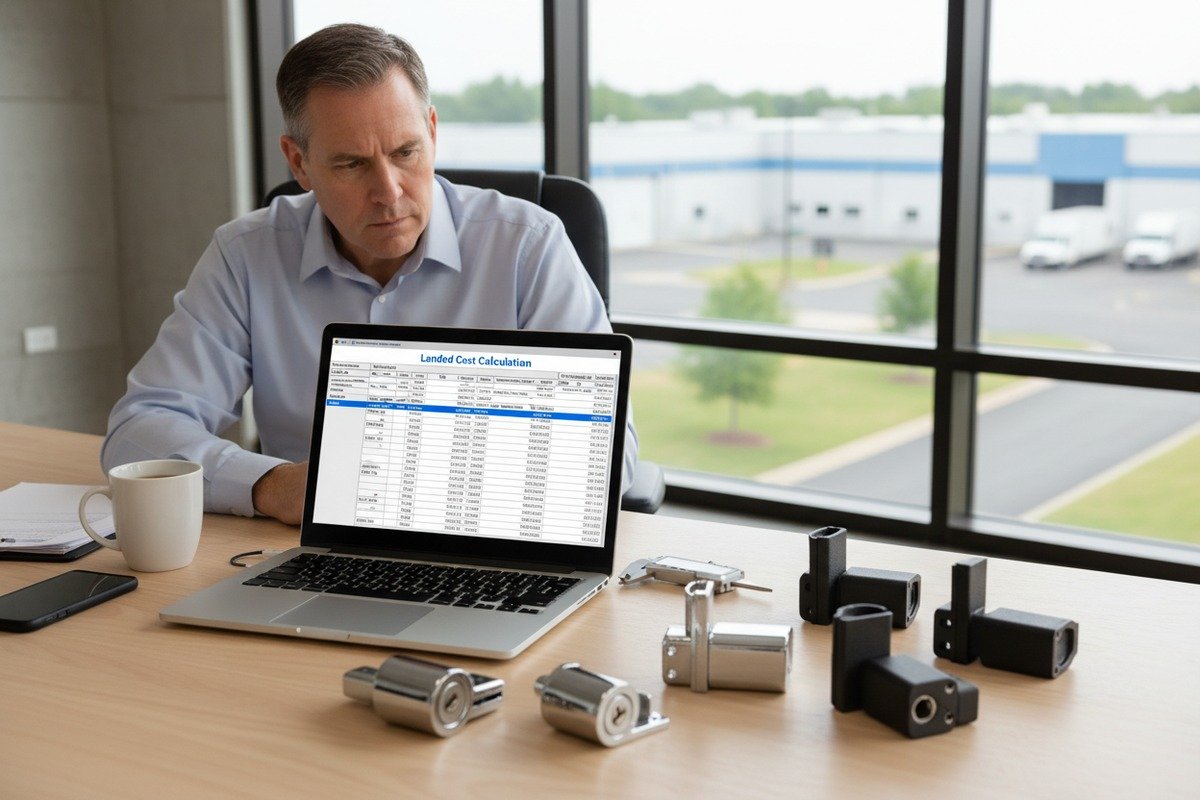
The Landed Cost Formula Explained
Let's walk through each element using a real-world example: 1,000 matte-black swing handle latches, each weighing 1.2 kg, packed in cartons totaling 1.2 CBM and 1,200 kg gross, with a declared product value of $12,000 (FOB Shanghai).
Product cost is the FOB price you negotiate with the supplier. For our mid-to-high-end locks certified to UL and TUV standards 1, this typically sits between $8 and $15 per unit depending on material and finish.
International freight varies dramatically by mode. Sea LCL for 1.2 CBM might run $90–$150 per cubic meter. Rail for the same volume is roughly 30–50 percent higher. Air freight is charged per kilogram at $2–$5/kg for the Northeast Asia-to-Europe lane.
Surcharges include bunker adjustment factor (BAF) 2, peak season surcharges, and currency adjustment. On ocean freight in 2025, these add 20–35 percent to the base rate. Rail surcharges are more stable at 10–15 percent.
Customs duties for steel and zinc-alloy locks entering the EU typically fall under HS code 8301 3, attracting a duty rate of 2.2–3.7 percent, though anti-dumping provisions can push this higher for certain categories. Always verify the exact code with your broker.
Insurance is usually quoted at 0.3–1 percent of CIF value. For a $12,000 shipment, budget $36–$120.
Port and border fees cover terminal handling charges (THC) 4, documentation, and customs clearance. Expect $200–$600 at origin and destination combined for sea, somewhat less for rail.
Inland transport is the first-mile (factory to port/rail terminal) and last-mile (destination port to your warehouse) trucking. In China, a truck from Xi'an to Shanghai port costs roughly $400–$600. In Europe, Duisburg to a German warehouse might add €150–€300.
Inventory holding cost is the one most buyers forget. If your annual cost of capital is 8 percent and $12,000 in locks sits on a vessel for 35 days, that's about $92 in opportunity cost alone. Faster modes shrink this figure.
Sample Calculation Table: 1,000 Swing Handle Latches (1.2 CBM / 1,200 kg / $12,000 FOB)
| Cost Component | Sea (LCL) | Rail (LCL) | Air |
|---|---|---|---|
| Product Cost (FOB) | $12,000 | $12,000 | $12,000 |
| Base Freight | $135 (1.2 CBM × $112/CBM) | $195 (est. $2.5/kg × 78 CBM rate) | $4,200 ($3.5/kg × 1,200 kg) |
| Surcharges (est.) | $40 | $25 | Included |
| Customs Duty (3% CIF) | $370 | $370 | $490 |
| Insurance (0.5%) | $62 | $62 | $62 |
| Port/Border Fees | $450 | $320 | $200 |
| Inland Transport (both ends) | $900 | $750 | $500 |
| Inventory Holding (8% annual) | $92 (35 days) | $39 (15 days) | $13 (5 days) |
| Total Landed Cost | $14,049 | $13,761 | $17,465 |
| Landed Cost per Unit | $14.05 | $13.76 | $17.47 |
Notice something surprising: for this mid-value shipment, rail is actually cheaper than sea when you factor in lower border fees and the reduced capital cost from a 15-day transit versus 35 days. Air, meanwhile, adds roughly 25 percent to the total—acceptable only if a production line is shut down waiting for parts.
Tips for More Accurate Estimates
First, always get at least three forwarder quotes. Rates in 2025 fluctuate weekly due to Red Sea rerouting and shifting carrier alliances. Second, confirm the HS code with your customs broker before you ship—a misclassification can trigger audits and penalties. Third, use a spreadsheet that lets you toggle fuel surcharge percentages up and down by 10 percent to stress-test your margin.
Which shipping method—sea, air, or rail—provides the best ROI for my industrial hardware orders?
Our engineers often test new lock prototypes against NEMA 4X and IP66 standards before a single unit leaves the factory. But even the best-engineered latch loses its competitive edge if the logistics eat your profit. Choosing the right shipping method is not about finding the lowest freight rate—it is about maximizing return on every dollar you invest in the shipment.
Sea freight delivers the best ROI for bulk orders of 5,000+ electrical cabinet locks, offering 30–50 percent lower freight per unit than rail. Rail wins for mid-volume, time-sensitive shipments of 1,000–5,000 units. Air freight is justified only for urgent orders under 200 kg or high-margin specialty locks.
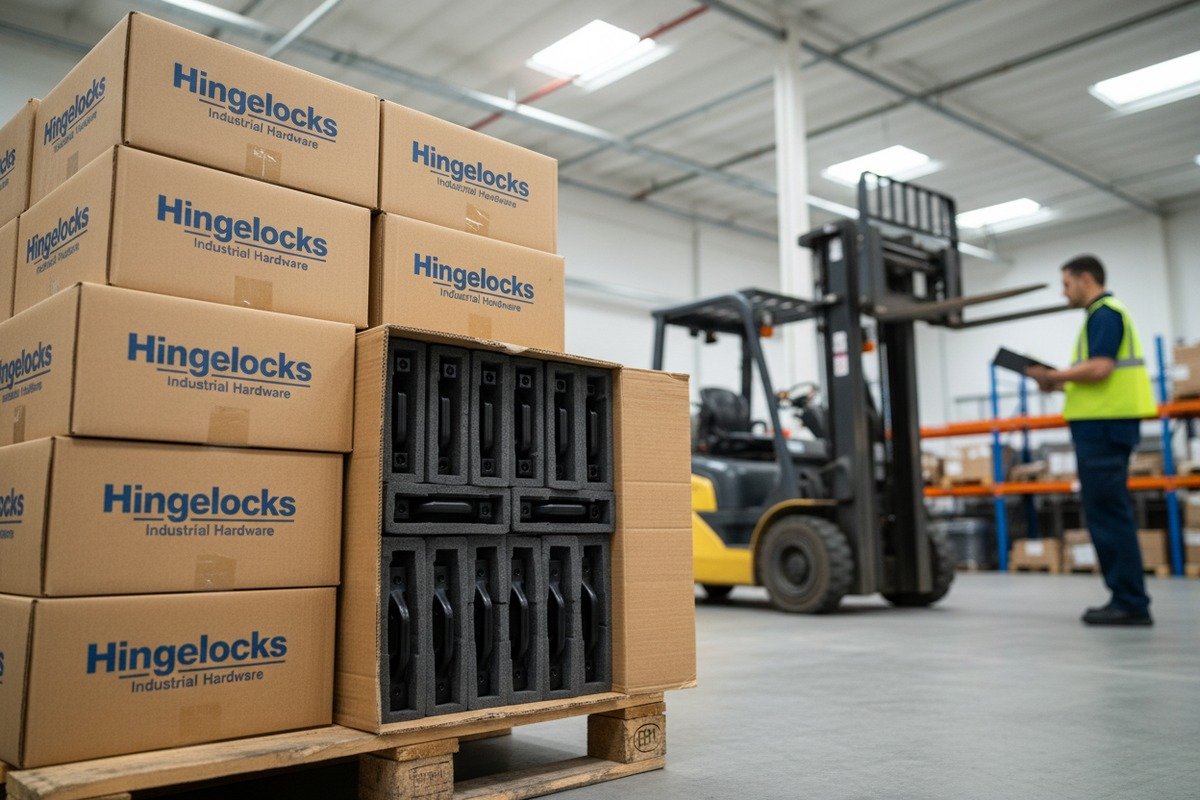
Understanding Value Density
Value density 7 is the ratio of your product's value to its weight. Electrical cabinet locks typically range from $5 to $15 per kilogram. This is considered low value density. The rule of thumb in freight economics is simple: low-value-density goods favor slower, cheaper modes. High-value-density goods—like electronics or medical devices—can absorb the premium of air freight because the capital savings from faster delivery outweigh the higher per-kilogram rate.
For a matte-black cam latch selling at $10 per unit and weighing 0.8 kg, the value density is $12.50/kg. Compare that to a smartphone at $500/kg. Air freight at $4/kg represents 32 percent of the lock's value but only 0.8 percent of the phone's. That is why air rarely makes sense for bulk lock shipments.
ROI Comparison by Order Size
| Order Profile | Recommended Mode | Why |
|---|---|---|
| 50,000+ units (FCL, 10+ tons) | Sea | Lowest per-unit freight; economies of scale; 30–45 day transit acceptable for stocked items |
| 1,000–5,000 units (LCL, 1–3 CBM) | Rail | 15–20 day transit cuts inventory holding; competitive LCL rates; stable schedules |
| Under 500 units or <200 kg (urgent) | Air | Speed (3–7 days) prevents production downtime; high per-kg cost offset by urgency |
| Mixed strategy | Sea bulk + Air samples | Ship 90% by sea for cost; air-freight prototypes or first batch for faster market entry |
When Rail Beats Sea on ROI
During our 2024 shipments to European distributors, Red Sea disruptions forced several ocean carriers to reroute around the Cape of Good Hope, adding 10–14 days and $800–$1,200 per container in surcharges. Rail from Xi'an to Duisburg remained on schedule at 16 days. For customers with just-in-time manufacturing 8, the uninterrupted supply chain was worth far more than the modest freight premium.
Rail also shines when you factor in reduced warehousing. If your European warehouse charges €8 per pallet per week, cutting 20 days of transit saves roughly €23 per pallet. For a 20-pallet shipment, that is €460—often enough to offset the higher rail base rate.
The Hybrid Approach
Many of our long-term clients use a dual-mode strategy. They ship 80 percent of their quarterly demand by sea FCL to minimize freight cost, then use rail or air for the remaining 20 percent to replenish fast-moving SKUs like polished chrome cam locks or swing handle latches. This approach balances cost efficiency with supply chain agility.
What hidden fees and import duties should I factor into my landed cost comparison for electrical locks?
We learned this lesson early when one of our first shipments to a US distributor arrived with an unexpected $1,400 demurrage charge because the customs broker misclassified the HS code and the container sat at the port for an extra five days. That single mistake wiped out the margin on the entire order. Hidden fees are the silent profit killers in international hardware trade.
Hidden fees include terminal handling charges, demurrage and detention, customs brokerage, fumigation certificates, anti-dumping duties, VAT or GST at import, currency conversion markups, and documentation fees. For electrical cabinet locks entering the EU or US, customs duties under HS 8301 range from 2.2% to 5.7%, and Section 301 tariffs may add 25% for US-bound shipments.
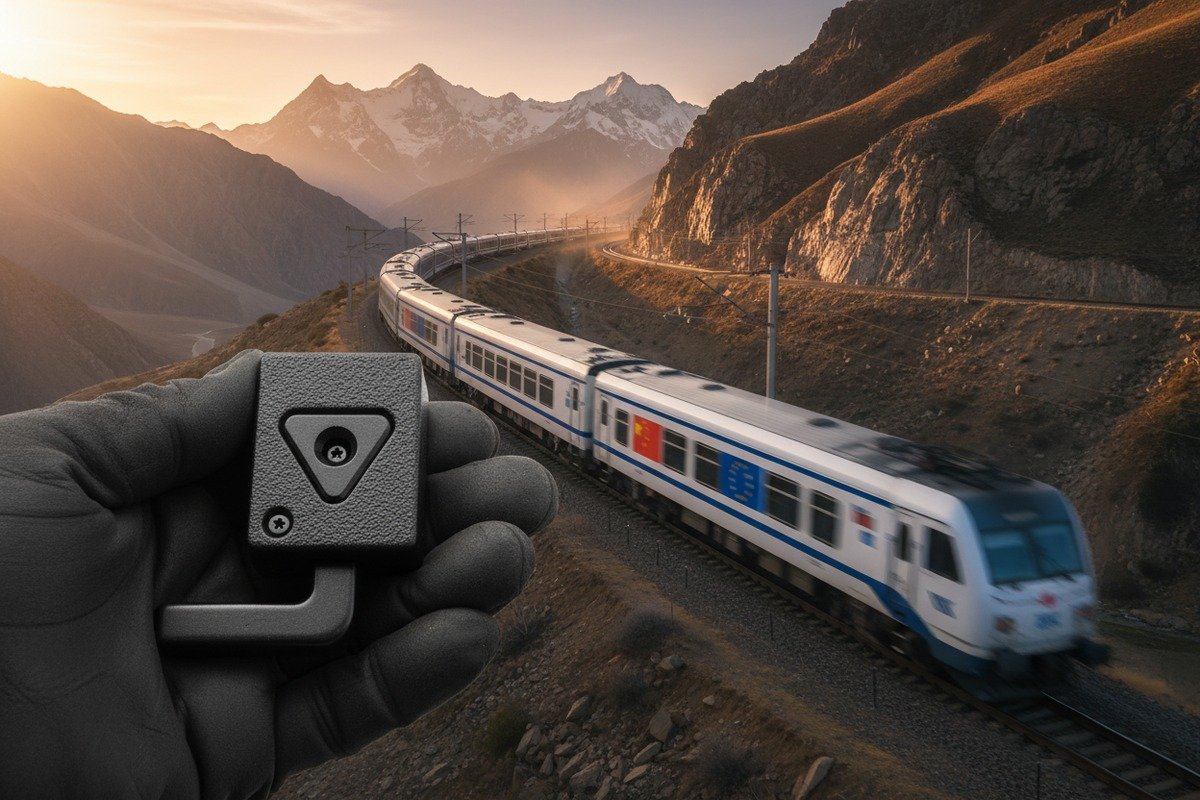
The Fees Nobody Talks About
Most freight quotes show the base rate, fuel surcharge, and maybe origin handling. But the invoice you receive after delivery often contains a dozen more line items. Here are the ones that catch hardware importers off guard.
Demurrage and detention occur when you fail to unload a container within the free time window (typically 3–7 days at destination). Rates jump to $100–$300 per day. If your customs clearance is slow due to documentation errors, this compounds fast.
Customs brokerage fees cover the professional service of filing import declarations. Expect $150–$350 per entry in the US or EU. Some brokers also charge per-line-item fees if your shipment includes multiple HS codes—for example, if you ship cam locks, hinges, and gaskets in one container.
Fumigation and phytosanitary certificates apply if your wooden pallets or crating do not meet ISPM-15 standards. The cost is $50–$150 per treatment, but the real risk is a two-week quarantine delay.
Anti-dumping and countervailing duties are the big ones. The US maintains Section 301 tariffs 10 on many Chinese-origin goods, including certain metal hardware. This can add 7.5–25 percent on top of standard duty. The EU has its own anti-dumping measures on specific steel products. Always verify whether your lock's HS classification triggers these.
Duty Rate Reference for Electrical Cabinet Locks
| Destination | HS Code | Standard Duty | Additional Tariffs | VAT/GST |
|---|---|---|---|---|
| EU (e.g., Germany) | 8301.40 | 2.2–3.7% | Possible anti-dumping on certain steel locks | 19% (DE) |
| USA | 8301.40.60 | 5.7% | Section 301: up to 25% on List 3/4A goods | None (no federal VAT) |
| UK | 8301.40 | 2.2% (post-Brexit tariff) | None currently | 20% |
How to Minimize Hidden Costs
Start by ensuring your supplier provides accurate commercial invoices with correct HS codes, material descriptions, and country of origin. Our export documents team at Hingelocks prepares detailed packing lists that include unit weight, material composition (e.g., zinc alloy, 304 stainless steel), and finish type—because customs officers use these details to verify classification.
Second, negotiate free demurrage days with your carrier. Many shipping lines offer 7–14 days free at destination if you book regularly. Third, consider using a bonded warehouse near the port to stage goods and avoid detention charges while you arrange inland delivery.
Finally, watch for currency conversion fees. If your freight forwarder bills in USD but your bank converts to EUR, the spread can cost 1–3 percent. Lock in rates with your bank or use a multi-currency account.
The Section 301 Trap for US Importers
This is critical for our American customers. Cabinet door locks classified under HS 8301.40.60 currently face a 5.7 percent standard duty plus a potential 25 percent Section 301 tariff. On a $50,000 shipment, that is $15,350 in duties alone—more than the freight cost by any mode. Some importers explore tariff engineering (e.g., shipping partially assembled components under a different HS code), but this carries compliance risk. The safest path is to work with an experienced customs attorney and factor the full duty burden into your landed cost model from day one.
How will choosing between sea and rail freight impact my project timelines and inventory holding costs?
When we process orders for energy storage cabinet manufacturers or EV charger assemblers, the conversation always turns to lead time. These customers operate on tight production schedules. A two-week delay does not just cost money in warehousing—it can halt an entire installation project and trigger contractual penalties. That is why transit time is never just a logistics metric. It is a financial variable.
Sea freight from Shanghai to Rotterdam takes 30–45 days, while China-Europe rail from Xi'an or Chengdu to Duisburg takes 15–20 days. The 15–25 day difference directly affects inventory holding costs, reorder frequency, and safety stock levels. For a $100,000 shipment at 8% annual capital cost, sea transit ties up roughly $960 more in capital than rail.

Transit Time Comparison in Practice
The transit time gap between sea and rail may seem like just two or three weeks. But for project-based purchasing—where a telecom company needs 10,000 cam locks to fit out 500 outdoor enclosures by a fixed deadline—those weeks determine whether you ship from existing inventory or wait for a replenishment order.
Our Xi'an location gives us a natural advantage for rail. The city sits on the primary CR Express corridor. A container loaded at our facility can reach Duisburg in 15–16 days, versus 35–40 days if we truck to Shanghai and ship by sea. For European customers, this means placing orders later in their planning cycle and still meeting deadlines.
Inventory Holding Cost: The Math
Inventory holding cost (IHC) includes warehousing, insurance on stored goods, depreciation or obsolescence risk, and the cost of capital. For durable, non-perishable products like our stainless steel and zinc-alloy locks, obsolescence risk is low. But capital cost is real.
Here is a simplified model:
IHC per day = (Shipment Value × Annual Holding Rate) ÷ 365
For a $100,000 shipment at 8 percent:
- Daily holding cost = $21.92
- Sea (38 days avg) = $833
- Rail (17 days avg) = $373
- Difference = $460 per shipment
Over 12 shipments per year, that is $5,520 saved by choosing rail—enough to offset the higher base freight on several of those shipments.
Safety Stock and Reorder Implications
Longer transit times force you to hold more safety stock. If your monthly demand is 2,000 locks and your sea lead time (including production) is 60 days, you need roughly 4,000 units of pipeline inventory. Switch to rail and the lead time drops to 40 days, reducing pipeline inventory to about 2,700 units. That frees up $13,000–$19,500 in working capital (assuming $10/unit cost) that you can deploy elsewhere.
Scenario: Red Sea Disruption Impact
In late 2024 and into 2025, Houthi attacks in the Red Sea forced most carriers to reroute via the Cape of Good Hope. This added 10–14 days and $800+ in surcharges per 40ft container on the Asia-Europe sea lane. Rail was unaffected. Several of our clients who had previously relied on sea freight switched to rail mid-quarter to avoid project delays. The lesson: rail provides a geopolitical hedge that sea cannot match on the Asia-Europe corridor.
Decision Framework: Sea vs. Rail by Project Type
| Project Characteristic | Recommended Mode | Reasoning |
|---|---|---|
| Routine quarterly restock, flexible timeline | Sea (FCL) | Lowest cost; buffer time acceptable |
| Fixed installation deadline within 6 weeks | Rail | 15–20 day transit fits tighter window |
| New product launch / first batch | Rail or Air | Speed to market critical |
| Price-sensitive, high-volume annual contract | Sea with safety stock buffer | Freight savings outweigh holding costs at scale |
| Geopolitically unstable period (e.g., Red Sea) | Rail | Avoids rerouting delays and surcharges |
For most of our European clients ordering mid-range volumes of cabinet door locks, rail has become the default choice for the first shipment of a new project, while sea handles the bulk replenishment once safety stock is established. This hybrid approach optimizes both timeline and total cost.
Slutsats
Comparing landed costs for electrical cabinet door locks requires looking far beyond the freight quote. By modeling every cost component—freight, duties, insurance, handling, and capital—across sea, air, and rail, you can make data-driven decisions that protect your margins and keep your production lines running on schedule.
Footnotes
1. Provides information on product safety and quality certification standards. ↩︎
2. Explains a common surcharge in ocean freight due to fuel price fluctuations. ↩︎
3. Official classification for base metal locks and hardware for customs. ↩︎
4. Defines fees for cargo handling at shipping terminals. ↩︎
5. Explains the expenses associated with storing unsold inventory. ↩︎
6. Explains the comprehensive cost of a product from origin to destination. ↩︎
7. Defines the ratio of a product's value to its weight, influencing transport choice. ↩︎
8. Explains a production strategy focused on minimizing inventory and waste. ↩︎
9. Details the significance and routes of the China-Europe freight train service. ↩︎
10. Provides official information on US trade tariffs, particularly against China. ↩︎





 Swedish
  English
  Spanish
  French
  German
  Japanese
  Arabic
  Korean
  Dutch
Dutch  Greek
Greek  Hindi
Hindi  Hebrew
  Italian
  Vietnamese
  Thai
Thai  Bulgarian
  Czech
Czech  Slovak
  Hungarian
  Finnish